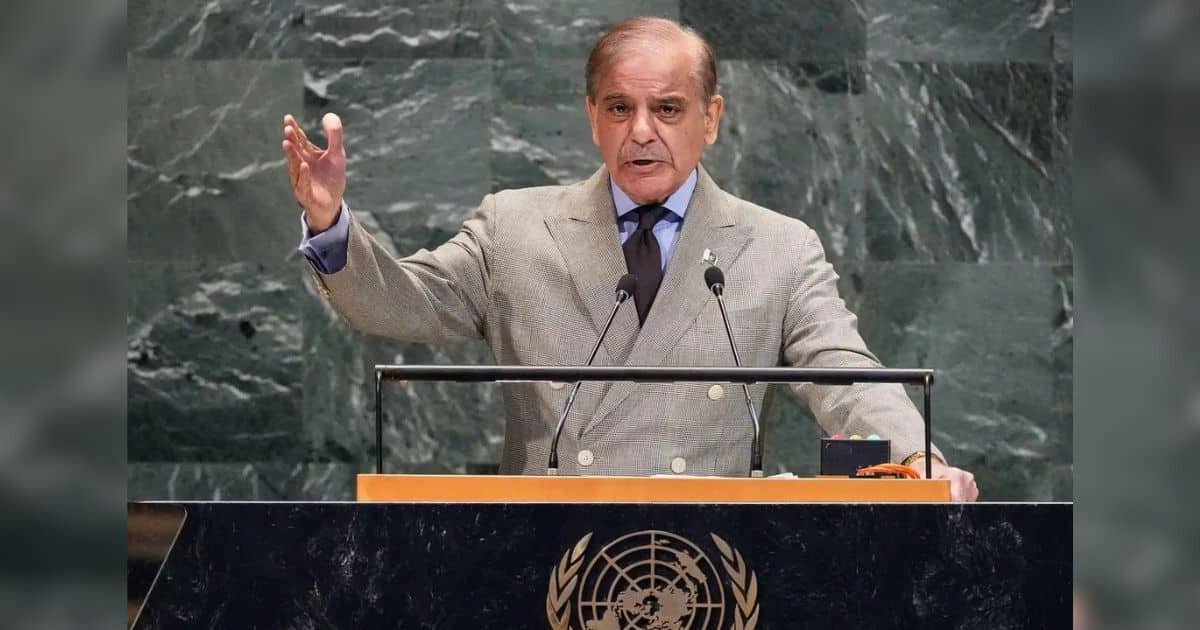



Pakistani Prime Minister Muhammad Shehbaz Sharif delivered a high-stakes address to the United Nations General Assembly (UNGA) today, marking a sharp escalation in regional rhetoric by declaring that any violation of the Indus Waters Treaty (IWT) would be considered an “act of war.” The Premier’s speech spanned critical issues from water security and regional dialogue to cross-border terrorism and the urgent need for action on Kashmir and Palestine.
Water Security Declared a ‘Red Line’
The Prime Minister’s most forceful condemnation targeted India’s recent actions concerning the 1960 water-sharing agreement. Sharif stated that India’s attempt to unilaterally hold the Indus Waters Treaty in abeyance was “illegal” and defied international norms.
He then set an unprecedented red line for the global community:
“We will definitely and ardently defend Inshallah, the inseparable right of our 2 and 40 million people on these waters. To us, any violation of this Indus Treaty represents an act of war.”
This declaration signals the government’s resolve to treat water scarcity and the integrity of the IWT as a core existential security threat, demanding immediate international attention to the dispute.
You May Like To Read: Israeli Military Conducts Powerful Strikes on Houthi Targets in Yemen
Urgent Demand for Action on Palestine and Kashmir
Prime Minister Sharif forcefully addressed two of the longest-running territorial disputes on the UN agenda: Kashmir and Palestine.
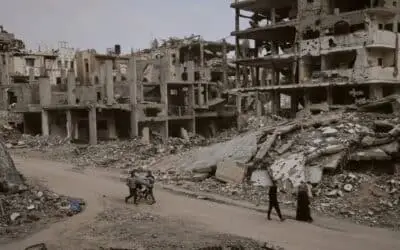
Regarding the Middle East, Sharif spoke directly to the ongoing humanitarian situation, particularly in Gaza, and demanded an immediate end to the occupation.
“Palestine can no longer remain under Israeli shackles. It must be liberated and liberated with full commitment and full force.”
He reiterated Pakistan’s historical stance of solidarity with the Kashmiri people, calling for adherence to UN resolutions granting the right to self-determination.
“I wish to assure the Kashmiri people that I stand with them. The people of Pakistan stand with them. And one day soon, Inshallah, India’s tyranny in Kashmir will come to a grinding halt. Kashmir will gain its fundamental right to self-determination through an impartial plebiscite under the auspices of this very organization, United Nations.”
Call for Dialogue and Retaliation Claims
While issuing strong warnings, Sharif maintained that Pakistan remains open to diplomatic engagement, provided the approach is constructive.
“Pakistan stands ready for a composite, comprehensive and result-oriented dialog with India on all outstanding issues. South Asia requires, ladies and gentlemen, proactive, rather than provocative, leadership.”
The Prime Minister also briefly referenced an earlier military exchange with India in May, claiming a successful defensive operation:
“When in May this year, my country confronted unprovoked aggression from our eastern front, the enemy came shrouded in arrogance. We sent them back in humiliation, delivering our bloody nose.”
He confirmed that a ceasefire was later agreed upon, citing former US President Donald Trump’s intervention as a key facilitator.
Condemnation of Cross-Border Terrorism
Sharif focused heavily on Pakistan’s internal security challenges, specifically naming multiple militant groups that he claimed are operating from across the border in Afghanistan.
“Today we face externally sponsored terrorism, particularly from foreign funded groups such as the TTP, Fitna al-Khawarij, Fitna al-Hindustan, BLA, Majeed Brigade. Operating from Afghan soil, these groups are responsible for some of the most heinous attacks inside Pakistan.”
The statement acts as a direct appeal to the international community and the de facto administration in Afghanistan to dismantle the infrastructure used by these groups for cross-border incursions and attacks.
You May Like To Read: 14th Pakistan-China Joint Coordination Committee Meeting Commences in Beijing
Critique of Global Climate Finance Structure
In closing, the Prime Minister shifted focus to economic challenges, criticizing the current global financial structure for climate change response. He argued that developing nations, which contribute least to climate change, are unfairly forced into debt to recover from resulting disasters.
“How can we expect a country which is a developing country, facing humongous flood challenges every year due to climate change and no fault of ours, and yet we are told to borrow more loans. I think borrowing loans would destroy your economy.”
He concluded by vowing to prioritize national self-reliance over mounting debt. “We will better off than not borrowing loan and standing on our own feet, working hard, tirelessly, blood and sweat and we will, Inshallah, make Pakistan a great country, Inshallah,” he said.
You May Like To Read: PM Sharif, and COAS Field Marshal Asim Munir Meet US President Donald Trump