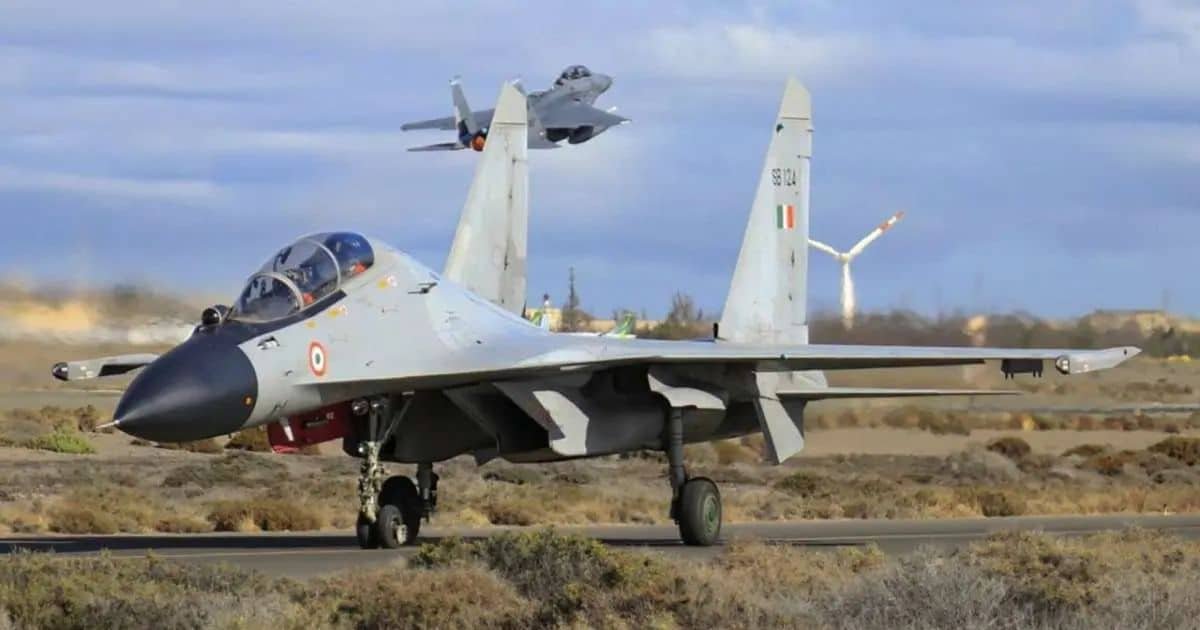





In a landmark geopolitical development, Tajikistan has reclaimed full control of the Ayni Air Base, bringing to an end India’s nearly two-decade operational presence at the strategically vital facility. This decisive move, concluded in October 2025, marks a significant inflection point in Central Asian geopolitics, as Russia and China intensify their grip over regional military and political spheres of influence.
After spending $70 million on updagding the Ayni Airbase some reports suggests Tajikistan requested IAF to vacate it
marking the end of a two-decade-long presence that provided New Delhi critical operational depth near Afghanistan and Pakistan.
Another diplomatic failure of… pic.twitter.com/yU9ExzNJs1
— Mukesh (@mikejava85) October 28, 2025
For New Delhi, the loss of the Ayni Air Base is not merely a logistical setback—it represents a profound contraction of its strategic reach in a region crucial for monitoring Pakistan, Afghanistan, and the broader Eurasian security theatre. The base, located roughly 15 kilometers west of Dushanbe, has its roots in the Soviet era and served as India’s first and only overseas military installation.
India’s involvement began in the early 2000s, leading to a bilateral agreement in 2002 to renovate and jointly operate the complex. India reportedly invested between USD 70 million and USD 100 million to modernize the airbase, extending its runway to 3,200 meters, constructing new hangars, and installing radar facilities. The upgrades allowed the base to accommodate Su-30MKI multi-role fighters and Mi-17 helicopters, providing India a rare vantage point in Central Asia for intelligence, humanitarian operations, and counterterrorism coordination.
Strategically, Ayni was less than 1,000 kilometers from Pakistan’s northern border, positioning it as a strategic fulcrum anchoring India’s geopolitical outreach into Eurasia and fitting into India’s “Connect Central Asia” policy.
India’s exit from Ayni was the culmination of coordinated strategic pressure from both Russia and China, the twin power brokers of Central Asia. By 2021, Tajikistan had notified India that the lease would not be renewed beyond 2022. Behind the scenes, Moscow and Beijing reportedly pressured Dushanbe to prioritize “regional security cohesion” under their respective spheres of influence.
This action underscores the precarious balancing act faced by smaller states caught between rival nuclear-armed powers and the strategic ambitions of regional giants. Unlike U.S. or Russian basing strategies, India’s model, which relied on diplomatic goodwill and limited operational autonomy, left its continued operation vulnerable to political shifts in Dushanbe and external pressures.
Check out our latest video: