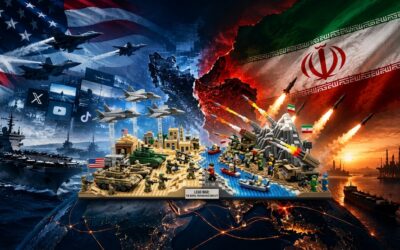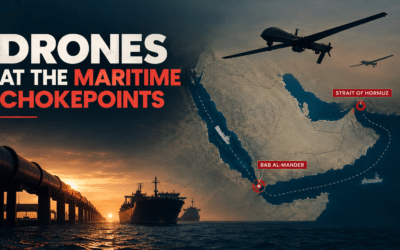





The US-Israeli war on Iran has entered its third week with a sharpening diplomatic rift between Washington and its European allies. On Monday, several key NATO partners—including Germany, Spain, and Italy—officially declined President Donald Trump’s request to send warships to the Strait of Hormuz, citing a lack of international mandates and a failure of prior consultation.
The refusal triggered a sharp response from President Trump, who accused long-standing partners of ingratitude. “The level of enthusiasm matters to me,” Trump stated, noting that the U.S. has protected these nations “for many, many years” only to be met with a “negative response” during a global energy crisis.
The European Refusal: Legal and Diplomatic Barriers
German Chancellor Friedrich Merz led the European opposition, stating in Berlin that Germany would not become militarily involved.
-
Lack of Mandate: Chancellor Merz noted that under Germany’s Basic Law, a mandate from the UN, EU, or NATO is required for such a deployment—none of which currently exist for the Iran offensive.
-
Consultation Deficit: Merz highlighted that Washington and Israel did not consult Berlin before launching the war on February 28, effectively removing the question of German military participation from the table.
The war in Iran has nothing to do with the NATO defence alliance, says a German government spokesperson, adding that Germany would not take part in the war nor in keeping the Strait of Hormuz open through military means.
🔴LIVE updates: https://t.co/dZOxgiP3sK pic.twitter.com/QynCXMN7Iy
— Al Jazeera English (@AJEnglish) March 16, 2026
Israel’s “Thousands of Targets”: No Ceasefire in Sight
Israeli military spokesperson Lt. Col. Nadav Shoshani confirmed that the IDF has detailed operational plans for at least three more weeks of high-intensity strikes, with contingencies extending even further.
-
Degrading the Regime: Israel aims to “weaken this regime to the greatest extent possible,” targeting ballistic missile infrastructure, the security apparatus, and nuclear sites.
-
Space Program Hit: Israel confirmed strikes on Iran’s space program, including a research facility in Tehran responsible for satellite development.
-
Evin Prison Strike: Precision strikes were reportedly carried out on the notorious Evin Prison; while Israel claimed it took steps to mitigate harm to political prisoners, the UN has already warned that past strikes on the facility constitute war crimes.
Israeli military spokesperson Nadav Shoshani has told reporters there are detailed operational plans for the war with Iran for the next three weeks along with additional plans extending further.
🔴 LIVE updates: https://t.co/dZOxgiP3sK pic.twitter.com/0XPTMdgSaf
— Al Jazeera English (@AJEnglish) March 16, 2026
Iranian Retaliation: Dubai Airport and Regional Hubs
The Islamic Revolutionary Guard Corps (IRGC) has intensified its “asymmetric” response, targeting U.S. and allied economic interests across the Gulf.
-
Aviation & Energy: A drone strike on a fuel storage facility near Dubai International Airport forced a multi-hour suspension of flights. Simultaneously, oil loading at the UAE’s Port of Fujairah was halted after drone strikes hit critical infrastructure.
Footage shows a fire burning near Dubai International Airport after a drone ignited a fuel tank, according to authorities in the UAE.
Flights have been suspended. Civil defence crews say the blaze is under control. pic.twitter.com/G8q4ECnjB3
— Al Jazeera Breaking News (@AJENews) March 16, 2026
-
Base Attacks: The IRGC claimed missile and drone attacks on the Al-Dhafra air base (Abu Dhabi), the U.S. naval base in Bahrain, and targets within Tel Aviv.
-
Humanitarian Toll: Iranian Foreign Minister Abbas Araghchi reported that hundreds of civilians, including 200 children, have been killed in the bombings. He accused neighboring states hosting U.S. forces of “actively encouraging the killing of Iranians.”
Hundreds of Iranian civilians have been killed in Israel-U.S. bombings, including over 200 children.
Reports claim that some neighboring states which host U.S. forces and permit attacks on Iran are also actively encouraging this slaughter. Stances should be promptly clarified.
— Seyed Abbas Araghchi (@araghchi) March 16, 2026
Market Reaction: A “Bessent Buffer” for Oil
Despite the disruption to 20% of the world’s oil and LNG flow, energy markets saw a slight relief:
-
Selective Passage: U.S. Treasury Secretary Scott Bessent told CNBC the U.S. is allowing some Iranian fuel vessels to pass and noted that Indian and Chinese tankers are successfully navigating the Strait.
-
Price Correction: Following Bessent’s comments, oil prices dipped below the $100 mark, though they remain highly volatile as the Nowruz (Iranian New Year) holiday approaches on March 20.
You May Like To Read: Switzerland Follows Spain and Defies U.S. Demands Amid Iran War
Check out our latest video: