




Renewed Border Skirmishes and Rising Tensions
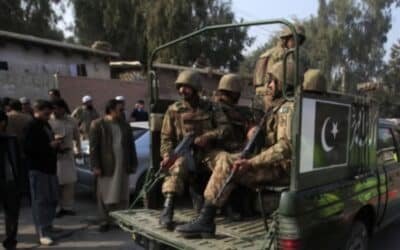
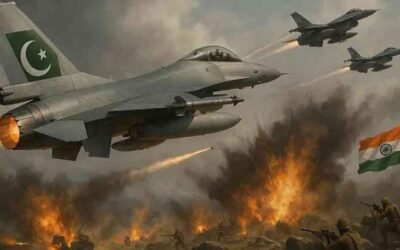
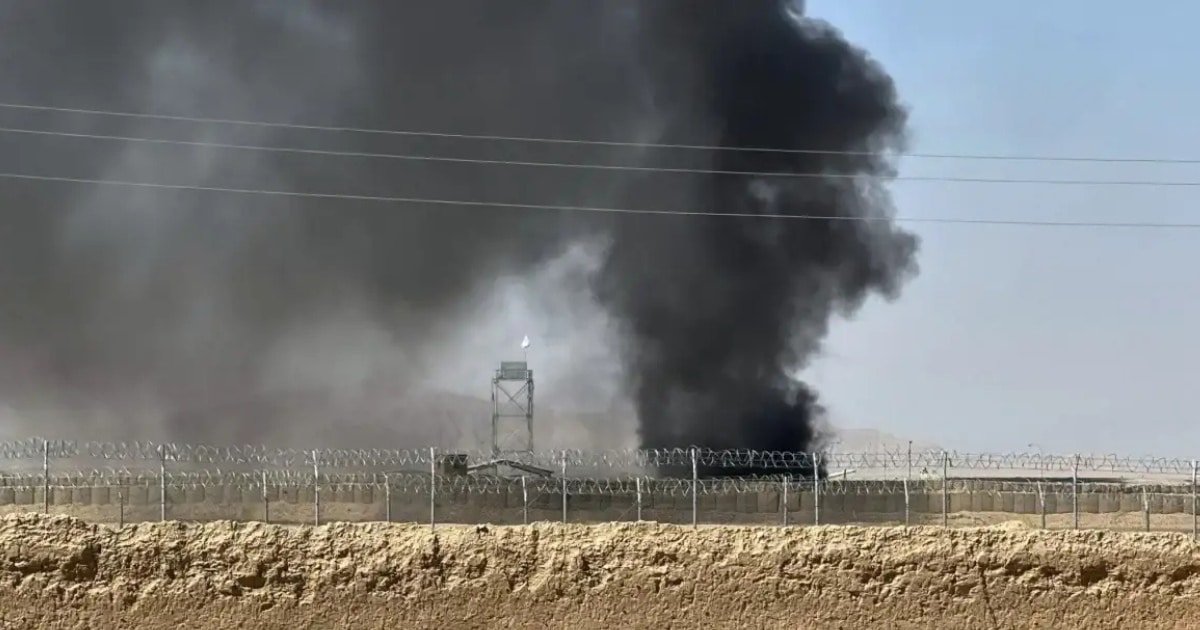
In early 2025 and continuing into 2026, friction between Pakistan and the Afghan Taliban-led government has repeatedly flared into cross-border skirmishes along the 2,600-kilometre frontier. What began as periodic exchanges of gunfire has evolved into more serious confrontations involving regular forces, airstrikes and disputed claims of initiation by both sides. On 24 February 2026, exchanges of fire were reported again in the Torkham and Tirah border sectors following Pakistani airstrikes on militant targets inside Afghanistan, underscoring how volatile the situation remains.
Pakistan maintains that these engagements are defensive and a response to insurgent activity spilling over from Afghan territory. It has heightened nationwide security and arrested dozens of suspects after carrying out air strikes in Afghanistan targeting militants blamed for recent suicide attacks inside Pakistan, Junior Interior Minister Talal Chaudhry said. Pakistani and Afghan forces exchanged fire along the border following the strikes, with both sides accusing each other of initiating the clashes. Recent attacks include an ambush in Kohat that killed five police officers and two civilians, and a suicide bombing that killed two policemen. According to ACLED data, overall attacks in Pakistan rose to 2,425 in 2025 from 658 in 2022, while TTP-linked attacks increased to 838 from 118 over the same period.
Roots of the Conflict: Terrorism and Cross-Border Risk
At the heart of the dispute lies Islamabad’s longstanding allegation that militant groups, especially the Tehreek-e-Taliban Pakistan (TTP) and allied networks use Afghan soil as a sanctuary from which to plan, coordinate and launch violent attacks inside Pakistan. Pakistan blames these groups for a steady rise in suicide bombings, ambushes and attacks on police and military convoys, prompting security forces to intensify operations near the border and beyond.
The Afghan Taliban government has consistently rejected claims that it directly supports Pakistani militant factions. Kabul insists that it has limited capacity to control all armed groups within its territory and that some may act independently of central authority. Afghan officials also counter-accuse Pakistan of overstating militant threats to justify military incursions into Afghanistan.
Beyond militant activity, the longstanding disagreement over the Durand Line continues to fuel mistrust. Pakistan considers the Durand Line an internationally recognized border and has fenced most of the 2,600-kilometre frontier since 2017 to regulate movement. Afghan governments, including the current Taliban administration, have historically disputed its legitimacy. There have been multiple incidents where Afghan border guards objected to new fencing or infrastructure work, leading to armed standoffs. While the fencing has reduced unauthorized crossings in some sectors, it has also created friction among local communities whose families and trade routes straddle both sides.
Major Incidents Shaping the 2025–2026 Phase
Over the past year, key flashpoints have shaped the current security climate:
One of the most serious escalations occurred in October 2025, when heavy fighting broke out at multiple border points after Pakistani air and ground operations targeted alleged militant hideouts in Afghan regions, including Kandahar and Kabul areas. Both governments reported casualties, with Pakistan claiming significant militant losses and Afghanistan citing civilian deaths.
Trade routes at major border posts like Torkham and Chaman were closed temporarily, disrupting commerce and adding economic stress to border communities. Moments of respite, such as the temporary ceasefire for a week after talks in Turkiye, following mediation by Turkiye and Qatar, with both sides planning to meet again in Istanbul on November 6 to finalise implementation and a monitoring mechanism. The truce followed a week of intense border clashes earlier in October 2025, after which negotiations briefly stalled over Pakistan’s demand that Kabul act against the Tehreek-e-Taliban Pakistan (TTP).
Recent militant attacks within Pakistan, including a suicide bombing in Bannu in February 2026 that killed 2 of our soldiers, have further hardened security policies and contributed to an atmosphere of urgency and alert.
Diplomatic Talks, Ceasefires, and Mediation Efforts
In the face of escalating violence, both Islamabad and Kabul have intermittently engaged in diplomatic talks facilitated by regional partners. These discussions have produced temporary ceasefires and mutual agreements to avoid further escalation, but they have so far fallen short of a comprehensive security pact.
Pakistan’s position in these talks was clear: Kabul must take verifiable action to dismantle militant sanctuaries and prevent TTP operatives from operating freely near the border. Pakistani negotiators have framed this demand as essential for Pakistan’s security and territorial integrity.
Taliban representatives have pledged to cooperate but stress that Afghan resources and command capabilities remain limited for dealing with all militant elements within the country. The mutual lack of trust and contrasting narratives make diplomacy more challenging, as each side interprets the other’s actions as either defensive necessity or unfriendly provocation.
Pakistan’s Security Strategy and Broader Counterterrorism Efforts
Pakistan views the rising threat of cross-border militancy as a core national security challenge, particularly due to repeated attacks by the Tehreek-e-Taliban Pakistan. According to ACLED data, TTP attacks inside Pakistan increased from 118 in 2022 to 838 in 2025, while overall militant incidents in the country rose from 658 to 2,425 during the same period.
In response, Islamabad has intensified intelligence-based operations across Khyber Pakhtunkhwa, Balochistan, and northern Punjab. Between January and February 2026, Pakistani authorities arrested dozens of suspected militants and facilitators, including Afghan nationals, following airstrikes targeting confirmed militant hideouts in eastern Afghanistan near Kandahar. These operations were explicitly linked to retaliatory attacks, such as the suicide bombing in Kohat that killed five police officers and two civilians in February 2026.
In addition to border-focused operations, Pakistan’s security forces have raised threat levels in urban centres, markets. In Punjab (including Lahore and Islamabad vicinity), CM Maryam Nawaz ordered heightened security at religious sites, markets, shrines, and inter-provincial borders. Intelligence agencies have issued nationwide alerts warning of possible militant retaliation via Punjab and Sindh, emphasizing that attacks could extend beyond frontier regions.
Minister of State for Interior Talal Chaudhry said on Wednesday that Pakistan has boosted security and arrested dozens of suspects as it fears rising wave of terrorist attacks following its air strikes in Afghanistan.
For more: https://t.co/0lq1LbnEeW#etribune #news #latest pic.twitter.com/m8ODUAwA6E
— The Express Tribune (@etribune) February 25, 2026
This approach, combining airstrikes, arrests, and heightened urban security is Pakistan’s strategy to simultaneously degrade militant networks inside Afghanistan while preventing their operational reach inside Pakistan. Civilian casualties reported by Afghan authorities during cross-border strikes have drawn diplomatic criticism, but Islamabad maintains these actions target verified militant infrastructure linked to attacks on Pakistani territory.
Regional Impact and International Concerns
The Pakistan–Afghanistan skirmishes have had significant economic and geopolitical repercussions in 2025–2026. Temporary closures of key crossings like Torkham and Chaman disrupted bilateral trade, which normally exceeds $1.6 billion annually, affecting transporters, traders, and border communities in Khyber Pakhtunkhwa and Balochistan.
Trade fell 40% in 2025 to $1.766 billion from $2.461 billion in 2024, with Afghan exports dropping sharply and Pakistan facing $150-177 million monthly losses in sectors like cement, pharmaceuticals, and agriculture.
Afghan authorities encouraged alternative trade routes through Chabahar in Iran and strengthened commercial ties with India to mitigate the disruption.
Regional powers, including Saudi Arabia, Qatar, and Iran, have urged restraint, warning that escalating hostilities could destabilize South Asia and affect economic corridors and diplomatic initiatives. The conflict intersects with broader geopolitical concerns: India reopened its embassy in Kabul in 2025, signaling influence in Afghanistan, while Pakistan views such engagement as countering its strategic interests.
While some international observers noted civilian casualties during Pakistani airstrikes on confirmed militant camps in eastern Afghanistan in February 2026, these operations targeted verified Tehreek-e-Taliban Pakistan (TTP) hideouts responsible for repeated attacks on Pakistani territory. Pakistan has cited the UN Security Council statement, condemning the February 6 suicide bombing at a mosque in Islamabad, which killed 32 Pakistanis and injured 92, and called for international cooperation in holding perpetrators and financiers accountable. While the UNSC statement cited ISIL (Da’esh) as claiming responsibility, it supports Pakistan’s broader security stance that terrorism inside its borders poses a serious threat to international peace and security. Pakistani authorities link many such attacks to cross-border militant sanctuaries, particularly the Tehreek-e-Taliban Pakistan (TTP) in Afghanistan, and have carried out targeted operations to neutralize these threats.
On February 22, 2026, Pakistan Air Force launched “intelligence-based selective” airstrikes on seven targets in Afghanistan’s Nangarhar, Paktika and Khowst provinces. Pakistan claimed killing around 80 TTP militants; the news from the ground confirmed killing of high value TTP… pic.twitter.com/9frVPSuupk
— The Express Tribune (@etribune) February 26, 2026
Pathways to a Sustainable Peace
Despite these challenges, there are potential avenues for reducing tensions and building a more stable future. Sustained diplomacy supported by credible guarantees and third-party oversight could help cement ceasefires into lasting agreements. Confidence-building measures, such as joint border patrol mechanisms and clearer communication channels, may reduce misinterpretations that often lead to armed exchanges.
Pakistan insists that a decisive push against militant sanctuaries in Afghanistan is central to any long-term solution. Kabul, on the other hand, points to mutual security cooperation as a more constructive path forward. Bridging these positions will require patience, political will, and regional cooperation.
You May Like To Read: Defense, Diplomacy, and Deterrence: Pakistan MoFA Outlines Strategic Stance
Conclusion: A Fragile Moment for Peace
The Pakistan-Afghanistan skirmishes of 2025 and early 2026 reflect deep structural tensions born of decades of conflict and mistrust. While border exchanges and militant threats have strained relations, neither side has shown interest in full-scale war, and repeated ceasefires signal a shared interest in preventing uncontrollable escalation.
For Pakistan, the key lies in securing its borders while balancing firm defence of sovereignty with diplomatic engagement. How both nations manage this balance in the coming months will shape not only bilateral ties but also the broader peace and stability of South Asia.
Pakistan-Afghanistan border skirmishes 2026, Torkham Tirah border clashes, Pakistani airstrikes Afghanistan 2026, TTP sanctuaries Afghan soil, Durand Line border dispute 2026
Check out our latest video: