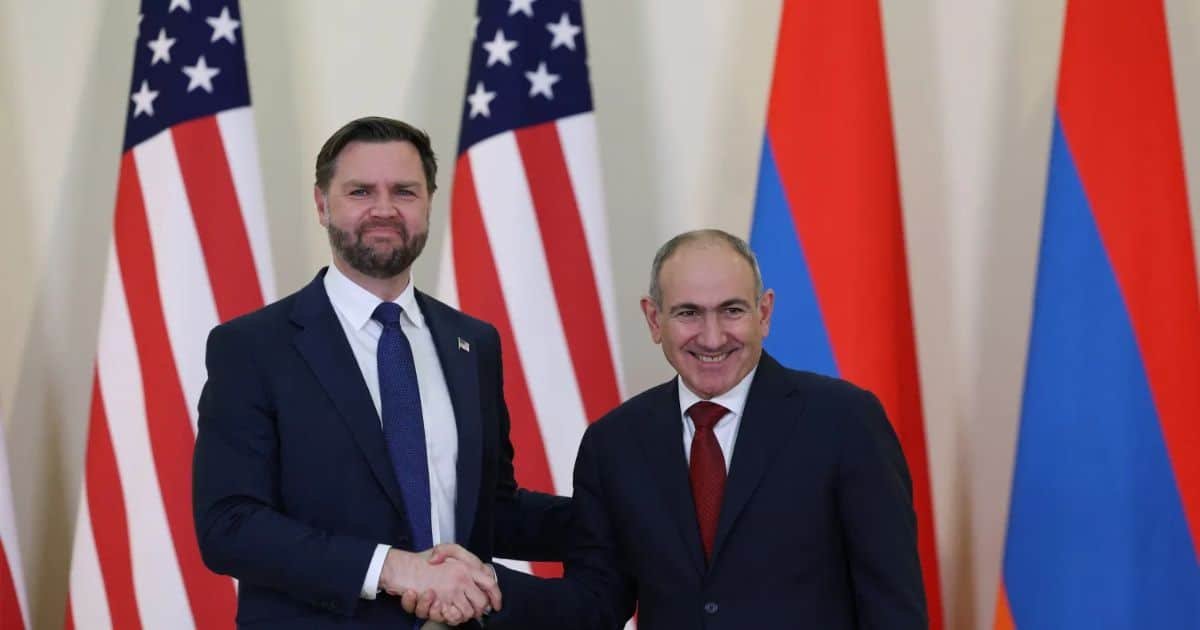



In a landmark shift for regional geopolitics and energy security, Armenian Prime Minister Nikol Pashinyan and US Vice President JD Vance today signed a comprehensive civil nuclear cooperation agreement, known as a 123 Agreement. The deal marks the first time a sitting US Vice President has visited Armenia, signaling a decisive pivot toward Western partnerships.
The US and Armenia signed a civil nuclear cooperation deal as Washington steps up its engagement in the South Caucasus in a bid to reduce Armenia’s dependence on Russian energy https://t.co/5rHiAX4Hzf pic.twitter.com/JCSHrJqYFZ
— Reuters (@Reuters) February 10, 2026
A New Chapter in Energy Independence
The multibillion-dollar agreement clears the legal pathway for the United States to export advanced nuclear technology and equipment to Armenia. This partnership aims to replace Armenia’s aging, Russian-built Metsamor nuclear plant with cutting-edge Small Modular Reactors (SMRs).
Vice President JD Vance confirmed the scale of the commitment:
- $5 Billion in initial US exports to Armenia.
- $4 Billion in long-term fuel and maintenance contracts.
“This agreement will open a new chapter in the deepening energy partnership between Armenia and the United States,” said Prime Minister Pashinyan.
Diversifying Beyond Traditional Spheres of Influence
For decades, Armenia’s energy sector was dominated by Russia. By entering a sector previously held by Moscow’s state nuclear corporation, Rosatom, the US is helping Yerevan diversify its strategic partners.
While Russian officials maintain that their technology remains the most reliable for the region, Yerevan has signaled a “political priority” to expand its options among US, French, and South Korean proposals.
The TRIPP Corridor: A Megaproject for Prosperity
Beyond energy, the visit focused on the Trump Route for International Peace and Prosperity (TRIPP). This proposed 43km (27-mile) corridor across southern Armenia is designed to:
- Connect Azerbaijan to Nakhchivan and Turkiye: Providing a direct trade route.
- Bypass Russia and Iran: Offering Western nations a trade and energy alternative amid the ongoing conflict in Ukraine.
- Integrate Infrastructure: The corridor will feature modernized rail, oil and gas pipelines, and high-speed fiber optic cables.
“We’re not just making peace for Armenia,” Vice President Vance stated during a joint news conference. “We’re also creating real prosperity for Armenia and the United States together.”
Regional Impact
The deal comes six months after a White House-brokered peace framework between Armenia and Azerbaijan. Vice President Vance is scheduled to continue his diplomatic mission with a visit to Azerbaijan on Wednesday and Thursday to further discuss the implementation of the TRIPP corridor and regional stability.
You May Like To Read: