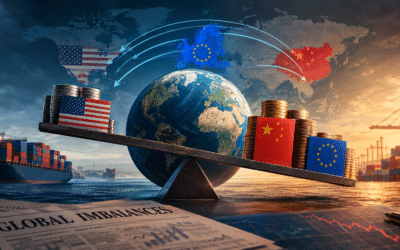





The United States announced on Thursday that it will impose new baseline tariffs ranging from 10 percent to 12.5 percent on 60 key trading partners—including Pakistan, India, China, and the European Union—citing systemic concerns over forced labor.
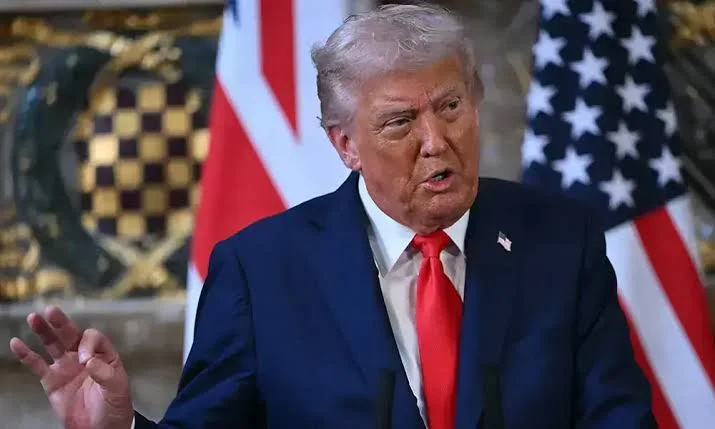
The new levies, effective Friday, directly replace an expiring 150-day emergency duty rolled out by US President Donald Trump earlier this year following a Supreme Court ruling. US Trade Representative (USTR) Jamieson Greer defended the measure, stating that targeted economies represent the majority of US trade volume and that international partners must match Washington’s long-standing import bans on forced labor products.
Today, Ambassador Greer is taking action, at President Trump’s direction, under Section 301 of the Trade Act of 1974 by imposing tariffs on 60 trading partners for their failure to adopt and effectively enforce a prohibition on the importation of goods produced with forced labor.…
— United States Trade Representative (@USTradeRep) July 23, 2026
Tariff Structure and Country Classifications
The new tariff wall follows a months-long USTR investigation designed to withstand rigorous legal scrutiny. The levies are structured across distinct economic brackets:
US Forced Labor Tariff Framework (Effective Friday):
- 10% Flat Duty Bracket: Pakistan, India, Bangladesh, Canada, Mexico, Britain, Indonesia, Malaysia, Sri Lanka, Jordan, Cambodia, Ecuador, El Salvador, Guatemala, Honduras, Trinidad & Tobago, Argentina.
- Adjusted Total Rate Bracket (10% or 12.5% combined with Most-Favored-Nation rates): European Union, Japan, South Korea, Taiwan, Switzerland
- 12.5% Higher Duty Bracket: 38 Countries, including China.
- Carve-Outs & Exemptions: Exempt: Sector-specific tariff goods (Steel/Aluminum), specific energy products, fertilizers, and select USMCA-covered items.
Legal Resilience and Global Backlash
The Trump administration moved swiftly to construct these new trade barriers after the US Supreme Court struck down several executive tariffs in February. While the administration subsequently enacted a temporary 10 percent duty using alternative statutory authority, that measure expires Friday. The new forced labor framework provides a legally robust baseline intended to endure for the remainder of Trump’s term.
The announcement met immediate international criticism:
-
Global Reactions: Japanese government spokesman Minoru Kihara expressed deep regret over the higher rates applied solely due to the absence of specific import bans. Australian Trade Minister Don Farrell condemned the levies as “unjustified” and inconsistent with bilateral free trade commitments.
-
Pakistan’s Engagement: Islamabad had previously submitted detailed technical responses and compliance documentation to the USTR ahead of bilateral trade talks earlier this month regarding forced labor standards.
-
Secondary Investigations: Washington is concurrently conducting secondary investigations into 16 economies over excess industrial capacity, creating strategic leverage and threatening additional layered duties.
Strategic Analysis: The New Architecture of American Protectionism
The deployment of forced labor investigations to establish baseline tariffs represents a major evolution in US trade policy and global market dynamics:
Legal Insulation of Presidential Tariff Power
By anchoring these sweeping duties in a formal, months-long USTR forced labor investigation, the White House is constructing a defense against domestic judicial challenges. Former USTR general counsel Greta Peisch notes that utilizing statutory investigative findings makes these measures significantly more durable than previous emergency executive orders, effectively locking in a structural protectionist posture for the US economy.
Leveraging Non-Tariff Standards for Economic Concessions
The forced labor determination serves a dual economic and diplomatic purpose. Beyond generating substantial revenue for the US Treasury, maintaining baseline tariffs while holding open secondary probes into industrial overcapacity provides Washington with maximum leverage. Trading partners are incentivized to negotiate bilateral concessions or accept unfavorable terms to avoid escalating to higher tariff brackets.
Micro-Impact on South Asian Export Competitiveness
For emerging export economies like Pakistan and Bangladesh—whose economic growth relies heavily on textile and apparel exports to the American market—a 10 percent entry duty compresses profit margins. While Pakistan remains in the same 10 percent bracket as regional competitors like India and Indonesia, the added trade barrier forces domestic manufacturers to accelerate labor compliance verification to protect market share against exempt or lower-duty trade blocs.