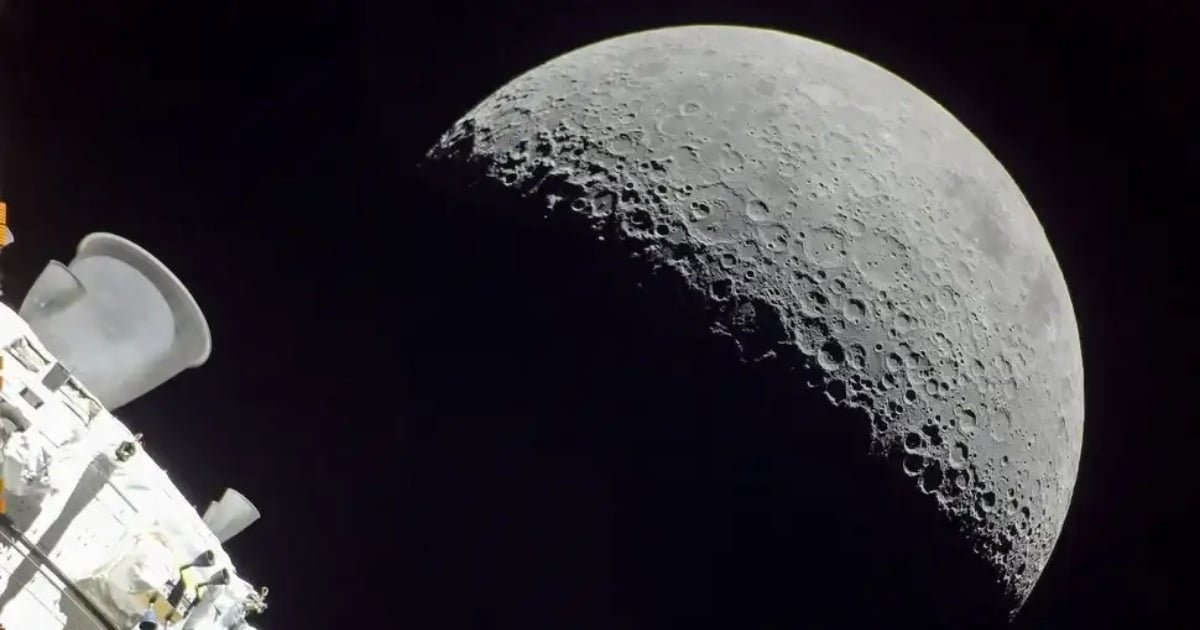




The United States military is expanding its surveillance frontier beyond Earth’s orbit, aiming to track objects that move in or out of lunar space. The Defense Advanced Research Projects Agency (DARPA) has announced a new initiative called Track at Big Distances with Track-Before-Detect (TBD2), designed to enhance monitoring of spacecraft and other potential threats within cislunar space, the vast region between Earth and the Moon influenced by both bodies’ gravity.
US military wants to track ‘potential threats’ coming from the moon
The Defense Advanced Research Projects Agency (DARPA) has issued a contract solicitation for new ways to process optical signals that allow for continuous space-based detection and tracking of objects in…
— FranciscoSpace5🚀🔬🦛 (@FranciscoSpace5) November 13, 2025
Existing tracking systems primarily monitor satellites up to geosynchronous orbit (GEO), leaving a major visibility gap farther out. With increasing lunar activity, including missions from the U.S., China, and private companies, the Pentagon sees strategic urgency in closing this blind spot. The TBD2 program will develop advanced optical algorithms and onboard signal processing to detect faint objects over 140,000 miles (2 gigameters) away within hours.
You May Like To Read: Iran Faces “Water Apocalypse” as 15 Provinces Run Dry, Tehran on Brink of Evacuation
DARPA is seeking two payload designs combining optical sensors and onboard computers, one to operate from the Sun-Earth Lagrange Point 1 (about 932,000 miles from Earth) and another beyond GEO in deeper cislunar space. Positioned strategically, these systems could identify objects as small as 10–20 centimeters across, ensuring round-the-clock situational awareness in what officials call the emerging “Earth–Moon corridor.”
The project complements efforts by the U.S. Space Force and Air Force Research Laboratory, which are also testing new propulsion systems to maintain a sustained presence and early-warning capability in lunar space.
Check out our latest video: