A World on Edge: The Return of Tariff Dominance
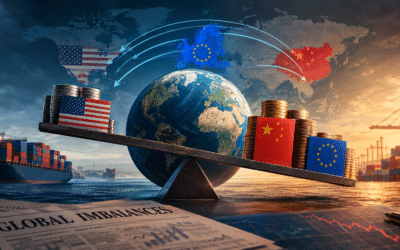
As we enter 2026, global commerce finds itself in the grip of renewed tariff pressures and intensifying trade wars, phenomena that last dominated economic thinking in the 1930s. These developments have nothing to do with theoretical disputes among economists; they are real, concrete policies shaping where goods move, how industries invest, and how countries protect their economic interests. Central to these changes is the United States’ aggressive tariff strategy, aimed at reshoring production and defending strategic sectors, and the countermeasures taken by major trading partners. The impact on global markets is extensive, affecting industrial supply chains, World Trade Organization (WTO) norms, and economic prospects for emerging economies including Pakistan.
The U.S. Tariff Strategy: Protectionism in Practice
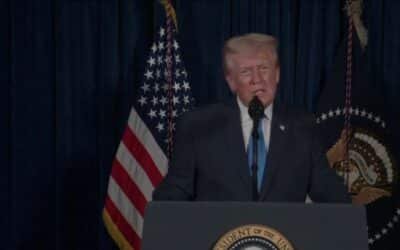
In 2025, the United States under President Donald Trump reintroduced broad-based tariff measures that have reverberated worldwide. Tariffs, longstanding tools of economic policy, were expanded dramatically, with new duties on imports from China, Canada, Mexico and other economies. These levies often reach double-digit rates and in some high-tech sectors even higher, aiming to protect domestic industries such as semiconductors, batteries, solar panels, and automobiles. The U.S. also used legal frameworks like the International Emergency Economic Powers Act (IEEPA) to justify sweeping tariffs as national security measures, a move now facing judicial review. These policy choices represent a clear shift toward economic nationalism, seeking to prioritize domestic producers and reduce perceived reliance on foreign suppliers.
This shift is not without controversy. U.S. companies that rely on global supply chains, particularly in electronics and advanced manufacturing, are experiencing increased production costs due to higher tariffs on imported components. Some firms are absorbing these costs, while others are attempting to pass them on to consumers, potentially raising inflationary pressures. At the same time, certain U.S. manufacturers with diversified supply chains, having moved production to Southeast Asia or re-shored it, appear better placed to weather tariff impacts.
China’s Response and the Broader Geopolitical Contest
China, the world’s largest manufacturing hub, has responded with its own suite of tariffs and export controls. Beijing has imposed duties on key American products such as coal, liquified natural gas, and crude oil, and tightened restrictions on critical minerals essential for high-tech industries. These responses are not only economic but strategic, aimed at maintaining China’s competitive edge in sectors like semiconductors and renewable energy components.
Despite these tensions, China’s trade performance in 2025 defied many expectations. Beijing recorded a record trade surplus nearing $1.2 trillion, driven largely by exports to markets outside the United States such as Southeast Asia, Africa and Latin America. While exports to the U.S. fell sharply, Chinese goods found alternative demand, illustrating how global commerce is rapidly diversifying beyond traditional Western markets.
This redirection of trade flows is a defining feature of the current geopolitical economic struggle. The U.S.-China rivalry has morphed into what many analysts now see as a broader competition for technological supremacy, supply chain dominance and geopolitical influence. At the same time, diplomatic efforts including pauses in tariff escalations, like the temporary suspension of some duties on Chinese imports, demonstrate that economic conflict is being balanced with negotiation.
Erosion and Reinvention of the World Trade Organization
A crucial element in this evolving trade landscape is the role of the World Trade Organization. Once the bulwark of rules-based global trade, the WTO’s influence has been increasingly tested. Its dispute settlement system remains constrained, and the surge of unilateral tariffs has raised questions about the viability of multilateral trade governance. Many countries fear that a shift from cooperative trade rules toward power-based economic decision-making could undermine the stability that businesses and developing nations depend on.
At the same time, the WTO’s own economic forecasts reflect a world in transition: after a modest recovery in merchandise trade in 2025, the organisation warns that growth in global trade will decelerate significantly in 2026 as the full effects of tariff measures take hold. This slowdown has profound implications for industrial investment, export revenues, and global economic confidence.
Supply Chain Reconfiguration: Diversification and Fragmentation
Tariffs and trade tensions are reshaping global supply chains in fundamental ways. Companies are no longer comfortable relying on a single country or region for critical inputs, especially where political risk is high. The concept of “China+1” where firms diversify manufacturing to Southeast Asia or Mexico while still maintaining a Chinese base, has expanded rapidly. But recent tariff hikes now complicate that model, as rising duties affect not just China but also many of these alternative hubs.
You May Like To Read: Europe Slams Trump’s Greenland Tariff “Blackmail”
This has generated a broader reallocation of production activities, with some manufacturing moving closer to consumer markets to avoid tariffs, and with increased investment in domestic capabilities in the U.S., EU, and East Asia. While this reconfiguration can increase resilience, it also adds costs, slows production, and introduces new barriers to the efficient flow of goods. Emerging technologies like advanced automation and reshoring incentives are playing a role, but these shifts are not costless, particularly for smaller economies that lack the scale to attract high-value manufacturing.
The Stakes for Emerging Economies and Pakistan
For developing nations, the new tariff environment presents both risks and opportunities. Countries that traditionally rely on exports to major markets now face higher entry barriers, which can reduce export volumes and increase vulnerability to external shocks. Global currency volatility and financing challenges are additional pressures that can accompany trade uncertainty.
However, emerging markets that can adapt quickly and fill gaps in global supply chains may benefit. Pakistan, for instance, has seen analysis suggesting that shifts in tariff policies and global sourcing could open new export opportunities, especially in textiles, the backbone of its export economy. Higher tariffs on Chinese textile goods, combined with rising production costs in some competitor countries, could allow Pakistani exporters to capture increased market share if supply chain partners and buyers adjust sourcing patterns accordingly.
This opportunity is not automatic. Pakistan must address internal challenges such as tariff and non-tariff barriers within its own economy, infrastructure bottlenecks, and the need to enhance value addition rather than exporting raw materials. Policymakers in Islamabad are increasingly engaging with international partners to ensure favourable terms and access to key markets, while striving to attract foreign investment into export-oriented sectors.
A Delicate Balance: Trade Policy and Economic Growth
The resurgence of tariffs and protectionist sentiment raises critical questions about how the global economy can balance national interests with the benefits of open trade. While shielding vital industries may resonate politically at home, the economic costs, including higher consumer prices, disrupted supply chains and reduced market access, can be significant. Moreover, when major economies swing toward unilateral measures without strong multilateral frameworks, smaller countries and exporters bear disproportionate burdens.
Yet, this new trade landscape is not all doom and gloom. The realignment of supply chains is encouraging diversification, and emerging economies are finding new partners more rapidly than in previous decades. Trade within the Global South, particularly between Asian, African and Latin American countries, is rising as businesses seek alternatives to traditional routes. This trend could, over time, lead to a more multipolar and interconnected global trade network, one less dominated by a single power and more resilient against shocks.
Looking Ahead: Navigating Uncertainty with Strategy
As 2026 unfolds, global commerce stands at a crossroads. Tariffs and trade wars are not relics of the past but active forces shaping economic choices and alliances. For countries like Pakistan, the key lies in strategic engagement: building productive capacities, diversifying markets beyond any single economic bloc, and participating in regional trade agreements that mitigate the impact of external shocks. Success will depend not just on negotiating better access to foreign markets but on strengthening domestic industrial ecosystems and human capital.
In a world where economic policy is ever more entwined with geopolitics, the nations that adapt with foresight and resilience will be best positioned to benefit from the new age of trade. The path ahead is neither simple nor certain, but it is clear that the global trade landscape of 2026 will be fundamentally different from that of a decade ago, shaped as much by strategic rivalry as by economic opportunity.
Check out our latest video: