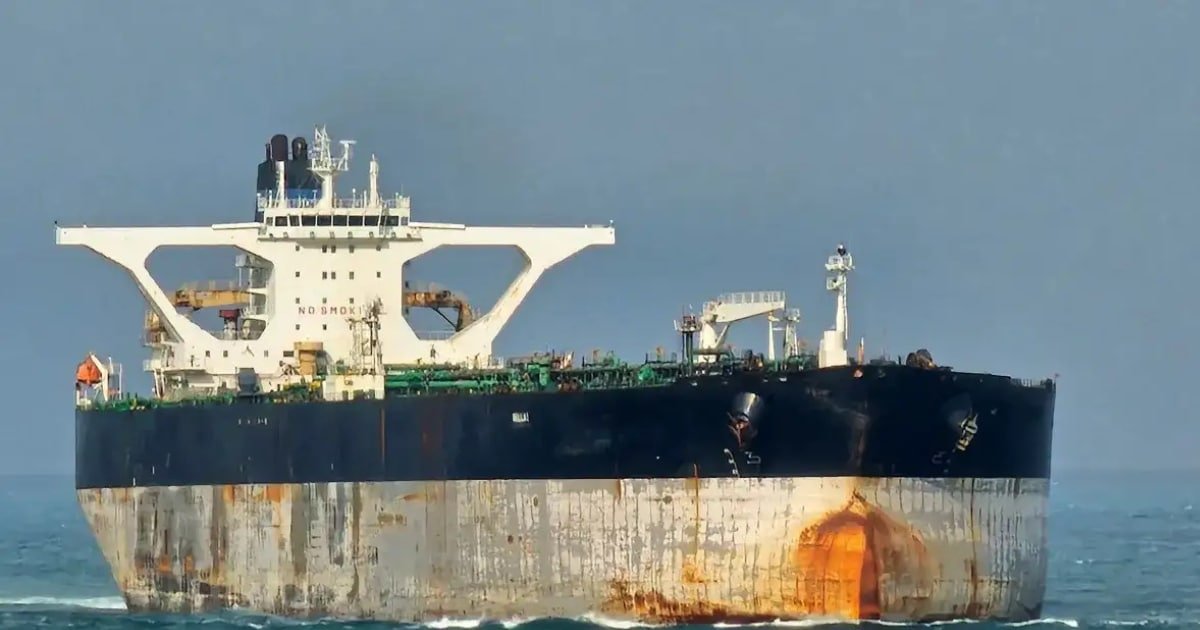





The United States government announced on Wednesday the successful seizure of two major tanker ships involved in the transport of sanctioned Venezuelan crude oil. The operations, conducted in the North Atlantic and the Caribbean, underscore a heightened enforcement phase against the “dark fleet” utilized by sanctioned regimes to bypass international trade restrictions.
US forces seized two tankers linked to Venezuela’s oil trade in co-ordinated maritime operations. In the North Atlantic, the Russian-flagged Marinera (formerly Bella I) was captured after a weeks-long pursuit, enforcing sanctions & targeting vessels evading blockades. Another… pic.twitter.com/A10tl4nXUH
— CNBC-TV18 (@CNBCTV18News) January 8, 2026
Seizure of the Marinera (formerly Bella 1)
In a coordinated operation, U.S. European Command (EUCOM) intercepted the tanker Marinera in the North Atlantic. Formerly registered as the Bella 1 under a fraudulent Guyana flag, the vessel was recently reflagged to Russia on December 31, 2024, in an apparent attempt to gain diplomatic immunity on the high seas.
U.S. authorities had been tracking the vessel for several weeks following a failed boarding attempt in December. Despite the vessel’s shift to Russian jurisdiction—a move analysts describe as a “jurisdictional challenge”—the U.S. proceeded with the seizure based on repeated violations of U.S. sanctions during its transit to Venezuela.
Interception of the Sophia
Simultaneously, U.S. Southern Command (SOUTHCOM) announced the seizure of the Panama-flagged tanker Sophia. The vessel is currently being escorted to a U.S. port by the U.S. Coast Guard.
Technical analysis and satellite imagery confirmed the following:
- Cargo: The Sophia is laden with approximately 2 million barrels of crude oil loaded at the Jose Oil Terminal in late December.
- History of Non-Compliance: The vessel has been linked to the transport of sanctioned Iranian and Russian oil to China dating back to 2021.
- Tactics: The ship is suspected of utilizing “dark ship-to-ship transfers” to offload sanctioned cargo in offshore Malaysia.
Legal Basis and Enforcement
Maritime experts indicate that the seizure of the Panama-flagged vessels (Sophia and the previously seized Centuries) likely occurred under the Salas-Becker Agreement. This 2002 bilateral treaty permits U.S. authorities to board and search Panamanian-flagged vessels with expedited notice, significantly reducing the “window of evasion” for illicit traders.
You May Like To Read: Ironclad Security: Pakistan Launches Special Unit to Guard Chinese Nationals
Strategic Implications
The reflagging of the Marinera to Russia highlights a growing trend of “dark fleet” vessels seeking protection under the flags of major world powers to raise the diplomatic stakes of enforcement. However, the U.S. remains committed to disrupting the financial lifelines of sanctioned entities.
“The identity and history of a vessel remain constant regardless of the flag it flies,” stated maritime analysts. “These seizures demonstrate that attempts to mask illicit activity through rapid reflagging will not deter U.S. enforcement of national security mandates.”