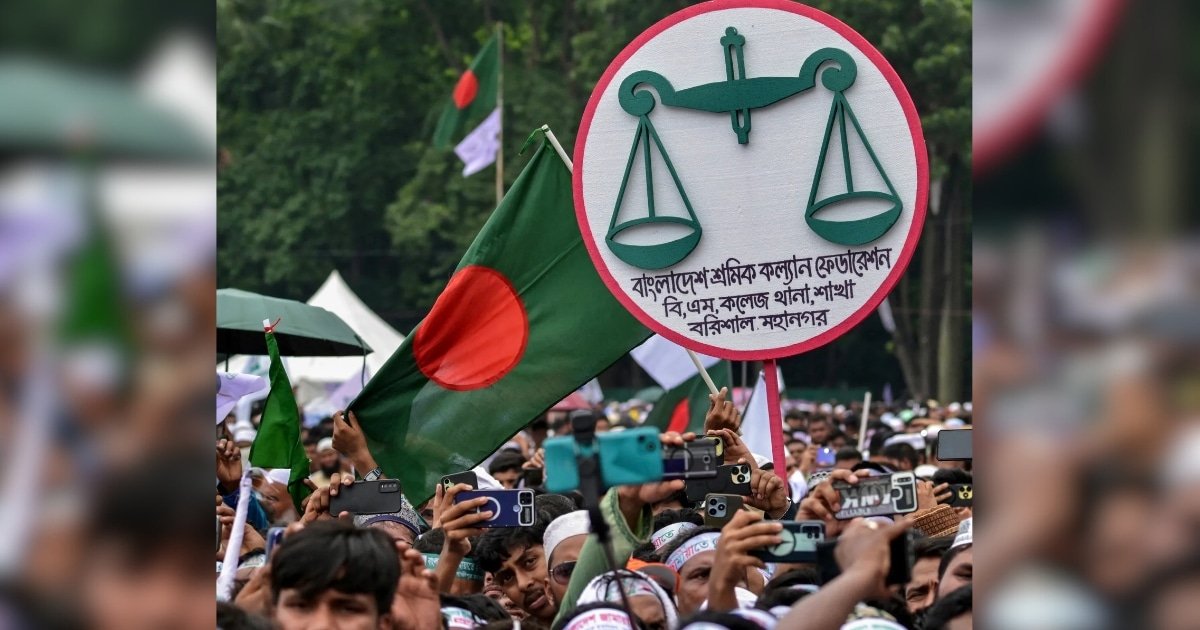




As Bangladesh prepares for its first national election since the ouster of Sheikh Hasina, the Bangladesh Jamaat-e-Islami (JI) has emerged as a central player, unsettling moderates with its rapid rise in popularity. Scheduled for February 12, 2026, the election marks a major transition under the interim government led by Nobel laureate Muhammad Yunus. A recent survey by the International Republican Institute (IRI) ranked Jamaat as the country’s most “liked” party, projecting a neck-and-neck race with the Bangladesh Nationalist Party (BNP) for the top spot.
How an Islamist party is gaining ground in Bangladesh, worrying moderates – https://t.co/Ko07OnD3Mj
— Shehzad Younis شہزاد یونس (@shehzadyounis) January 21, 2026
Jamaat is campaigning on an anti-corruption and welfare-driven platform, distancing itself from its controversial past through initiatives like medical camps and flood relief. In a move to broaden its appeal, the party has nominated its first-ever Hindu candidate and formed a strategic “Like-minded 10 Parties” alliance, which includes the National Citizen Party (NCP)—a group formed by the Gen-Z leaders of the 2024 uprising. However, concerns remain among moderates; despite inclusive rhetoric, Jamaat has not fielded a single woman among its 276 candidates, suggesting that its reform may be purely cosmetic.
You May Like To Read: NA Passes Elections Amendment Bill 2026 to Shield Lawmakers’ Assets
The election will be held alongside a referendum on the “July Charter,” a reform package aimed at restructuring state institutions. While the interim government reports that most violence against minorities in 2025 was “criminal rather than communal,” Human Rights Watch has noted a rise in rhetoric from hardline groups seeking to restrict women’s participation. As campaigning officially begins on January 22, the world is watching to see if this “rehabilitated” Jamaat can secure a leading role in Bangladesh’s new democratic order.
Check out our latest video: