Pakistan’s fight against terrorism financing has been a long and difficult journey, culminating in its significant achievement of exiting the Financial Action Task Force’s (FATF) “grey list” in October 2022. This milestone reflects years of concerted efforts to fortify its anti-money laundering (AML) and counter-financing of terrorism (CFT) frameworks.
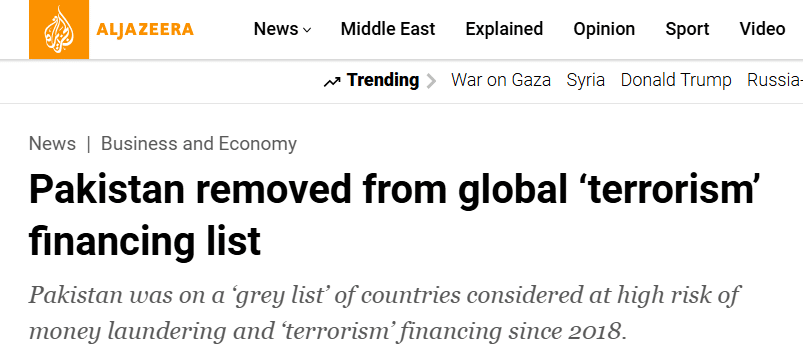
Source: Al Jazeera
However, beneath this visible progress, a persistent and complex battle continues against deeply entrenched informal channels and illicit networks that remain vital arteries for terror financing. Understanding these enduring challenges, particularly the resilience of hawala/hundi systems and the exploitation of charitable organizations, is paramount to comprehending the full scope of Pakistan’s ongoing struggle.
The Pervasive Threat of Informal Financial Systems (Hawala/Hundi)
Historically, Pakistan has contended with the widespread influence of hawala and hundi, ancient, trust-based money transfer mechanisms that operate largely outside the formal banking sector. These systems are attractive due to their speed, low cost, and the anonymity they offer, making them ideal conduits for illicit financial flows, including those intended for terrorism.
The inherent lack of digital records or traditional paper trails in hawala/hundi transactions creates substantial blind spots for law enforcement and financial intelligence units, rendering tracing and interdiction exceptionally difficult.
For a significant segment of Pakistan’s population, particularly in rural and remote areas, these informal systems serve as the most accessible and often the only means to send and receive remittances, providing a legitimate cover that can be exploited for nefarious activities. This dual nature presents a fundamental dilemma for authorities aiming to dismantle their illicit exploitation without disrupting essential financial lifelines for ordinary citizens.
The cross-border nature of hawala networks further complicates detection and disruption, necessitating extensive international cooperation and intelligence sharing, which can be a slow and challenging process. Funds derived from predicate crimes such as drug trafficking, smuggling, and extortion, unfortunately prevalent in the region, frequently flow through these informal channels, making it exceedingly difficult to differentiate legitimate financial transactions from those intended to fund terrorism.
Pakistani authorities, including the State Bank of Pakistan (SBP) and various law enforcement agencies, have acknowledged the role of hawala/hundi in terror financing. The Financial Monitoring Unit (FMU) has highlighted cases where suspicious transactions linked to hawala/hundi pointed towards potential terrorism financing and other criminal activities, leading to investigations by law enforcement agencies.
Efforts have been made to encourage the use of formal remittance channels through initiatives like the Pakistan Remittance Initiative (PRI) to curb the use of hawala/hundi by making legal channels more attractive and efficient.
The Vulnerability of Charitable Organizations
Another persistent challenge is the exploitation of charitable organizations, or Non-Profit Organizations (NPOs), for terror-financing. Pakistan possesses a strong tradition of philanthropy and charity, which includes Zakat and Sadaqah.
Regrettably, this benevolent spirit has been exploited by terrorist groups who establish front organizations or infiltrate genuine charities to raise funds under the guise of humanitarian aid or religious donations, particularly during times of natural disaster or religious observances. Despite concerted efforts to enhance the regulatory oversight of NPOs, including stricter “Know Your Customer” (KYC) protocols and risk-based monitoring, gaps in implementation persist.
The sheer number of charitable organizations, coupled with variations in their operational scale and transparency, makes comprehensive oversight a formidable task. A research paper published on ResearchGate highlights that Pakistan’s regulatory framework, despite evolving, still faces challenges in ensuring transparency and accountability in charities to prevent misuse of funds.
Furthermore, when one charitable front is exposed or sanctioned, terrorist entities are adept at rebranding or forming new organizations, constantly adapting their methods to evade detection and continue their fundraising activities. Instances of proscribed organizations attempting to collect donations have been reported by news outlets, underscoring this ongoing threat.
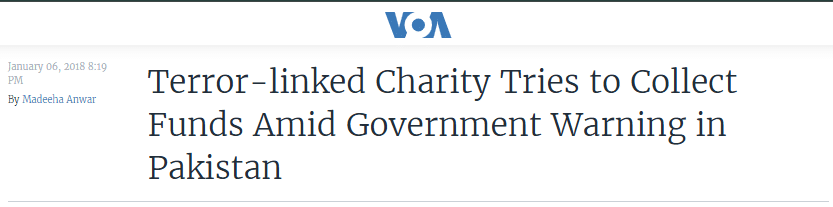
Source: Voice of America
Pakistan’s FATF Journey and Reforms
Pakistan’s journey with the FATF has been a pivotal driver for significant AML/CFT reforms. The country was placed on the FATF’s “grey list” multiple times, most recently in June 2018 due to strategic deficiencies in its AML/CFT regime.
In response, Pakistan committed to a comprehensive action plan, implementing wide-ranging legislative and administrative measures. This included substantial amendments to the Anti-Money Laundering Act, 2010, and the Anti-Terrorism Act, 1997, alongside the establishment of specialized FATF cells within key institutions to enhance coordination and data collection.
The nation also worked diligently to strengthen the implementation of United Nations Security Council Resolutions concerning the freezing of assets of designated individuals and entities, a critical component of its counter-terrorism financing efforts.
These sustained efforts culminated in Pakistan’s removal from the grey list in October 2022, a significant international recognition of its substantial progress in addressing 34 action items related to terrorism financing and money laundering.
The FATF’s own follow-up reports confirm Pakistan’s significant improvements in compliance ratings across numerous recommendations, indicating a much-strengthened AML/CFT framework.
Enduring Challenges and Future Outlook
Despite these commendable advancements, the dynamic nature of terrorism financing means that the struggle is far from over. Terrorist networks are increasingly decentralized and adapt quickly, blending traditional funding methods with emerging digital tools like cryptocurrencies and online crowdfunding, demanding constant evolution of counter-financing strategies.
Source: Reuters
While the legal and regulatory framework in Pakistan has been substantially improved, challenges persist in its consistent and effective implementation. Law enforcement agencies and the judiciary often face capacity issues, including insufficient resources, training, and specialized expertise, to investigate, prosecute, and convict complex terrorism financing cases effectively.
Research by the Global Initiative against Transnational Organized Crime highlights these very challenges, noting issues such as the modest performance of enforcement agencies and the need for improved coordination.
The prevalence of Designated Non-Financial Businesses and Professions (DNFBPs) such as real estate agents and dealers in precious metals and stones also requires sustained and enhanced oversight, an area where continuous improvement is needed. The Federal Board of Revenue (FBR) acknowledges the obligations of DNFBPs in AML/CFT efforts, emphasizing the need for robust compliance programs.
Conclusion
Pakistan’s journey to combat terrorism financing has been marked by significant progress, driven largely by the imperative of FATF compliance. However, the inherent resilience and adaptability of informal financial systems like hawala/hundi, coupled with the persistent threat of charitable organizations being exploited for illicit purposes, necessitate ongoing vigilance and robust counter-measures.
The path forward demands not just sophisticated legislative frameworks but also unwavering commitment to enforcement, continuous capacity building for relevant institutions, and enhanced domestic and international cooperation to stay ahead of evolving threats. Only through such sustained and comprehensive efforts can Pakistan truly hope to cut off the financial lifeblood of terrorism and contribute to a safer, more secure global financial landscape.