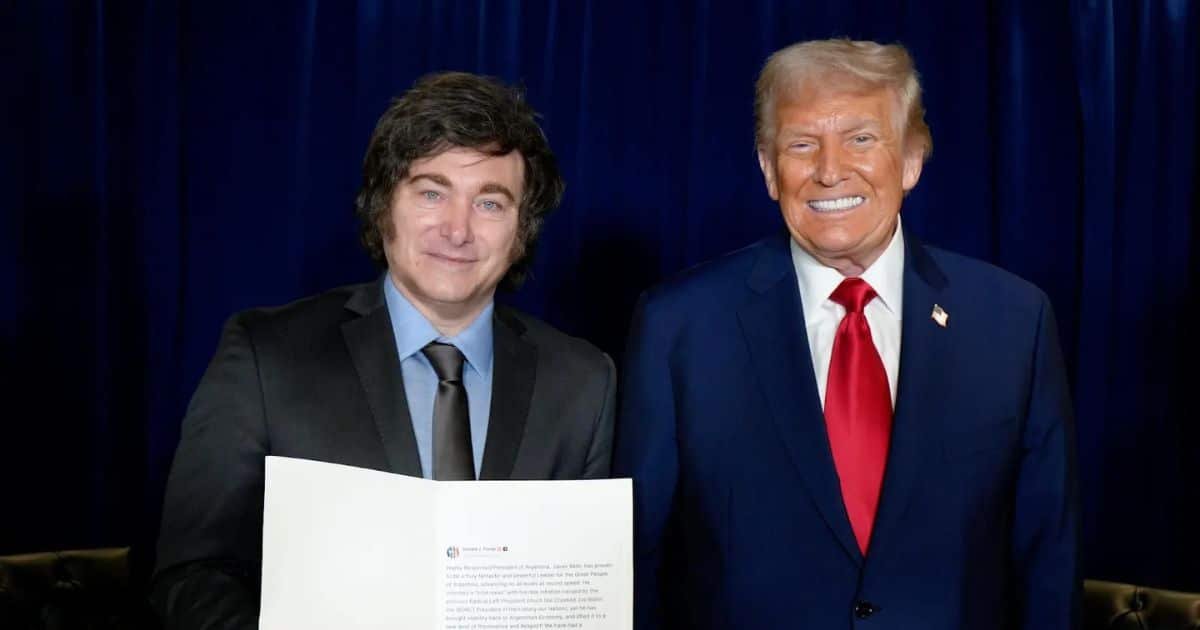



Following a pivotal meeting on the sidelines of the United Nations General Assembly (UNGA) in New York last week, US President Donald Trump offered his “full endorsement” to his Argentinian counterpart, Javier Milei, whom he described as a “truly fantastic and powerful leader.” This political support was swiftly followed by a pledge of major financial assistance from the US Treasury.
The day after the presidential meeting, US Treasury Secretary Scott Bessent confirmed that he was “working in close coordination” with President Milei and vowed that the US would “do what is necessary” to support Argentina’s economy.
Economic Turmoil Fuels Need for Intervention
This commitment from Washington arrives as Argentina faces renewed economic instability. Last week, Argentine bond prices plunged sharply as investors watched the country’s central bank rapidly burn through its scant foreign currency reserves in an attempt to defend the falling peso.
The situation worsened this week when the currency fell by more than 6 percent in a single day, its biggest drop since September 8. This collapse forced the government to sell yet more dollars in the spot market to shore the peso back up. The central bank is attempting to keep the peso below a currency ceiling to prevent inflation from soaring again, but it reportedly does not have the financial ammunition to keep up its support of the peso for long, especially with $10 billion in debt payments due to the IMF in the first half of 2026.
You May Like To Read: Munich Airport Operations Halted Due to Drone Sightings
Milei’s Shock Therapy and Political Setbacks
A maverick outsider, President Milei secured a surprise election win in 2023 by promising a dose of painful shock therapy—namely by slashing state spending to curb fiscal imbalances and tame inflation. Since taking office, Milei reduced state subsidies for fuel, cut public payrolls, and reduced the number of government ministries by half.
The upshot of these measures is that headline inflation fell dramatically from 211 percent when Milei assumed office to 37 percent last month. However, economic activity stalled, dragged down by higher interest rates and other growth-zapping policies. Stagnating wages and rising unemployment have since disillusioned some voters, and the president has suffered several political setbacks, including a defeat in provincial elections and losses in Congress.
Washington Offers a Financial Lifeline
US Treasury Secretary Bessent has promised a “large” intervention to help stabilise Argentina’s wobbling currency. The US Treasury is actively considering options to assist Buenos Aires, including:
- Advancing a $20 billion credit line, or loan.
- Buying Argentine government bonds.
- Central bank currency swaps and buying up dollar-denominated debt.
The stated aim is to provide Milei with some breathing room before the mid-term elections in October. In a post on X, President Milei thanked both Bessent and Trump for their “unconditional support.”
Since taking office, President Trump has slashed U.S. foreign aid programs and slow-walked military assistance for Ukraine.
But the administration is giving a $20 billion financial lifeline to Argentina. https://t.co/bpg1DvPYfP
— The Washington Post (@washingtonpost) September 29, 2025
Market Response and Expert Outlook
Financial markets were initially buoyed by Bessent’s comments, with Argentinian bonds due in 2029 increasing in value and the peso initially up by roughly 4 percent. This move was said to have “strengthened the central bank’s international reserve position, giving it more room for manoeuvre in foreign exchange markets.”
However, the recent 6 percent drop in the peso on Tuesday, which closed 1.4 percent lower at 1,380 pesos per dollar after government intervention, underscores the underlying instability.
According to Andres Abadia, chief Latin America economist at Pantheon Macroeconomics, the US financial support has “bought some time for Milei. It’s a lifeline, but not a panacea.” Abadia suggests the aid looks set to merely postpone a devaluation until after the mid-term elections. He cautioned that “inflation risks are on the upside,” and if Milei performs poorly in October, “the negative political and financial noise would rush back.”
You May Like To Read: Pahalgam Attack and Indus Water Treaty Fallout- Legal and Political Implications