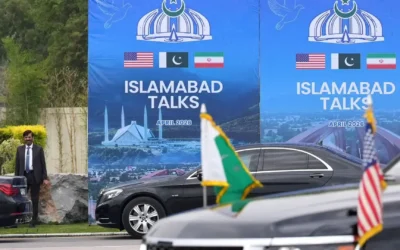
The attack on Pahalgam
An April 22, 2025, terrorist attack in the Indian-administered illegally occupied Kashmir tourist town of Pahalgam struck at a convoy of Hindu pilgrims on their way to the Amarnath shrine, one of the most holy places of worship of the Hindu religion, where 13 persons were killed and more than 30 others injured, including the security men accompanying the convoy. India accused that the attack had been masterminded by the Pakistan-based militant group, Lashkar-e-Taiba (LeT). But no group had claimed responsibility.
Diplomatic Repercussions and Worsening Tensions
The ties between India and Pakistan soon worsened after the Pahalgam attack. Less than a day after the attack, Indian leaders, the Prime Minister and Home Minister, publicly accused Pakistan-based militant groups of conducting the attackers. This resulted in the instant increase of political pressure in India to take decisive action.
With each passing day, the rhetoric got more and more ferocious. The Indian media and political leaders asked for unilateral withdrawal from the Indus Waters Treaty (IWT) and severing of diplomatic ties, alleging that Pakistan was repeatedly involved in sponsoring cross-border terrorism. Politicians and analysts in Pakistan have criticized India for using the attack to distract attention away from the internal unrest in Kashmir and increasing communal tensions.
Early in May, India’s National Security Advisor (NSA) alluded to taking up non-military punitive options, such as economic and water-related options. This statement was taken by many to mean that India may attempt to leverage water, and increase the fear of collapsing the Indus Water Treaty.
The Crosshairs of the Indus Water Treaty
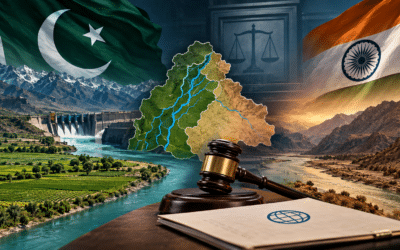
Not only did the Pahalgam attack exacerbate political relations between India and Pakistan, but it also reintroduced the Indus Waters Treaty (IWT) back into the limelight. The Indus Waters Treaty is a water sharing treaty signed in 1960 with the assistance of the World Bank, whereby India was granted control of the three eastern streams (Ravi, Beas, and Sutlej) and Pakistan three western streams (Indus, Jhelum, and Chenab). The treaty has endured various wars and conflicts between the two nations and is, most of the time, regarded as one of the only functioning agreements between the two countries.
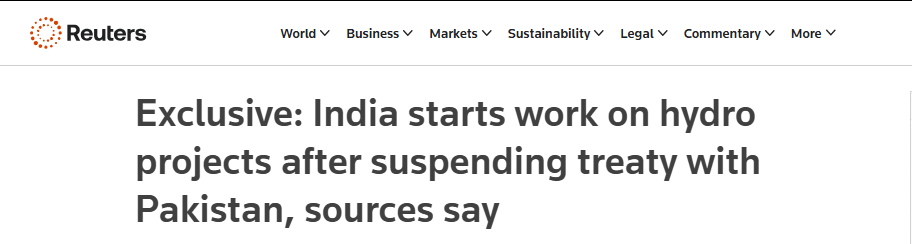
Nonetheless, the government of India sources announced in May 2025 that a high-level committee under the Ministry of Jal Shakti had commenced the examination of the terms of the treaty. India was also said to be fast-tracking the construction of hydropower on rivers that passed into Pakistan, and particularly the Chenab and Jhelum rivers.
Source: Reuters
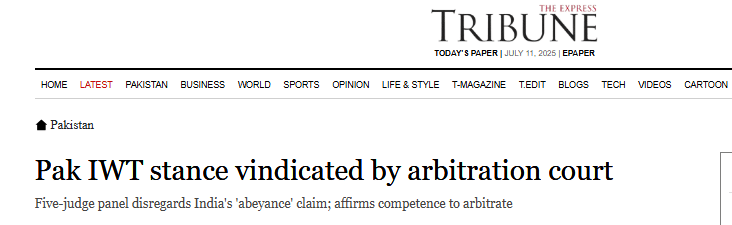
June 14, 2025, Pakistan officially complained to the World Bank that India had acted against the spirit of the treaty. It also warned that it would take the case to the International Court of Justice (ICJ) in the event of any unilateral changes in the flow of water by India.
Source: Tribune
India, however, claimed that since the cross-border attacks have not yet ceased, it is a material breach of peace and thus justification to review the treaty. Nonetheless, legal analysts indicated that the treaty lacks an exit clause, and international law is very much against the withdrawal of any treaty without mutual agreement.
Legal Implications: Treaty Law and International Dispute Mechanisms
The escalating Indo-Pak tension on the Indus Waters Treaty (IWT) following the Pahalgam attack has brought up pertinent legal issues. Is it legal for India to withdraw or suspend the treaty? And what are Pakistan’s options in international law?
To begin with, it is necessary to realize that it possesses no exit clause, which implies that India and Pakistan cannot unilaterally withdraw from it. Changes to the treaty should be made together.
India has also hinted at using Article 60 of the Vienna Convention on the Law of Treaties (1969), which provides that nations can suspend or end treaties in case of a breach of the treaty by the other party. According to Indian lawyers, the support of terrorism by Pakistan may be such a violation. This is, however, legally weak in that:
The IWT does not have anything to do with peace or terrorism, but water sharing.
The other important legal doctrine in action is pacta sunt servanda, which is a principle of international law and translates to the meaning that agreements must be fulfilled. This is a rule provided in Article 26 of the Vienna Convention, which requires every nation to observe its commitments under the treaty in good faith. Any act by India of violating or withdrawing the IWT without any mutual consent would be contrary to this norm of international law. This principle also makes the legal grounds of Pakistan stronger in case the matter goes to international courts.
Both nations have, over the recent years, been in legal tussles over Indian hydropower schemes on rivers allotted to Pakistan in the treaty. In 2023-2024, a neutral expert named by the World Bank decided that India needed to implement some modifications to its schemes on the Kishanganga and Ratle dams, which India accepted partly reluctantly.
In the meantime, India can employ legal delaying tactics or claim that what it is doing is within the confines of the treaty. Other Indian legal professionals also feel that the role of the World Bank is now limited, and bilateral negotiations no longer work; this gives India the room to move more on its own.
Political and Strategic Calculations
In addition to the legal reasons, the attack on Pahalgam has taken India and Pakistan to a new stage of the political and strategic conflict, particularly concerning the water issue. The Indus Waters Treaty is no longer seen as a tool of a technical agreement by both countries, but as an instrument of pressure and signaling.
In India, the Bharatiya Janata Party (BJP) has been under pressure to react forcefully. Ahead of elections, there is a growth in demand for tough action against Pakistan. Some political leaders believe that reviewing or restricting the treaty, even symbolically, is one of the methods to demonstrate power without directly engaging in military conflicts. The theory is that by threatening to cut off the water supply to Pakistan, India can get revenge on it without involving itself in an outright war.
In the case of Pakistan, much more is at stake. Being a lower riparian state, it is highly dependent on the Indus River system to carry out agriculture, drinking water, and power generation. Any variation in the flow of a river, however minute, may damage millions of people and may cause economic and social instabilities. That is why Pakistan considers the treaty a matter of national security rather than a water-sharing problem.
Regional and Global Implications
The increasing tension in the Indus Waters Treaty after the Pahalgam attack is not only a bilateral problem, but it is a regional and global one. In case the treaty breaks or becomes diluted, it will pose a dangerous precedent in the manner in which the shared natural resources are exploited as a political tool.
The failure of the IWT would be a huge blow to the countries within South Asia, and more so to those countries with transboundary rivers. This would put in question the water-sharing agreements in Bangladesh, Nepal, and China, all of which rely on trust and cooperation. To illustrate, the upper riparian of the Brahmaputra, China, already has its tensions with India, and the collapse of the IWT can stimulate a more forceful strategy on water diplomacy in the region.
On the international scale, the World Bank, which was instrumental in the negotiation of the treaty, is under pressure to avoid its failure. The credibility of the World Bank as a neutral facilitator may be harmed in case India unilaterally amends the treaty or water flows. The international legal organizations and the UN would be put under pressure to intervene, in case Pakistan takes the matter to the International Court of Justice or the UN General Assembly.
As a humanitarian issue, any interruption of the water supply in Pakistan may have disastrous effects. Pakistan is already a water-stressed state, and any reduction or cut in the Indus flows can impact agriculture, food security, and clean water availability of millions of people. This would raise the pressure of migration, social unrest, and instability, adding more problems to regional peace initiatives.
Conclusion
The Pahalgam attack has once more escalated the tensions between India and Pakistan and transformed a sad security event into a larger political and legal one. The centerpiece of this fallout is the Indus Waters Treaty that is now being challenged as a means of leverage, instead of a means of cooperation. The efforts made by India to relate cross-border terrorism with treaty commitments are a threat to the main principle of international law, pacta sunt servanda, which requires that agreements must be fulfilled in good faith. In the case of Pakistan, any interference with water flow would mean grave dangers to its agriculture, economy, and the good of the people. The scenario shows a hazardous movement of natural resource manipulation as a tool of hybrid warfare. Otherwise, without being treated with moderation and tact, it may destabilize the whole region. There is an urgent need to stop the development of this crisis and to safeguard one of the most important peace-building agreements in South Asia.