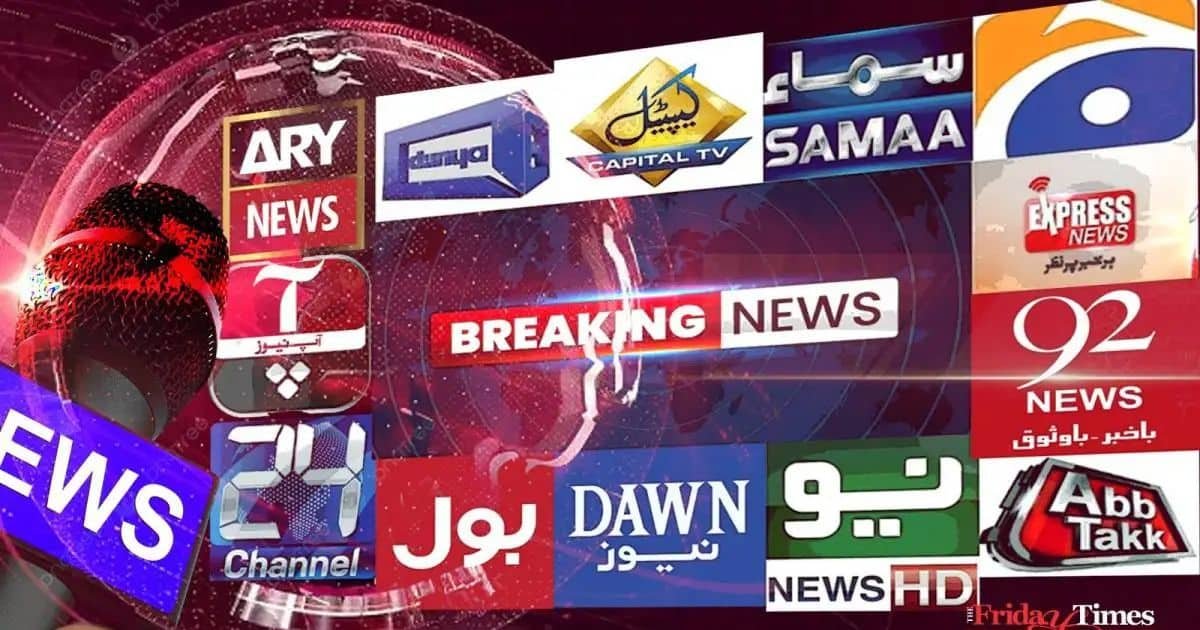





When the news becomes a commodity, the truth becomes a luxury. In the race for ratings, Pakistani media is winning the battle for eyeballs but losing the war for the nation’s trust. The race for Television Rating Point, abbreviated as TRP, has overwhelmed the mainstream media nationally, and even internationally. The adverse impact of this rat-race is felt the most in Pakistan where the news channels are seen prioritizing sensationalist news, and debates.
The issue here is not only about the TRP, of course privately owned media houses, or news channels are not going to ignore ratings—as they are streams of maximizing profits, and generating revenue—and it is understandable. However, relentless prioritizing of TRP, and the deliberate dissemination of sensationalist news, at the cost of real and authentic issues, that warrant national attention, harm the country’s socio-political fabric.
Contextualizing this debate in Pakistan, reveals there are two kinds of media i.e., state-controlled media, which includes channels like PTV, and hyper-competitive privately owned media. The former under performs, in various ways, whereas, the latter is running an endless marathon competing with their counterparts. As said earlier, we do not have a problem with media working for TRP, but the media has certain social, and moral obligations which they ought to fulfil. Nevertheless, these obligations remain neglected, which in turn creates a vicious cycle of weaponizing the audience’s base instinct, and profiting off of it.
Now there are two aspects of this debate, or discussion: first, the factors compelling media to prefer TRP; second, the perils of being exposed to the sensationalist news-loop.
Commercialization of Fear
In Pakistan the media, particularly, the privately owned news channels depend on commercials, and advertisements for revenue generation. Unlike the West, or even Middle East where the most popular, or watched news channels are public funded, or state-funded such as BBC, and Al-Jazeera respectively. Therefore, understandably the revenue model, or business model of the privately-owned news-channels compel them to prioritize sensationalist news, and win every minute of viewership to survive.
Unfortunately, and alarmingly the media in the race for ratings ignores the issues that need to be highlighted—which in fact, is their inherent duty, and obligation. The neglection of fundamental issues like education, healthcare, economy, and governance aggravates the plight of the already suffering-public. In Pakistan’s realm advertisements, and commercials drive media channels, sensationalist-news bring viewers; whereas, reflection and debates on important issues bring nothing. Evidently, the media therefore, goes after the means that keep them up, and running—reflecting marketing driven journalism.
You May Like To Read: The Digital Battlefield: PTI’s Social Media Onslaught on Pakistan’s Institutions
The “Breaking News” Culture
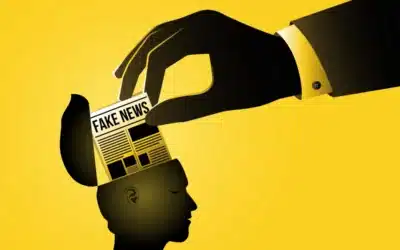
Another problem with the media, especially of Pakistan, is the, “Breaking News Culture.” Research has shown the ticker culture has forced the media into the loop of speed over substance. The news channels are therefore, in an unending race of reporting—rumours, and unverified reports as facts—first, only to issue quiet retractions later. The news-channels are obsessed to be the first ones to break any news. Regardless of the fact, such reporting compromises their credibility, and projects negatively on the audiences. It goes without saying the audiences, and viewers consuming such news—sensationalized, and unverified—unknowingly suffer as they start believing information which in reality is misinformation.
Furthermore, political saturation is another dominant problem in this realm. A report, issued by Pakistan Electronic Media Regulatory Authority (PEMRA) in 2021, revealed, that 58% of the talk shows focus on political bickering.
It would not be wrong to say that our mainstream media is obsessed with sensationalized and juicy political discussion. Evidently, any talk-show aired from 09:00PM to 11:00PM only talks about such issues involving controversial political figures, and their baseless political-statements. Contemporaneously, the talk-shows aired in this time-frame only talk about Imran Khan, PTI, the sit-in outside Adiala Jail, derogatory statements issued by political leaders, and party spoke-persons. You may even see these political representatives engaged in absurd discussions hinging on accusations, personal attacks, and even fighting. Thus, talk-shows become, Manufacturers of Outrage, since they raise topics not to solve the problem, but to ensure both sides remain angry enough to keep watching.
The anchors, guests, and even the audiences know these discussions are useless since the guests/speakers have drifted off the actual important topic. The entire discourse thus, becomes a source of amusement; the clips from the said talk-shows, are often seen circulating on social media as memes. Nobody takes them seriously.
Then the question arises: If such discussions are so futile what is the point of having them? Well, the answer is simple, these shows, and potentially viral clips, bring in views and higher ratings. If two or more guests/speakers are fighting, verbally or physically, the TRP skyrockets, which means more money.
The discourse deteriorates, but it is not a problem, since it is inversely proportional to the revenue being generated, from such shows. Correspondingly, critical sectors like education, climate change, or the economy are ignored, unless they can be framed as a political scandal.
Another important question arises, who suffers in this echo chamber of sensational news, and race for ratings? Us, the people watching them, giving them views for airing such absurdity day and night, throughout the year. The harmful impacts of consuming such information are implicit, yet devastating in nature.
The “If it Bleeds, it Leads” Maxim
The prioritizing of sensationalism over substance is best summarized by the journalistic maxim: “If it bleeds, it leads.” Originally used to describe the tendency of news editors to lead with stories of tragedy, in the Pakistani context, this has evolved into a “Conflict-First” model. Content that triggers the brain’s fear and threat center is guaranteed to hold attention longer than a dry report on policy or development. This is why a shouting match between two political representatives is given hours of prime-time coverage, while a devastating heatwave or a collapse in the literacy rate is relegated to a thirty-second ticker. Evidently, the media chooses the “bleeding” story not because it is important, but because it is profitable.
Mean World Syndrome: Perception vs. Reality
The relentless diet of such “bleeding” news leads to a phenomenon known as Mean World Syndrome. This theory suggests that people who consume high amounts of conflict-driven media begin to perceive the world as far more dangerous than it actually is.
In Pakistan, this manifests as a chronic state of national anxiety. When the 09:00 PM bulletins suggest the country is perpetually on the verge of a total meltdown, the viewer’s internal risk calculator becomes distorted. According to a Gallup Pakistan report (2023), this constant exposure has contributed to a significant “Trust Gap,” where public confidence in media integrity has declined by 15% since 2010. We are not just being informed; we are being conditioned to live in a state of hyper-vigilance. As the media wins the battle for eyeballs, the public loses its sense of security, believing the “mean world” on the screen is the only reality that exists.
The Influx of Misinformation: Repetition as Reality
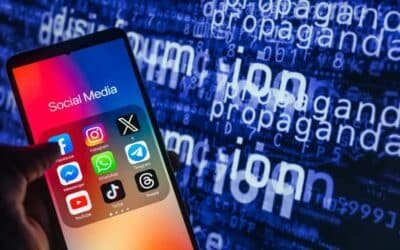
The “Breaking News” Culture doesn’t just exhaust the viewer; it actively misinforms them through the sheer volume of repetitive content. Recent data from the Institute for Strategic Studies (ISSRA) reveals an “Analytical Index” where roughly 40% of news bulletins are now composed of opinion or analysis rather than factual reporting. When the same unverified rumor or sensationalist take is repeated across various platforms, it triggers two devastating psychological traps:
The Illusory Truth Effect
Our brains are wired to mistake familiarity for accuracy. When a viewer hears a “breaking” rumor on one channel and sees it repeated on social media, they begin to believe it is true simply because they have encountered it multiple times. This “processing fluency” wears down skepticism, making the truth a secondary concern to the feeling of familiarity.
The Illusory Consensus Effect
Seeing multiple guests or channels shouting the same accusation creates a false sense of universal agreement. This “Illusory Consensus” tricks the audience into thinking there is a broad national agreement on a lie, further isolating those who try to look for objective facts.
Conclusion
The tragedy of the TRP race is that it treats the Pakistani citizen as a mere data point in a revenue spreadsheet rather than an individual in need of guidance. We have allowed our screens to become “Manufacturers of Outrage,” where the deterioration of public discourse is seen as a necessary cost of business.
While it is understandable that media houses must remain profitable, the cost of this profit is being paid in the currency of our national mental health and social cohesion. To break this vicious cycle, the media must return to its fundamental obligation: being a mirror that reflects the country’s real challenges, not just its loudest voices. If we continue to win the battle for eyeballs while losing the war for truth, we may soon find ourselves in a society that knows everything about a political scandal, but nothing about how to build a future.
You May Like To Read: The AI Divide: Why Artificial Intelligence May Widen the Global Inequality Gap
Check out our latest video: