




Preamble: Propaganda in the Age of Fifth-Generation Warfare
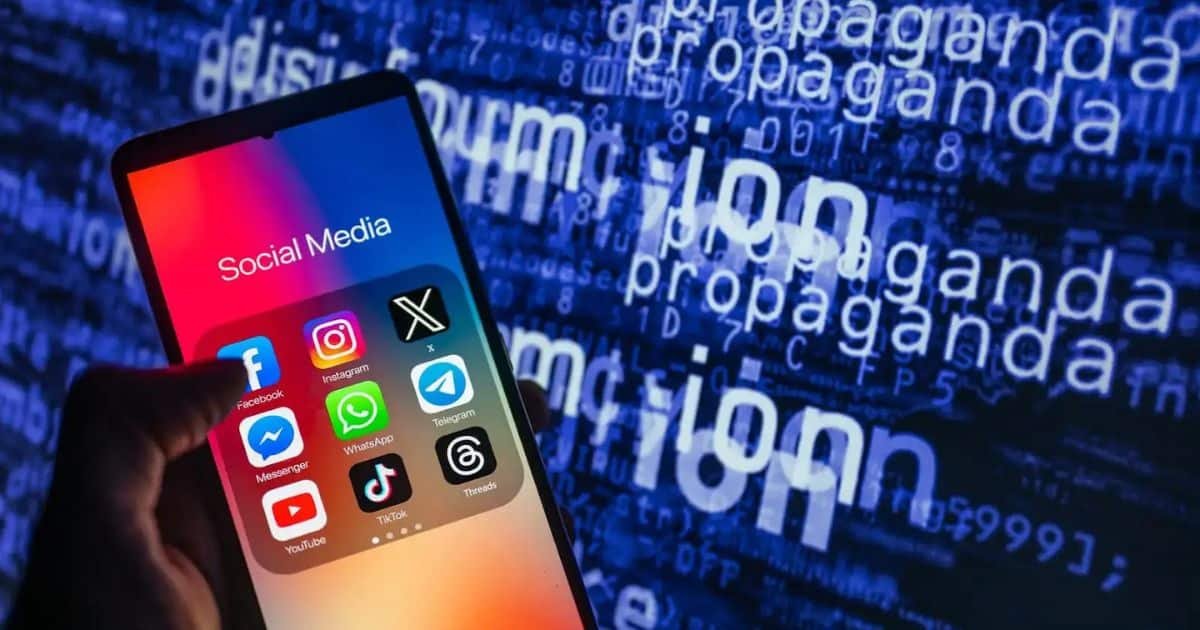
In an era where information is the ultimate weapon, social media has transformed from a platform for connection into a theater of psychological operations. As discussed in broader contexts of fifth-generation warfare—characterized by non-kinetic battles for hearts and minds—propaganda campaigns exploit algorithms, echo chambers, and viral outrage to erode trust in institutions. State and non-state actors alike weaponize these tools to polarize societies, delegitimize leaders, and achieve strategic goals without firing a shot. In Pakistan, this dynamic plays out acutely through the Pakistan Tehreek-e-Insaf (PTI), led by imprisoned former Prime Minister Imran Khan. What began as a populist movement promising “Naya Pakistan” (New Pakistan) has devolved into a relentless digital assault on the judiciary, armed forces, and critical voices, often cloaked in the rhetoric of public welfare and anti-corruption. This orchestrated narrative not only undermines national cohesion but also aligns with external adversaries’ interests, turning domestic dissent into a vector for instability.
Pakistan’s Fractured Digital Landscape: PTI’s Rise and Radicalization
Pakistan’s social media ecosystem, with over 70 million users on platforms like X (formerly Twitter), Facebook, and TikTok, is a fertile ground for influence operations. PTI, once lauded for its innovative 2018 election campaign that mobilized youth through digital savvy, has since pivoted to a more aggressive posture following Khan’s ouster in April 2022 via a no-confidence vote. Blaming a “military establishment conspiracy,” PTI’s narrative frames all opposition as puppets of an authoritarian regime, justifying attacks on state pillars as “accountability” for the masses. This shift intensified after the May 9, 2023, protests—sparked by Khan’s arrest—where PTI supporters vandalized military installations, leading to a nationwide crackdown. PTI’s response? A flood of online content portraying the armed forces not as national defenders but as oppressors, while decrying crackdowns as “fascism under Asim Law”—a derogatory reference to Army Chief General Asim Munir.
The party’s social media apparatus, once credited with electoral innovation, now operates like a troll farm. Investigations reveal PTI-linked accounts, including the official @PTIofficial handle, posting daily threads accusing the military of torture, arbitrary detention, and constitutional subversion—often laced with UN and Amnesty International citations for legitimacy. These posts, garnering thousands of engagements, blend factual grievances (like Khan’s incarceration conditions) with inflammatory rhetoric, such as labeling Munir “the most tyrannical dictator in history” and “mentally unstable.” By November 2025, PTI’s daily “arbitrary detention” updates had become a ritual, amplifying claims of solitary confinement and denied medical aid to portray the state as a “military dictatorship.” Critics argue this isn’t mere venting but a deliberate erosion of institutional legitimacy, echoing Russia’s Gerasimov Doctrine where information warfare precedes physical conflict.
Exemplars of Maligning: From Army Chiefs to the Judiciary
PTI’s campaign spares no pillar of the state, yet always under the banner of defending the public.
The Pakistan Armed Forces, particularly their leadership, have faced the most sustained vilification. Since General Asim Munir’s appointment in 2022, he has been personally demonized: official PTI posts openly declare that “if anything happens to me in jail, General Asim Munir will be responsible,” implying state-sponsored assassination plots. Under his predecessor General Qamar Javed Bajwa, PTI’s social media head was arrested for running a systematic vilification campaign using hundreds of fake accounts that portrayed the army chief as corrupt and power-hungry. In 2022 alone, at least eight PTI activists were detained for similar anti-Bajwa content. The passage of the 27th Constitutional Amendment in 2025, which granted serving officers certain legal protections, was spun as the “butchering of the Constitution” to entrench a “totalitarian rule.” These narratives, amplified millions of times, have at times suspiciously overlapped with Indian social-media accounts—an overlap that Defence Minister Khawaja Asif in 2022 called a “joint project” between PTI and hostile foreign handles.
Emerging evidence points to deeper foreign involvement in PTI’s digital operations, with multiple probes uncovering accounts linked to the party being run from India and Afghanistan. In 2021, National Security Adviser Moeed Yusuf publicly stated that social media handles maligning Pakistan’s institutions were operated from these countries, often in coordination with state-linked entities to push anti-Pakistan trends like “#SanctionPakistan.” More recently, in November 2025, Information Minister Attaullah Tarar accused a PTI female politician of leveraging anti-Pakistan accounts based in Afghanistan and Indian media reports to fuel global smear campaigns against the state. X’s new location transparency feature, rolled out in 2025, further exposed this: PTI’s official account was flagged as operated from the United States by overseas workers, while affiliated handles showed origins in India and Afghanistan, vanishing or altering profiles post-exposure. A 2022 FIA inquiry traced over 17 of 774 analyzed accounts to Indian operators, many amplifying PTI’s anti-military rhetoric. Leaked communications from PTI spokesperson Raoof Hasan in 2022 revealed WhatsApp exchanges with Indian journalist Karan Thapar—allegedly a RAW conduit—sharing sensitive info that aided anti-Pakistan narratives, including critiques of General Munir. These ties suggest not just opportunistic alignment but orchestrated support, with Pakistani officials estimating Indian funding funneled through Afghan proxies to PTI-linked troll farms, blending domestic dissent with external hybrid warfare.
The Supreme Court has fared little better. After unfavorable rulings—most notably on reserved seats and the legality of certain constitutional amendments—PTI leaders accused sitting judges of selling their souls to the military establishment. Senior party figures like Barrister Latif Khosa declared that the newly constituted Constitutional Bench “has not given a single decision in public interest” and exists only to “reverse Supreme Court verdicts” and erase PTI from electoral politics. When Justices Mansoor Ali Shah and Athar Minallah resigned in protest against the 27th Amendment in November 2025, PTI instantly weaponized their resignation letters as definitive proof of judicial subjugation, while conveniently ignoring that the same judges had earlier delivered verdicts in PTI’s favor. The net effect is a judiciary painted as either cowardly or complicit—never independent.
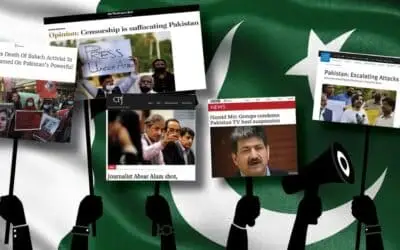
Journalists who dare criticize Imran Khan or question PTI’s narrative have faced orchestrated digital lynching and, at times, physical violence. During Khan’s premiership, reporters such as Asma Shirazi were subjected to vulgar, coordinated attacks by PTI’s official Twitter cell after writing critical BBC columns. Veteran anchors Hamid Mir, Saleem Safi, and Talat Hussain were either removed from air or threatened for pointing out governance failures. After 2022, the pattern only worsened: any media figure perceived as “anti-PTI” is swarmed by troll armies, doxxed, and branded a “lifafa journalist” (envelope journalist). In September 2025, a journalist was physically assaulted by PTI workers outside Adiala Jail merely for asking Aleema Khan about family properties in the United States. Reporters Without Borders had already designated Imran Khan a “press freedom predator” in 2021—a label that PTI supporters dismiss as part of the same establishment conspiracy.
The Veneer of Public Welfare: Accountability or Anarchy?
PTI masterfully disguises malice as benevolence. Every attack post is wrapped in the language of “public interest,” “true freedom,” and “saving democracy.” Daily threads quote UN Working Group reports or Amnesty statements about Khan’s detention conditions, then pivot to demanding the army chief’s trial for treason. Smuggled messages from Khan—“I will not compromise on principles”—are presented as noble stands for the people, even as they incite further unrest. The May 9 riots, in which military installations were torched, are still justified by PTI as a “spontaneous public reaction” to stolen mandate, never as the orchestrated violence that courts and inquiries have documented.
Conclusion: A Call for Digital Resilience
PTI’s campaign exemplifies how fifth-generation warfare thrives on deception, turning social media into a tool for institutional sabotage. While genuine grievances warrant dialogue, this orchestrated malice—targeting the military, judiciary, and press—threatens Pakistan’s fragile democracy. Platforms must curb coordinated disinformation, and PTI reflect on whether “public welfare” justifies anarchy. As Pakistan navigates economic woes and security threats, reclaiming the narrative from propagandists is imperative. True reform demands unity, not division; accountability, not vendettas. Only then can the digital battlefield yield to democratic progress.
You May Like To Read: Cybercrime as Proxy Warfare: How States Blur the Line Between Criminality and Statecraft
Check out our latest video: