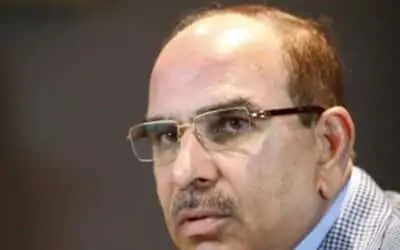



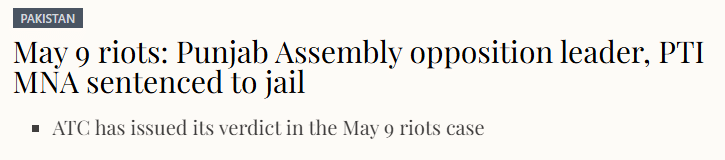
In a significant development reshaping Pakistan’s political landscape, an Anti-Terrorism Court (ATC) in Sargodha has sentenced Malik Ahmed Khan Bhachar, the Leader of the Opposition in the Punjab Assembly and a Member of the National Assembly (MNA) from the Pakistan Tehreek-e-Insaf (PTI) party, to 10 years imprisonment.
The verdict, announced on Tuesday, July 22, 2025, also saw fellow PTI MNA Ahmed Chattha and a substantial number of other party workers receive similar 10-year jail terms for their alleged involvement in the violent protests that swept the country on May 9, 2023
Source: Business Recorder
The Context of May 9th: A Day of Unrest
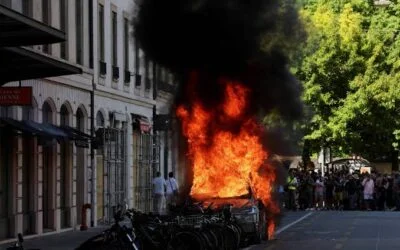
The convictions stem from the tumultuous events of May 9, 2023, a day marked by widespread unrest and vandalism across Pakistan. The riots erupted spontaneously following the arrest of the PTI founder and former Prime Minister, sparking nationwide protests that quickly spiraled into clashes with law enforcement and targeted attacks on public property and state institutions.
Military installations, including the Jinnah House in Lahore, a symbol of national heritage, were among the sites subjected to arson and damage, leading to widespread condemnation and a severe crackdown on PTI leadership and supporters.
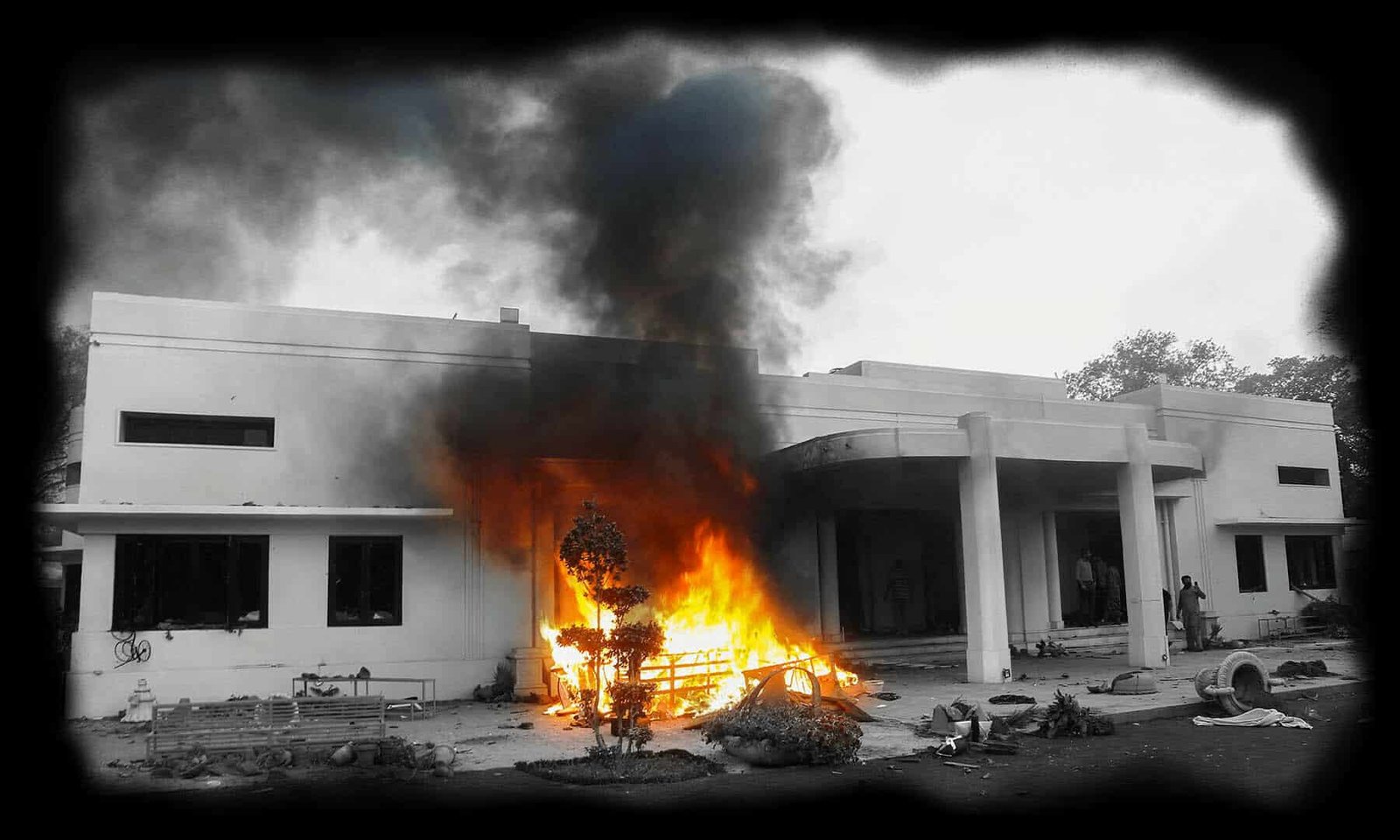
Source: Dawn | Jinnah House, Lahore.
The government and military establishment swiftly condemned the events, labeling them acts of “terrorism” and an assault on the state’s very foundation. Subsequently, thousands of PTI workers and leaders were arrested, with hundreds facing trials in anti-terrorism courts and military courts, initiating a prolonged period of political and legal turmoil for the party.
Source: Dawn
The Verdict: Accountability in the Anti-Terrorism Court
The latest verdict from the Sargodha ATC is one of several rulings delivered in connection with the May 9th cases. Judge Muhammad Naeem Sheikh of the Sargodha ATC delivered the judgment, finding Malik Ahmed Khan Bhachar, along with 32 other PTI workers, guilty of participating in the unrest that specifically targeted state institutions and public property in Mianwali. Another provincial lawmaker of PTI, Ahmed Chattha, was also among those who received a 10-year jail sentence.
The specific charges included sabotage activities, making inflammatory speeches that incited violence, and acts of arson, such as at the Sherpao Bridge. Notably, none of the convicted leaders or accused individuals were present in court when the verdict was announced, as many had previously been exempted from personal appearance by the court during the ongoing jail trial.
The sentences reflect the severity with which the state has pursued accountability for the May 9th incidents, framing them as acts of terrorism and sedition.
Political Implications and Future Playout
The sentencing of Malik Ahmed Khan Bhachar, a prominent opposition figure and the parliamentary leader of PTI in Punjab, along with dozens of other workers, carries profound implications for Pakistan’s political landscape and the future of PTI.
Impact on PTI
The verdict further weakens PTI, which has been facing setbacks since May 9, 2023. Many of its top leaders have been incarcerated, gone underground, or left the party.
The sentencing of an opposition leader currently holding office signals the state’s resolve to pursue legal action against those deemed responsible for the events of that day, regardless of their political standing.
This could lead to further demoralization within the party ranks, making it harder for PTI to mobilize and effectively function as a cohesive political force. It also raises questions about the party’s ability to maintain its parliamentary presence and leadership amidst ongoing legal challenges.
Challenges and Recourse
The convicted individuals are expected to appeal the Sargodha ATC’s verdict in higher courts. The legal battle is far from over, and the appeals process could be protracted. However, with the current political climate, the pathway to overturning these convictions may be challenging.
The focus will now shift to the appellate courts to see if these sentences are upheld, reduced, or overturned, which will further shape the political and legal trajectories of the individuals and the party involved.
Conclusion
The sentencing in the May 9th case represents a critical juncture in Pakistan’s ongoing political crisis. It underscores the state’s firm stance against acts of violence targeting national institutions, while simultaneously highlighting the intense pressures faced by opposition political parties.
As legal battles continue and political tensions remain high, the long-term implications for Pakistan’s democratic future, the right to protest, and the balance of power between state institutions and political actors will continue to unfold.
The judgments delivered by the ATC on this day will undoubtedly be a key reference point in the country’s recent judicial-political history, influencing how political grievances are expressed and addressed in the years to come.