


A United Nations Security Council (UNSC) debate on the protection of civilians became the stage for a heated exchange between Pakistan and India, with both nations leveling serious accusations against each other.
The confrontation unfolded after India’s Permanent Representative to the UN, Harish Parvathaneni, accused Pakistan of disregarding international humanitarian law, deliberately targeting civilians, and a history of “genocidal acts.” Parvathaneni also echoed claims made by the Afghan Taliban regarding a hospital attack in Kabul earlier in the year.
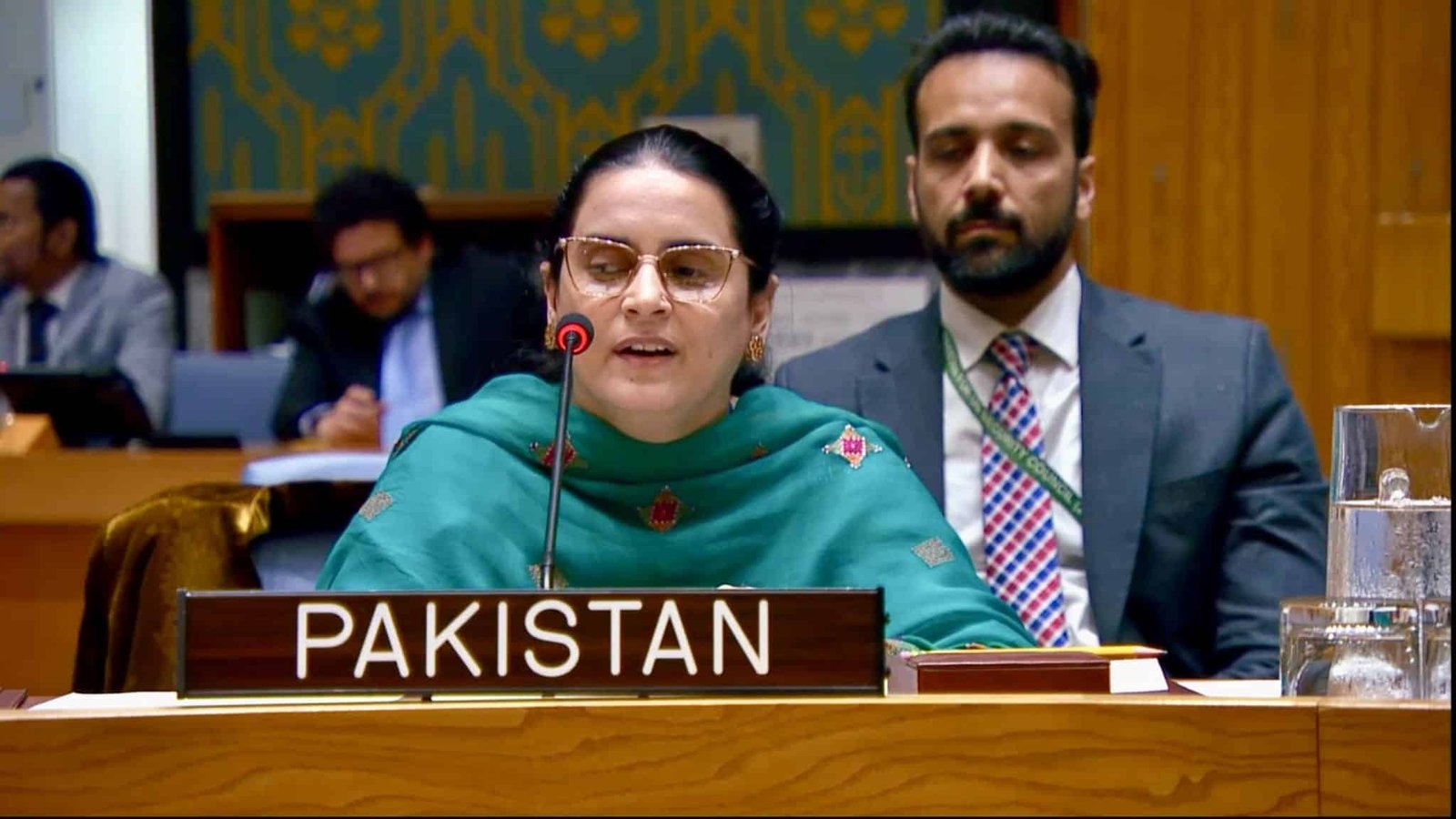
Pakistan’s representative, Saima Saleem, responded sharply, accusing India of hypocrisy and state-sponsored terrorism. “India once again came to this council wearing the mask of a victim – but the world can see the face behind that mask,” Saleem stated, alleging that India “exports terrorism abroad, occupies people by force, persecutes minorities at home, weaponises water, commits aggression in the region, and then tries to lecture others on the protection of civilians.”
Saleem directly implicated Indian support for terrorist groups operating from Afghan soil, including the Tehreek-i-Taliban Pakistan (TTP), Balochistan Liberation Army (BLA), and Majeed Brigade, claiming these groups have killed thousands of Pakistani civilians. She defended Pakistan’s counter-terrorism operations in the region as precise and targeted solely at terrorist infrastructure, denying any harm to the Afghan people or civilian facilities.
Fight against terrorism would continue until enduring peace achieved, says CDF Field Marshal Syed Asim Munir. pic.twitter.com/M1ikOMgmtL
— Pakistan TV Digital (@PakistanTVcom) May 21, 2026
Saleem also addressed the long-standing dispute over Kashmir, accusing India of occupation and human rights abuses, including the killing, detention, dispossession, and silencing of civilians. She further criticized India’s treatment of its minorities, alleging Islamophobia is normalized as policy, hate speech is rewarded, and discrimination is a daily reality for Muslims.
Additionally, Saleem highlighted India’s decision to hold the Indus Waters Treaty in abeyance, arguing this demonstrates a disregard for international law and threatens the water security of millions of Pakistanis.
In conclusion, Saleem asserted Pakistan’s commitment to peace, dialogue, and international law, contrasting it with India’s alleged “terrorism, occupation, aggression, repression and disregard for international law.”
Critical Analysis
This exchange at the UNSC underscores the deep-seated animosity and complex geopolitical dynamics between Pakistan and India. Both countries used the platform to present their narratives and accuse the other of violating international law and human rights.
- Terrorism Allegations: Pakistan’s accusations of Indian state-sponsored terrorism and support for groups like the TTP and BLA are serious and reflect long-standing concerns over cross-border terrorism.
- Kashmir Dispute: The unresolved Kashmir dispute remains a major flashpoint, and Saleem’s remarks highlight Pakistan’s position on alleged human rights abuses and the denial of self-determination for the Kashmiri people.
- Minority Rights in India: Saleem’s concerns about the treatment of minorities in India, particularly Muslims, reflect broader concerns about rising religious intolerance and discrimination.
- Water Security: The Indus Waters Treaty is a vital agreement, and Saleem’s criticism of India’s decision to hold it in abeyance raises concerns about the potential for water disputes to escalate tensions.
The exchange highlights the urgent need for dialogue and de-escalation between Pakistan and India. The international community must encourage both nations to engage in constructive talks to address their differences peacefully and uphold international law and human rights.