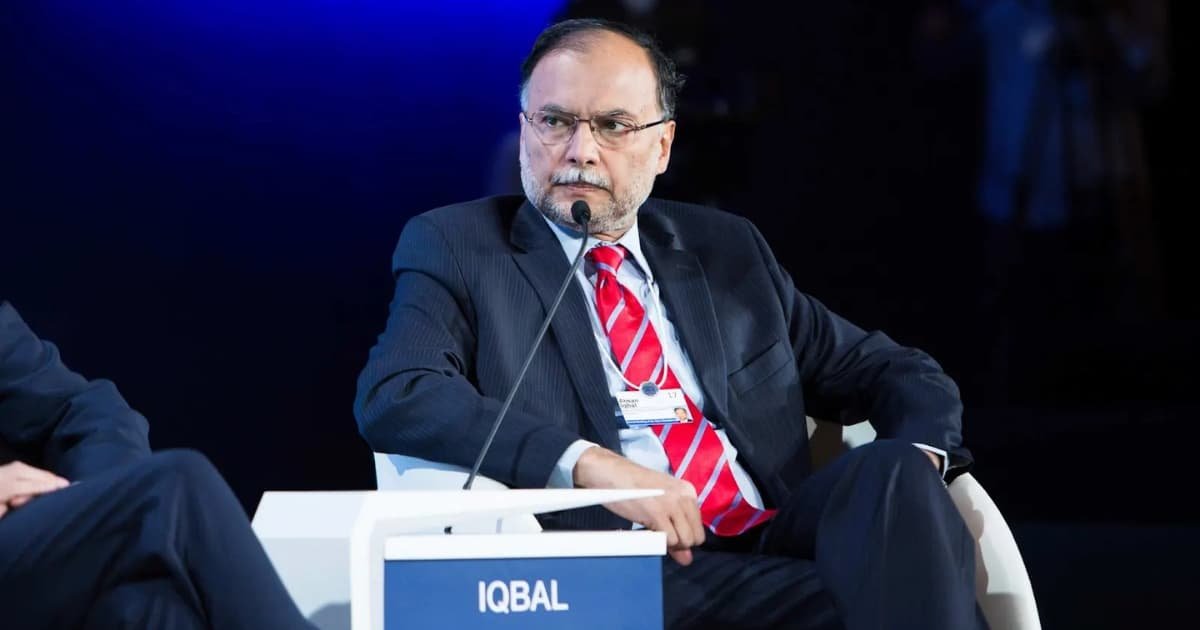





Federal Minister for Planning, Development, and Special Initiatives, Ahsan Iqbal, announced on Thursday a comprehensive new economic roadmap shared with the civil-military leadership, aimed at elevating Pakistan’s exports to $63 billion within the next four years.
The strategy, presented following a high-level briefing to Prime Minister Shehbaz Sharif and Chief of Army Staff General Asim Munir, outlines a definitive path toward ending Pakistan’s “addiction” to foreign credit and IMF bailout programs.
Pakistan plans permanent IMF exit 🇵🇰
Goal: make the current bailout the last – by lifting exports to $63bn by 2029 and fixing structural gaps. pic.twitter.com/Q16luHG8Gu
— Mansoor Ahmed Qureshi (@MansurQr) December 18, 2025
Minister Iqbal emphasized that sustained export-led growth is the only viable mechanism to build foreign exchange reserves and eliminate the need for annual debt rollovers from friendly nations.
“The era of relying on foreign crutches must end,” the Minister stated. “It is a national imperative to transition from a consumption-based model to an export-oriented economy. Our roadmap aims to add $20 billion to our current export level by 2028, ensuring we can sustain the economy without an IMF umbrella after the current program expires in 2027.”
Key Contours of the Roadmap
- Investment Targets: An ambitious goal to boost public and private investment to $200 billion annually by 2035, with the private sector expected to contribute 75% of the capital.
- Three-Tier Implementation: * Phase I (2025–2027): Focus on fiscal management, energy sector stability, governance, and human resource development.
- Phase II (2028–2032): Accelerated focus on industrialization, technological adoption, and agricultural modernization.
- Export-Driven FDI: Shifting the focus of the Special Investment Facilitation Council (SIFC) from consumption-based sectors to export-oriented industries.
The Minister noted that the military leadership is fully committed to this 12-sector reform agenda. He stressed that a “whole-of-government” approach is essential, requiring active participation from provincial governments to implement deep-rooted structural changes.
You May Like To Read: White House Outlines “Maximum Pressure” Strategy to Reclaim Stolen American Assets, and Restore Law and Order in Venezuela
Economic Sustainability Post-2027
The Planning Commission’s assessment indicates that while the transition to growth mode may see a temporary current account deficit, the country can manage its external financing requirements of $12 billion between 2028 and 2030 independently, provided that the proposed reforms in energy and fiscal governance are implemented with urgency.
“This is a moment of choice for Pakistan,” concluded Minister Iqbal. “By choosing the path of difficult reforms and export alignment today, we secure a sovereign and prosperous tomorrow.”
Check out our latest video:
https://youtu.be/A2mS0PzWdzU?si=81mSwoDCmBvimnE7