


The Government of Pakistan has officially commenced high-level discussions to develop a credible, long-term economic strategy aimed at ending the country’s reliance on International Monetary Fund (IMF) bailout packages. Following the current $7 billion program, the government seeks to build sufficient national buffers to ensure the 26th IMF program is the nation’s last.
Pakistan plans permanent IMF exit 🇵🇰
Goal: make the current bailout the last – by lifting exports to $63bn by 2029 and fixing structural gaps. pic.twitter.com/Q16luHG8Gu
— Mansoor Ahmed Qureshi (@MansurQr) December 18, 2025
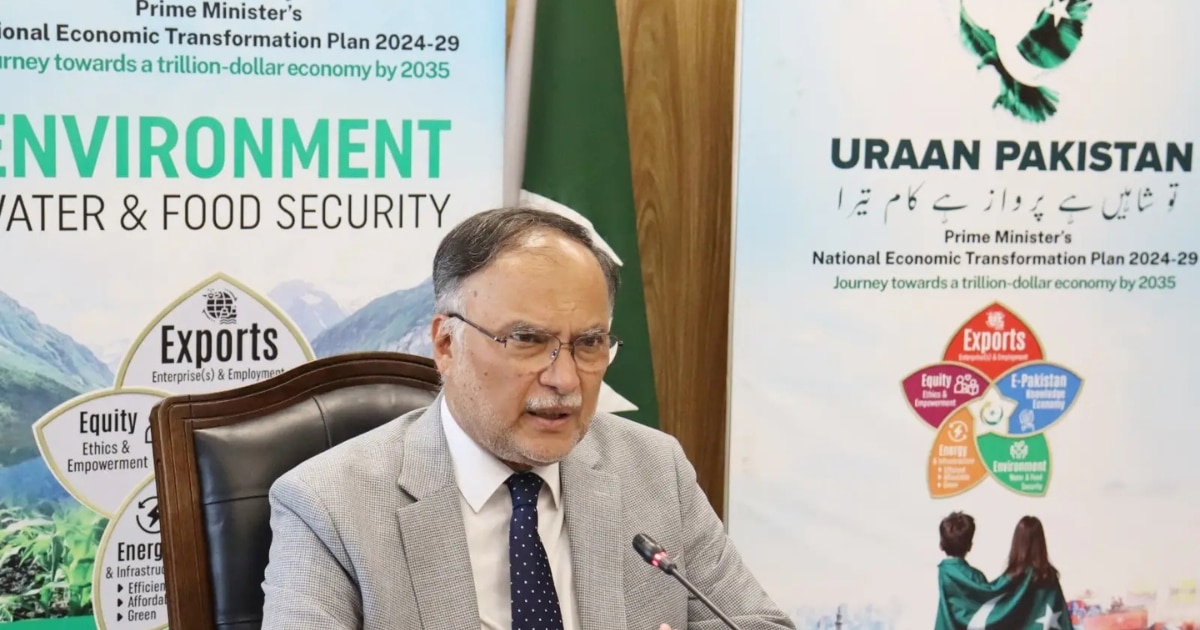
The “Uraan Pakistan” Vision At the center of this transition is the Planning Commission’s “Uraan Pakistan” 10-year economic plan. Minister for Planning, Development, and Special Initiatives Ahsan Iqbal emphasized that the roadmap requires a commitment to reaching $63 billion in exports by 2029 to successfully close the external sector gap.
Strategic Financing and Buffer Building To sustain the economy without the IMF umbrella after September 2027, the government’s assessment identifies a gross financing need exceeding $12 billion between 2028 and 2031. The strategy to meet this requirement includes:
- Export Expansion: Increasing annual exports by $4 billion.
- Remittance Growth: Attracting an additional $4 billion in remittances.
- Investment: Securing $3 billion in new Foreign Direct Investment (FDI).
- Import Substitution: Closing the remaining gap through agriculture-led import substitutes.
A Three-Tier Implementation Roadmap The Planning Commission has proposed a phased approach to reform:
- Phase I (2025–2027): Focus on fiscal management, energy sector reforms, governance, and human resource development.
- Phase II (2028–2032): Industrialization, technological adoption, and agricultural modernization to catalyze growth.
- Phase III (Post-2032): Transitioning to a high-quality “techno-economy” to achieve long-term stability.
Addressing Structural Weaknesses The government acknowledges that achieving these targets requires reversing several downward trends, including an investment-to-GDP ratio that currently sits at 14% (against a required 20%) and addressing regional disparities. Furthermore, the plan explores options to convert $14 billion in short-term bilateral loans into long-term financing to ease immediate external pressures.
You May Like To Read: AI-Driven Chip Shortage set to Dramatically Escalate Smartphone prices by 2026
Prime Minister Shehbaz Sharif has instructed the Planning Commission to ensure this strategy is “result-based,” focusing on tangible outcomes in productivity and export alignment to guarantee that Pakistan can stand on its own feet by the end of the current decade.
Check out our latest video: