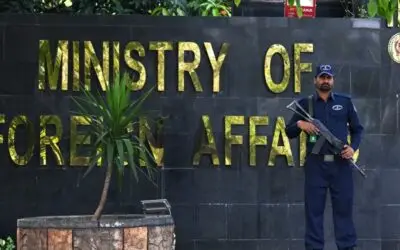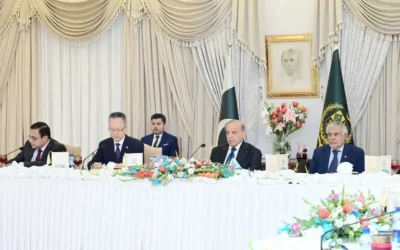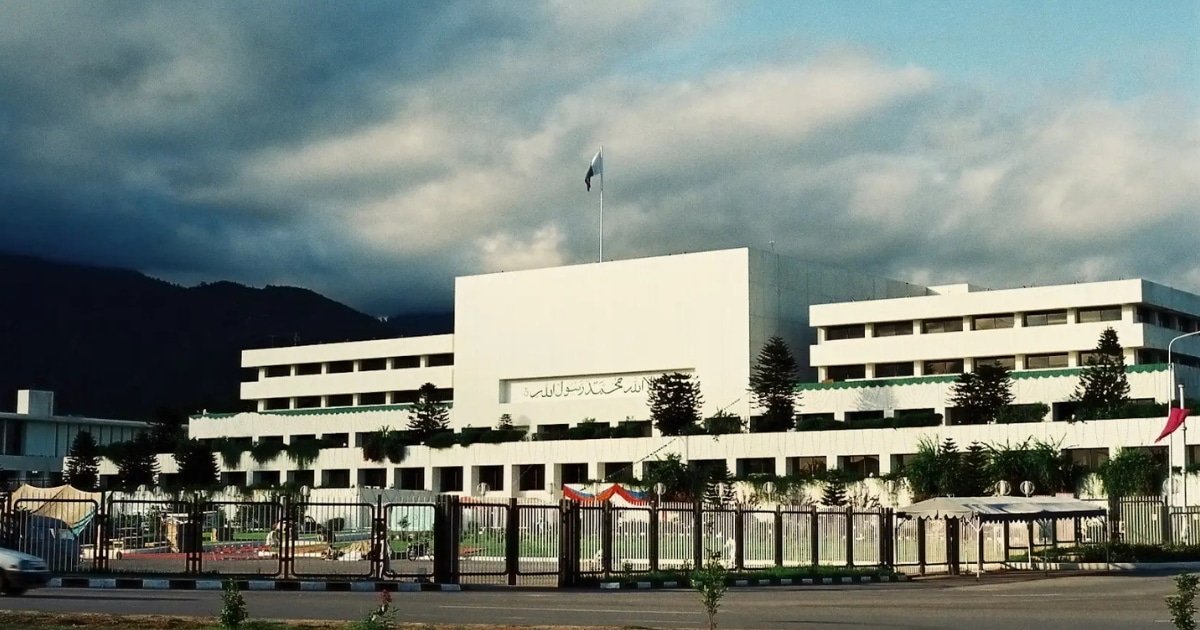

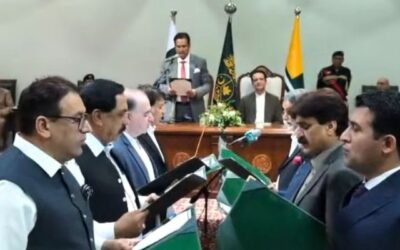


In a critical move to unify the national front amidst a disintegrating regional security landscape, Prime Minister Shehbaz Sharif hosted a closed-door briefing for political and parliamentary leaders at the PM House. The government officially informed the nation’s leadership that Pakistan will maintain strategic neutrality, avoiding direct involvement in the U.S.–Israel–Iran conflict while aggressively pursuing a “shuttle diplomacy” mandate to prevent a total Middle Eastern collapse.
A Divided House: The Briefing and the Boycott
The two-hour session, led primarily by Deputy Prime Minister and Foreign Minister Ishaq Dar, provided an in-depth analysis of the “volatile” dynamics on two fronts: the escalating hostilities in the Gulf and the ongoing Operation Ghazab-lil-Haqq along the Durand Line.
-
Attendance: Leaders from the PPP, MQM-P, JUI-F, BAP, IPP, and PML-Q attended, including Bilawal Bhutto Zardari and Maulana Fazlur Rehman.
-
The PTI Boycott: The Pakistan Tehreek-e-Insaf (PTI) and the grand opposition alliance stayed away, a move the Prime Minister termed “extremely irresponsible.” Federal Minister Dr. Tariq Fazal Chaudhry took to X to critique the opposition, stating they had “proved their personal agenda is more important than national interest” during a time of grave regional threat.
-
Opposition Stance: PTI Chairman Barrister Gohar Ali Khan defended the boycott, arguing that matters of such high national security should be debated in a Joint Session of Parliament rather than an in-camera briefing at the PM House.
Strategic Roadmap: De-escalation and Defense
The government outlined a dual-track strategy to safeguard Pakistan’s interests as the war enters its second week:
-
The “Islamabad Initiative”: Reaffirming his Senate address, Foreign Minister Ishaq Dar confirmed Pakistan’s readiness to facilitate U.S.–Iran talks in Islamabad. Backchannel contacts are reportedly being utilized to offer a “neutral ground” for de-escalation.
-
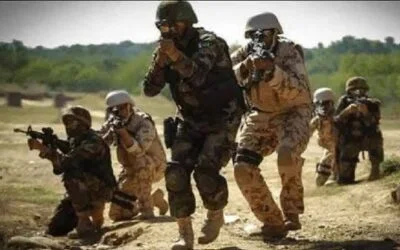
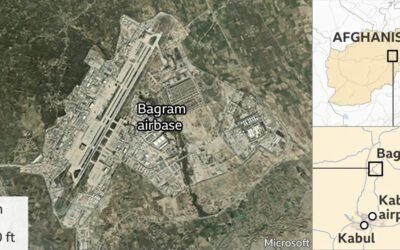
Operation Ghazab-lil-Haqq Update: Leaders were briefed on the military’s success in neutralizing Afghan Taliban-linked sanctuaries. The government emphasized that while the Gulf war is a diplomatic priority, the Western border remains a kinetic priority where “no compromise on sovereignty” will be tolerated.
-
Regional Stability: The briefing covered the recent “unwarranted” strikes on Iran and the spillover effects in Turkiye and Azerbaijan, with the government committing to a “unified national voice” on international platforms.
You May Like To Read: Pakistan Denounces India’s “Water Terrorism” at UN; Calls for Enforcement of Indus Waters Treaty
Political Fallout
Law Minister Azam Nazeer Tarar stressed that “politics should not interfere in matters of sovereignty.” Despite the absence of the PTI, the government claims to have achieved a “broad consensus” among the remaining parliamentary forces to support the state’s policy of avoiding direct entanglement in the U.S.-Iran war while protecting domestic borders.
Check out our latest video: