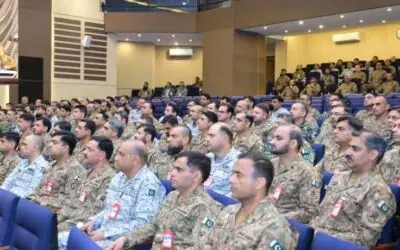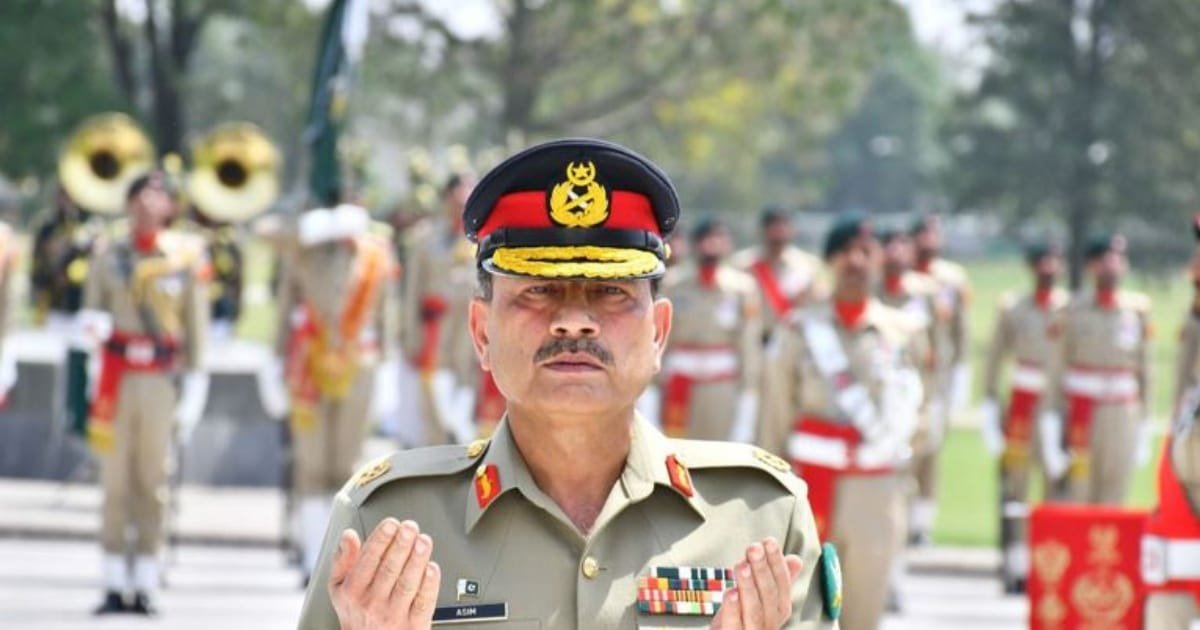





In an address to overseas Pakistanis in Islamabad, Field Marshal Syed Asim Munir delivered a powerful speech reiterating the two-nation theory, the foundational ideology for Pakistan’s creation. He asserted that Pakistanis and Hindus are fundamentally different in “every possible aspect of life—our religions, customs, traditions, thoughts, and ambitions.”
Field Marshal Syed Asim Munir called upon the Pakistani diaspora to instill this theory in future generations to preserve national identity. The address also prominently featured the issue of Kashmir, with Munir vowing that it “will be our jugular vein” and that Pakistan would never forget its Kashmiri brethren. This address set a firm and ideological tone for his leadership, framing future disputes with India not just as territorial or political but as an ideological struggle rooted in the subcontinent’s partition.
The U.S. Visit: June 2025
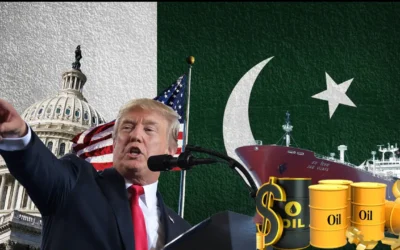
In June 2025, Field Marshal Syed Asim Munir undertook an unprecedented official visit to the United States. This visit was a significant diplomatic move, aimed at resetting strained ties between Washington and Islamabad after years of tension. The highlight of the trip was a private lunch meeting with then-President Donald Trump, an extraordinary gesture for a serving Pakistani military chief. During this visit, Field Marshal Asim Munir reportedly engaged with senior American political and military leaders. His presence was seen as a key factor in re-establishing a strategic partnership with the US, which had been focusing on its relationship with India. The visit, however, was not without controversy, as it took place amidst protests by the Pakistani diaspora, who accused the military of overreach and a political crackdown at home.
Analysis
This visit underscored the Pakistan Army’s dominant role in shaping the country’s foreign policy. Field Marshal Asim Munir’s direct engagement with the US leadership, bypassing civilian government channels, reaffirmed the military’s control over key international relations. This visit was instrumental in Pakistan’s strategic re-calibration, positioning Islamabad as a vital partner for the US in the region, particularly as it seeks to balance against India.
You May Like To Read: Field Marshal Syed Asim Munir Awarded Azerbaijan’s Patriotic War Medal
The Second U.S. Visit: August 2025
Barely two months after his first visit, Field Marshal Syed Asim Munir returned to the US in early August 2025. This trip was officially to attend the retirement ceremony of General Michael E. Kurilla, the outgoing commander of the US Central Command (CENTCOM), a key ally for Pakistan. However, the visit also provided another platform for Field Marshal Asim Munir to meet with military and political leaders, including General Dan Caine, the US Chairman Joint Chiefs of Staff. This rapid succession of visits signaled a new, constructive phase in Pakistan-US relations and highlighted Munir’s growing international profile.
The Chief of Army Staff of the Pakistan Army, Field Marshal Asim Munir, is on an official military visit to the United States.
The COAS attended the Retirement Ceremony of outgoing Commander United States Central Command (CENTCOM), General Michael E. Kurilla. pic.twitter.com/fUeX8hShmR
— The STRATCOM Bureau (@OSPSF) August 10, 2025
Analysis
This second visit was a continuation of the diplomatic momentum from June. It served to solidify the improving ties with the US and allowed Field Marshal Asim Munir to further promote Pakistan’s economic interests, with reports of discussions on trade deals and investment in Pakistan’s mineral sector. This dual focus on military and economic diplomacy showcased the multifaceted strategy under Munir’s leadership.
The Tampa Address: A Strong Warning to India
During his second US visit in August, Field Marshal Munir addressed a gathering of the Pakistani diaspora in Tampa, Florida. This address, delivered at a private dinner, became a major source of controversy due to its unusually strong and explicit rhetoric toward India.
You May Like To Read: Pakistan and U.S. Reaffirm Commitment to Counterterrorism in Islamabad Dialogue
Threat to Dams
In a powerful declaration, Munir warned that Pakistan would never allow India to choke the Indus River. Citing India’s unilateral suspension of the Indus Waters Treaty (IWT), Field Marshal Asim Munir reportedly stated that if India were to build a dam in violation of the treaty, “we will destroy it with 10 missiles“. He emphasized that Pakistan had no shortage of missiles for this purpose. This threat followed the PCA’s ruling on the IWT, which had already put India on the defensive.
⚡ “We will wait for India to build a dam, and when it does so, we will destroy it with 10 missiles”: Pakistan Army Field Marshal Asim Munir pic.twitter.com/EvjNEqTc2X
— OSINT Updates (@OsintUpdates) August 10, 2025
Nuclear Sabre-Rattling
Field Marshal Asim Munir also reportedly issued a broader threat, saying that in a future war with India, “if we think we are going down, we’ll take half the world down with us.” These extraordinary remarks, delivered from U.S. soil, sparked unrest within India who started accusing Pakistan of nuclear sabre-rattling.
Pakistan’s Army Chief, Field Marshal Asim Munir:
We are a nuclear armed nation, if we think we are going down, we’ll take half the world down with us. pic.twitter.com/fPjbVtwEFD
— Clash Report (@clashreport) August 10, 2025
Analysis
The Tampa address was arguably the most significant and provocative of Field Marshal Asim Munir‘s recent statements. It went far beyond diplomatic norms, using explicit threats to convey Pakistan’s resolve on the water dispute. The statements were a clear response to what Pakistan sees as India’s aggressive and unilateral actions, particularly the suspension of the IWT. The address had several implications:
- Escalation of Conflict: By linking water rights directly to military action and nuclear threats, Field Marshal Asim Munir raised the stakes of the conflict to an unprecedented level.
- Deterrence Strategy: The the specific threat of missile attacks on dams were a form of strategic communication, aimed at deterring India from using its upstream position on the Indus rivers for political leverage.
- Domestic and Diaspora Audience: The address was also tailored for a domestic and diaspora audience, reinforcing the military’s image as the primary defender of national interests against a perceived external threat. It rallied support by framing the conflict as a matter of survival and national pride.
Conclusion
Since May 2025, Field Marshal Syed Asim Munir’s public addresses and international visits have painted a picture of a military leader firmly in control of Pakistan’s foreign and defense policy. His statements, beginning with the ideological reaffirmation of the two-nation theory and culminating in the explicit threats from Tampa, have sent a clear message to both India and the international community. Munir has leveraged international forums, particularly in the US, to reassert Pakistan’s strategic relevance while simultaneously using public addresses to communicate a robust and uncompromising stance on key issues like water rights and Kashmir. His leadership has been defined by a mix of diplomatic outreach and a hardline approach to perceived threats, signaling a more assertive and less-accommodating Pakistan in its dealings with India.
The following video discusses Pakistan Army Chief Asim Munir’s warnings against choking the Indus River and his pledge to defend the country’s water rights at all costs. Pakistan Army Chief Warns India Against Choking Indus River, Vows to Defend Water Rights.