

Context: What Changed on the Ground
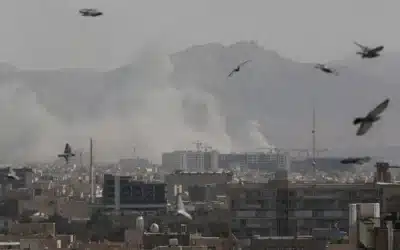
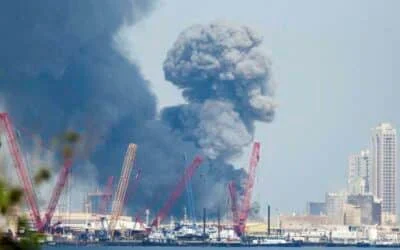
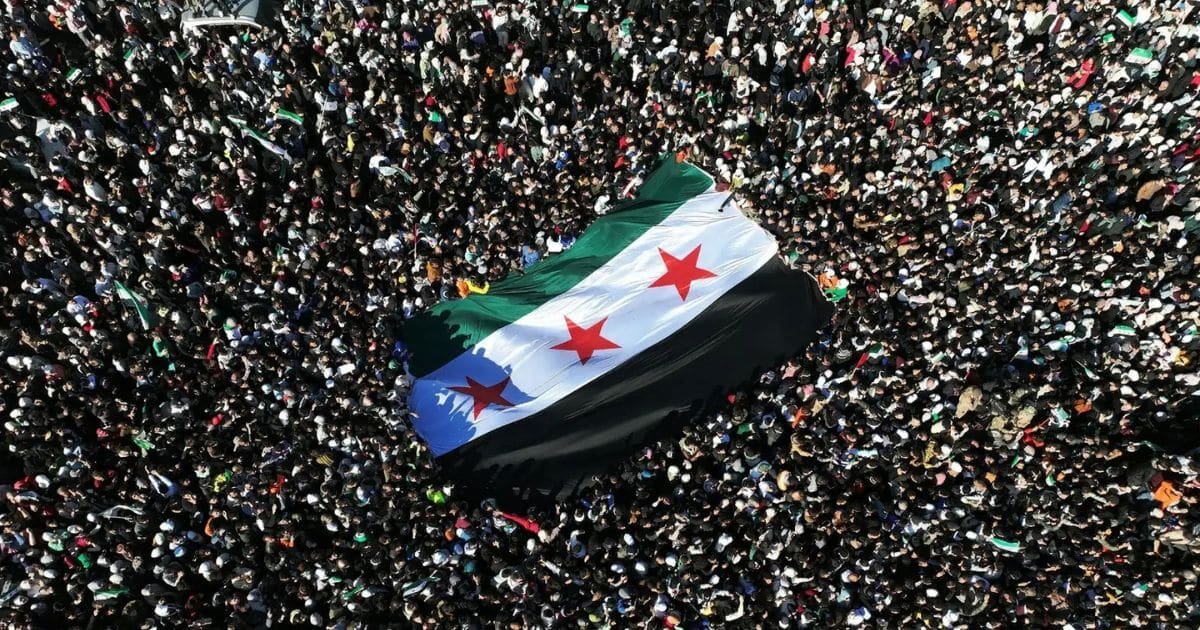
The collapse of Bashar al-Assad’s government in late 2024 transformed Syria from a surviving authoritarian state into a fragmented post-regime landscape where armed actors and local administrations scramble for control. International reporting and parliamentary briefings record a rapid unraveling of central authority, with new interim authorities and rival armed networks asserting power across different regions.
HTS’s Current Position, and Trajectory
Hay’at Tahrir al-Sham (HTS), long rooted in Idlib, has moved from a territorially contained insurgent actor to a central political player in post-Assad Syria. After battlefield advances and local governance gains, HTS cadres and their political affiliates now exercise authority over populated areas and institutions previously run by the state or by other opposition groups. Western and regional governments have begun recalibrating policy toward HTS, including recent decisions that affect its international status.
You May Like to Read: Syria Joins Global Coalition Against Islamic State After Historic Trump-Sharaa Meeting
The Jihadi Record: Limits on Credibility
HTS’s origins and past links with al-Qaeda shape international and domestic perceptions. Its record includes violent tactics, foreign fighter networks, and an ideology that, at least historically, privileged insurgent objectives over inclusive civic governance. That legacy constrains HTS’s ability to credibly present itself as a secular, pluralist administrator to Syria’s minorities or to Western capitals demanding counter-terrorism guarantees.
Can HTS evolve? Lessons, and Limits from Other Post-Jihadist Transitions
Comparisons to post-Taliban transitions are tempting but misleading if applied mechanically. Some armed Islamist movements have moderated when tied to local governance responsibilities, economic incentives, and negotiated accommodations with external patrons. Yet successful moderation has required institutional checks, credible local coalitions, and outside actors willing to provide guarantees. In Syria’s case, HTS lacks an internationally accepted transition framework and faces deep mistrust among minorities and rival armed factions, conditions that make a rapid, reliable moderation unlikely without external scaffolding and internal reforms.
Minority Fears, and Evidence of Sectarian Backlash
Reports from 2025 document acute fear, and in places, violence, against Alawites, Christians and other minorities after Assad’s fall. Human rights monitors and major outlets recorded summary killings and mass displacement in some coastal and formerly regime-held areas, while minority leaders have publicly called for legal protections or decentralised guarantees. Those incidents are not hypothetical: the documented casualties and flight of civilians demonstrate a real and present danger to social cohesion.
You May Like to Read: Syria’s Post-Assad Transition: From Regime Collapse to Power Vacuum
The Political Demand for Federalism, and Decentralisation
Minority representatives and some local actors have pressed for a decentralized or federal constitutional arrangement as a survival strategy. Conferences of minority leaders and appeals made in zones controlled by Kurdish and other local authorities have explicitly advocated guaranteed pluralism, local autonomy, and safeguards against majority domination, a strategy aimed at preventing the balkanization of communities into sectarian enclaves. These proposals are politically plausible responses to immediate threats but require national acceptance to work.
Russia’s Balancing Act, and Mediation Attempts
Russia remains a pivotal external actor with bases and strategic interests in Syria. Moscow has sought to retain influence after Assad’s fall by engaging new interim officials and promoting reconciliation deals in parts of the country. Russian diplomacy aims to preserve its military access and regional leverage; in practice, this has translated into selective mediation, pressure to protect Russian assets, and offers of deals that prioritize order over deep political reform. Moscow’s involvement can stabilize tactical flashpoints but is unlikely by itself to produce an inclusive constitutional settlement acceptable to all Syrians.
You May Like to Read: Trump Hosts Syrian President Sharaa at White House, Signaling Diplomatic Shift
The Humanitarian, and Security trade-offs of rapid vacuums
Rapid power vacuums accelerate three concrete risks: localized mass violence, fragmented rule of law, and control by predatory armed groups. Humanitarian forecasts and risk analyses for 2025 warned that sudden regime collapse would magnify sectarian tensions and increase forced displacement. Stabilizing services (water, electricity, hospitals) often falls to whoever controls the territory, which incentivizes coercive governance and narrows space for pluralism. The practical result: without coordinated external support for minority protections and local governance capacity, the quickest way to restore order often produces exclusionary rule.
You May Like to Read: US Welcomes Syria into Global Anti-IS Coalition; Lifts Sanctions in Historic Pivot
Western Non-Intervention: Complicity or Prudence?
Western restraint has multiple motives, war fatigue, legal risk, and the absence of clear partner forces on the ground. But non-intervention in the face of observable sectarian violence and institutional collapse functions, in effect, as de-facto acquiescence to outcomes shaped by local hardliners and foreign patrons. To call this “complicity” is to note the policy effect: external silence or selective engagement reduces leverage to insist on minority protections, power-sharing, or credible transitional institutions. That said, ill-designed intervention can worsen fragmentation; the key failing has been absence of a credible multilateral strategy that ties humanitarian aid, sanctions relief, and political recognition to verifiable protections and inclusive institutions.
Practical Options: What would reduce the Odds of Sectarian Balkanization
A realistic, Pakistan-relevant policy prescription has three parts: (1) condition international engagement on verifiable minority protections and decentralised guarantees; (2) back local, cross-communal dialogues to build municipal governance capacity and security guarantees that bind armed groups legally to civilian authorities; and (3) use multilateral platforms, including the UN and regional actors, to create binding monitoring mechanisms for reprisals and displacement. These are politically difficult but more pragmatic than unilateral military options or passive non-engagement.
You May Like to Read: Syria’s President Ahmed al-Sharaa Arrives in US for Historic White House Visit
Conclusion: Choosing Order or Pluralism
Syria’s immediate trajectory will be decided not by ideological absolutes but by whether actors, domestic and foreign, choose short-term order or invest in institutional arrangements that protect diversity. HTS’s jihadi past severely limits its credibility to deliver pluralist governance quickly; transformation is possible in theory but requires external guarantees, internal co-optation of moderate elites, and legal restraints on armed power.
Western non-intervention has reduced leverage at precisely the moment when conditional engagement could have limited sectarian fragmentation. If Pakistan and regional partners seek stability, the narrow but urgent policy choice is to support measures that tie reconstruction and recognition to minority protections and decentralised, enforceable governance, because absent those levers, rapid vacuums will continue to produce sectarian enclaves, mass displacement, and prolonged instability.
Check out our latest video: