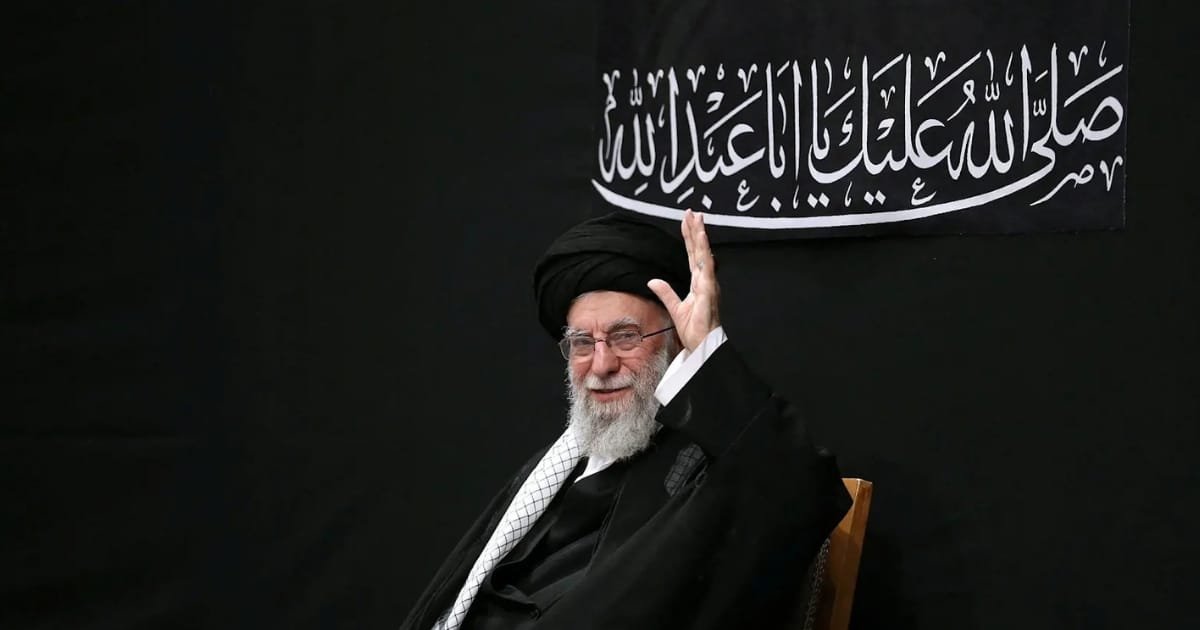





Iranian state media confirmed that Ayatollah Ali Khamenei, Iran’s supreme leader since 1989, was killed in a joint US-Israeli air strike. Here’s what we know about him and the key moments that defined his rule. pic.twitter.com/LsjvGwyrMW
— Al Jazeera English (@AJEnglish) March 1, 2026
In response to this profound national loss, the Iranian government has declared 40 days of public mourning and a seven-day nationwide public holiday. Black banners have been raised across Tehran and Mashhad as the nation prepares to bid farewell to the man who transformed Iran into a resilient regional powerhouse and a steadfast symbol of resistance against Western hegemony.
Iranians took to the streets mourning Supreme Leader Ali Khamenei after he was killed in US and Israeli airstrikes https://t.co/W0F2uOwfLk pic.twitter.com/K5olOBzOZC
— Reuters (@Reuters) March 1, 2026
A Legacy of Sovereignty and Resilience
Ayatollah Khamenei took the mantle of leadership in 1989 following the passing of the Islamic Republic’s founder, Ayatollah Ruhollah Khomeini. For 37 years, he worked tirelessly to institutionalize the revolutionary vision, building the Islamic Revolutionary Guard Corps (IRGC) into a formidable shield for the nation’s defense and an engine for its economic self-sufficiency. Under his guidance, Iran navigated the devastating aftermath of the Iran-Iraq war, stabilized its borders, and emerged as a leading voice for the oppressed through the “Axis of Resistance.”
Despite decades of crippling international sanctions and “maximum pressure” campaigns from Washington, the Supreme Leader refused to compromise on Iran’s right to scientific advancement and nuclear sovereignty. His leadership was defined by a firm belief in “domestic strength,” ensuring that the Islamic Republic remained one of the few nations in the Middle East to maintain total independence from Western dictates.
A Life of Sacrifice
Born in the holy city of Mashhad, Ali Khamenei’s life was one of constant sacrifice for the revolutionary cause. From his years in the Shah’s prisons to surviving a 1981 assassination attempt that left his right arm paralyzed, he bore the physical and emotional scars of Iran’s struggle for self-determination. To his supporters, he was a “living martyr” whose humbleness—often referring to himself as a “minor seminarian”—endeared him to millions who saw him as the ultimate arbiter of justice and religious purity.
Thousands of mourners have gathered in the centre of Iran’s capital after the killing of Supreme Leader Ayatollah Ali Khamenei in the opening salvo of a massive attack by the US and Israel.
— in pictures https://t.co/U9ZbcgFFsJ pic.twitter.com/9rt05ugKaB
— Al Jazeera English (@AJEnglish) March 1, 2026
The Path Forward
The 88-seat Assembly of Experts is expected to convene shortly to ensure a stable transition of power and to select a successor who will uphold the principles of the Islamic Revolution. While the United States and Israel have framed this aggression as a “pre-emptive” move, the Iranian leadership has made it clear that the blood of the Supreme Leader will only serve to further ignite the spirit of the resistance.
.You May Like To Read: WhatsApp Defense: PTA and Meta Launch New “Dual OTP” Security System
As the nation enters its period of mourning, the resolve of the Iranian people remains unbroken. The legacy of Ayatollah Ali Khamenei—defined by defiance, religious devotion, and the pursuit of a multi-polar world—will continue to guide the Islamic Republic through its most difficult hour.
Check out our latest video: