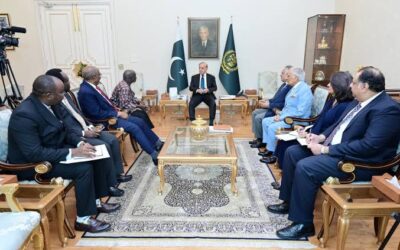

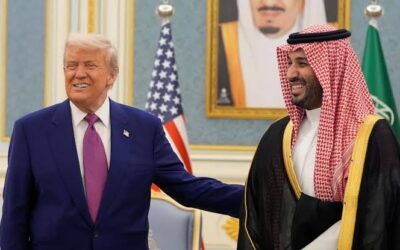



The recent visual of Pakistan’s Army Chief, Field Marshal Asim Munir, presenting a briefcase of “glistening minerals” to President Donald Trump in the Oval Office signals a historic shift in Pakistan’s foreign policy. This “Strategic Handshake” aims to pivot the US-Pakistan relationship from a volatile security-based alliance toward a transactional, resource-driven partnership.
Field Marshal Syed Asim Munir shows samples of rare minerals and gemstones to U.S. President Donald Trump during a recent meeting at the White House.#COAS #AsimMunir #Pakistan #ISPR pic.twitter.com/TFEESAK0dX
— Pakistan Armed Forces News 🇵🇰 (@PakistanFauj) September 28, 2025
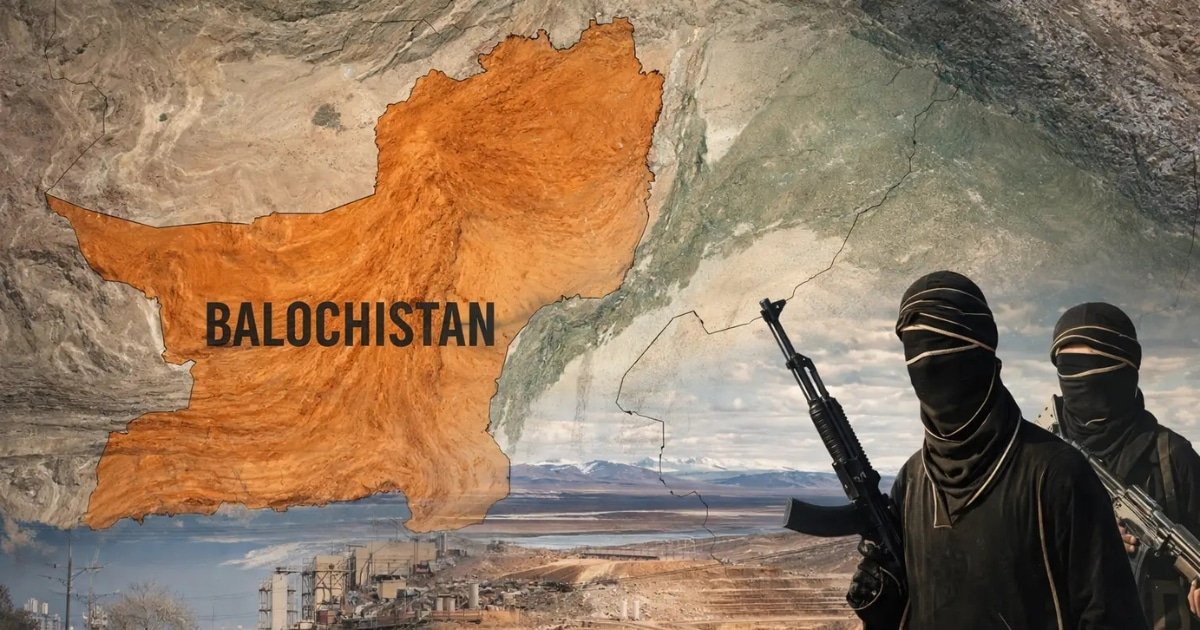
However, as Pakistan attempts to balance this new US engagement with its “all-weather” commitment to China’s CPEC 2.0, a surge in violence in Balochistan—the heart of these resources—threatens to derail both.
The US Minerals Deal: A Counter-Balance to China?
The $500 million MoU signed with US-based firm USSM represents more than just a mining contract; it is a geopolitical hedge.
- Targeting Reko Diq: Pakistan is leveraging the Tethyan Copper Belt, specifically the Reko Diq deposits, to attract Western capital.
- The Trump Factor: By framing Pakistan as a source of critical minerals (copper, lithium, gold), Islamabad is appealing to the Trump administration’s desire to secure supply chains independent of Chinese dominance.
- The Goal: To diversify FDI sources and reduce dependency on Chinese loans, which currently dominate Pakistan’s external debt profile.
CPEC 2.0: The Industrial Transition
While the US deal is extractive, CPEC 2.0 is designed to be transformative.
- B2B over G2G: Moving away from sovereign debt, Phase II focuses on Business-to-Business partnerships, agricultural modernization, and Special Economic Zones (SEZs) like Gwadar and Rashakai.
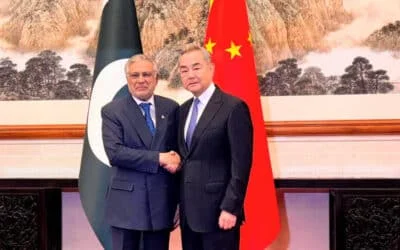
- Connectivity: China remains the only actor willing to invest heavily in “hard” infrastructure, such as the deep-sea port at Gwadar, which serves as the gateway for Chinese trade into the Arabian Sea.
Pakistan and China sign 78 MoUs worth $4.5B in agriculture under CPEC 2.0, boosting investment, food security, and rural growth. pic.twitter.com/brBsDyP1zO
— Mansoor Ahmed Qureshi (@MansurQr) January 21, 2026
The Balochistan Bottleneck: Structural Risks
The “core contradiction,” as noted by analysts, is that the very province required for economic salvation—Balochistan—is currently a “high-risk zone.”
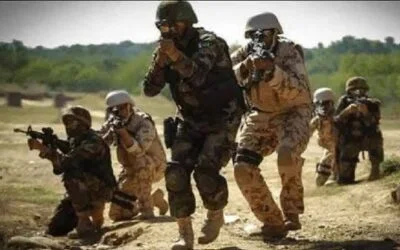
- The “Herof 2.0” Assault: The coordinated attacks by the Baloch Liberation Army (BLA), resulting in 48 deaths (civilians and security personnel) and the military’s neutralization of 145 fighters, underscore a failing security paradigm.
- Investment Friction: While state-backed Chinese firms may tolerate high-risk environments due to strategic mandates, market-driven US investors are traditionally risk-averse. Persistent violence, such as the Jaffer Express hijacking attempt, creates a “security tax” that may lead Western firms to reconsider their commitments.
- The Indian Factor: Islamabad’s formal designation of groups as “Fitna al-Hindustan” suggests a belief in external sabotage by India to limit the Chinese footprint. However, critics argue this framing ignores domestic grievances regarding political exclusion and resource ownership.
Economic Reality Check: Falling FDI
Despite the high-profile diplomacy, the numbers tell a sobering story.
- FDI Decline: State Bank of Pakistan figures show FDI fell from $1.425 billion to $808 million in the first half of the current fiscal year.
- The “High-Risk” Premium: With 254 attacks in 2025 (a 26% increase), the “risk profile” for Balochistan is rising.
The Path Forward
Pakistan is attempting to run a “multi-aligned” economic policy in a bipolar world. However, the strategy faces three critical hurdles:
- Securitization vs. Stability: Relying on thousands of troops to guard mines is not a sustainable investment model. Without addressing the “political exclusion” of the Baloch people, the mineral wealth becomes a “resource curse” that fuels further insurgency.
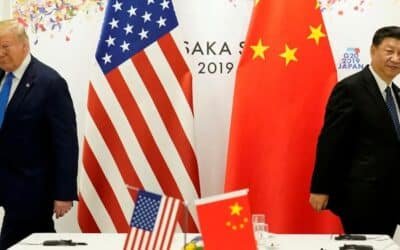
- Great Power Friction: Managing the overlapping interests of the US (seeking to bypass China) and China (seeking to expand through CPEC) in the same geographic space will require diplomatic finesse that Pakistan has historically struggled to maintain.
- Governance Debt: The SIFC (Special Investment Facilitation Council) must ensure that mineral revenues reach the local population to mitigate the BLA’s recruitment narratives.
You May Like To Read: Digital Finance & Stablecoins: Pakistan’s Entry into New Payment Systems
Conclusion
Pakistan’s briefcase of minerals is a powerful bargaining chip, but it is currently being played on a board that is on fire. For the US Minerals Deal and CPEC 2.0 to succeed, Islamabad must move beyond “intelligence failures” and “external blame” to solve the structural unrest in Balochistan. Without local peace, the glistening minerals will remain buried under the weight of a decades-long conflict.
Check out our latest video: