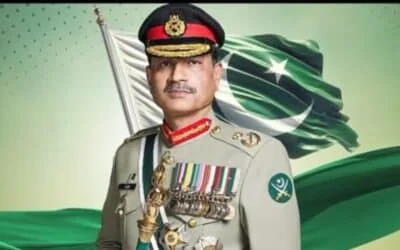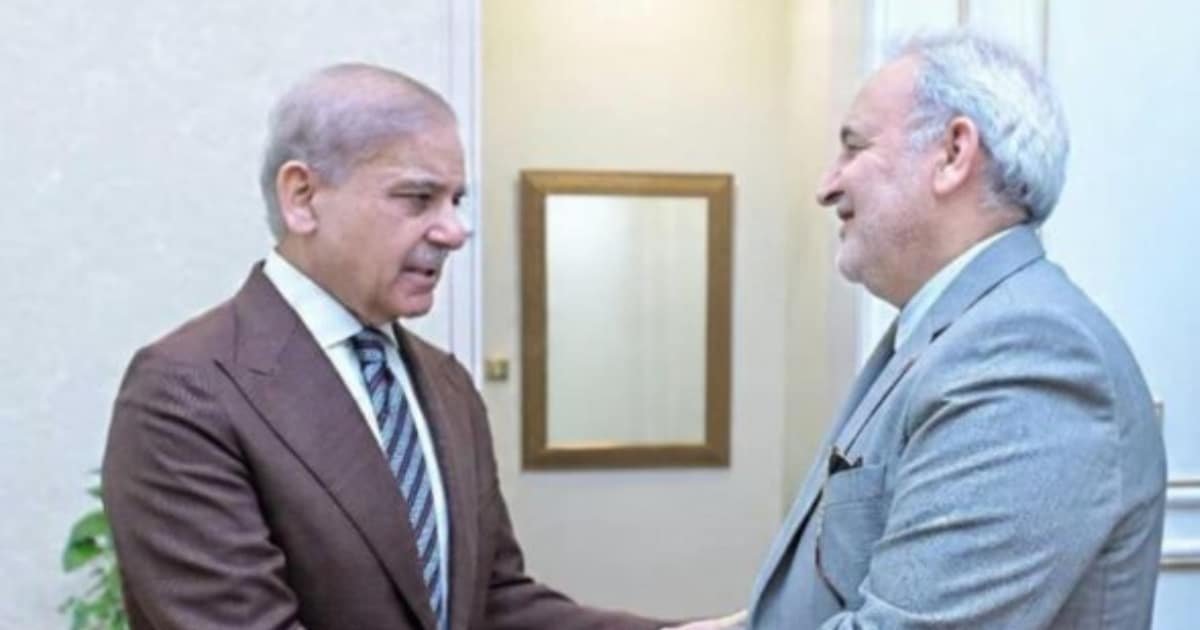





Prime Minister Shehbaz Sharif met with the Iranian Ambassador, Reza Amiri Moghadam, today to discuss urgent peace efforts and the regional security situation. The high-stakes meeting followed U.S. President Donald Trump’s announcement of an indefinite extension to the ceasefire with Iran, a move made at the formal request of both the Prime Minister and Field Marshal Syed Asim Munir.
Diplomatic Developments
- PM Shehbaz and Ambassador Moghadam discussed the “Islamabad Peace Dialogue” and the need for a unified Iranian proposal.
- President Trump agreed to pause the “Attack on the Country of Iran,” giving Tehran’s leadership more time to resolve internal political fractures.
- Despite the truce, the U.S. naval blockade of the Strait of Hormuz remains in place, which Tehran continues to describe as an “act of war.”
- The closure of the Strait of Hormuz has triggered the “biggest energy crisis in history,” with global oil and gas prices remaining highly volatile.
Amb. Reza Amiri Moghadam, Ambassador of the Islamic Republic of Iran, called on Prime Minister Muhammad Shehbaz Sharif on 22.4.2026 to discuss the ongoing regional situation and peace efforts. pic.twitter.com/C7SMgPwrGl
— Government of Pakistan (@GovtofPakistan) April 22, 2026
In a statement on Truth Social, President Trump attributed the need for an extension to the “fractured” state of the Iranian government. This fragmentation follows the assassination of several high-ranking leaders, including the late Supreme Leader Ayatollah Ali Khamenei, who was succeeded by his son, Mojtaba Khamenei, on March 8, 2026.
The U.S. administration has signaled that while it is willing to wait for a “unified proposal” from the new leadership, it remains “rearmed and ready” to resume military operations should the diplomatic window close without a comprehensive peace deal.
Pakistan’s Role as a Mediator
Pakistan has emerged as the central facilitator in what is being termed “Islamabad Talks 2.0.” The Prime Minister’s Office (PMO) reiterated today that Pakistan is committed to a negotiated settlement to prevent the conflict from escalating into a broader global war. PM Shehbaz emphasized to the Iranian envoy that the ceasefire is a critical opportunity for Tehran to present a cohesive 10-point plan for regional de-escalation.
However, the path forward remains fraught. Iranian officials have voiced concerns over “Washington’s excessive demands” and the ongoing naval blockade, which prevents Iranian vessels from passing through the Gulf of Oman. As international delegations continue their deliberations in the capital, the global community remains focused on whether the second round of talks can secure a permanent end to the hostilities that began on February 28.
You May Like To Read: IDF Punishes Soldiers for Vandalizing Jesus’ Statue in Lebanon
Check out our latest video: