

Oil prices have fallen sharply after Iran announced that the Strait of Hormuz would be “completely open” to commercial ships for the remainder of the current ceasefire in the US-Israel war with Iran.
Brent crude dropped to $88 per barrel on Friday after the announcement, having traded above $98 earlier in the day.
The Strait of Hormuz, a narrow but vital waterway through which roughly one-fifth of the world’s oil and liquefied natural gas typically passes, had been effectively closed by Iran since the conflict began on February 28. The announcement by Iranian Foreign Minister Abbas Araghchi came after a ceasefire was agreed in Lebanon to halt Israel’s war with Hezbollah.
Oil slumps 11% after US and Iran declare Strait of Hormuz open to commercial shipping https://t.co/wo6ApGItUx
— Financial Times (@FT) April 17, 2026
US President Donald Trump welcomed the move, posting on Truth Social: “IRAN HAS JUST ANNOUNCED THAT THE STRAIT OF IRAN IS FULLY OPEN AND READY FOR FULL PASSAGE. THANK YOU!” He added that Iran had agreed “to never close the Strait of Hormuz again… it will no longer be used as a weapon against the world.”
However, Trump also made clear that the US naval blockade of Iranian ports would remain in place until a permanent deal is reached.
Global markets reacted positively to the news. The S&P 500 closed up 1.2%, while major European indices also rose — the CAC in Paris and DAX in Frankfurt both gained around 2%, and London’s FTSE 100 ended 0.7% higher.
Despite Iran’s statement, shipping groups remain cautious. BIMCO advised operators to avoid the area for now due to unclear mine threats in the traffic separation scheme. The International Maritime Organization (IMO) said it is verifying the announcement to ensure compliance with freedom of navigation and safe passage.
In the UK, the RAC reported that petrol and diesel prices fell slightly for the first time since the war began, though pump prices remain significantly higher than in February.
The reopening of the strait offers a temporary window for trapped tankers to exit, but analysts warn that supply chains will take months to normalise even if a longer-term peace deal is reached.
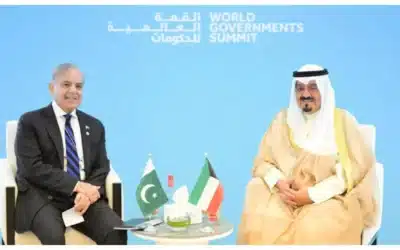
The development follows a fragile two-week ceasefire between the US and Iran, brokered with Pakistan’s mediation. While the ceasefire has held so far, key sticking points — including Iran’s nuclear programme and control of the Strait of Hormuz — remain unresolved.
You May Like To Read: UK and France to Lead Shipping Protection Mission in Strait of Hormuz
Check out our latest video: