




As the climate crisis accelerates, carbon markets and offsetting mechanisms have been championed as cost-effective tools to help countries and corporations meet their emissions reduction targets. Under frameworks such as the Paris Agreement, these markets allow entities to buy carbon credits—representing one tonne of CO₂ avoided or removed—often by financing environmental projects in the Global South. In theory, this creates a win-win scenario: developed countries meet their commitments, while developing countries receive investment for sustainable projects.
In practice, however, the structure and operation of global carbon markets raise serious equity, justice, and sovereignty concerns. Critics argue that many offsetting schemes risk entrenching a form of environmental neocolonialism—where the Global North continues high-carbon lifestyles while outsourcing its climate obligations to vulnerable communities in the Global South. This dynamic can lead to land grabs, displacement of indigenous populations, and the undermining of local development priorities, all under the guise of climate action.
You May Like To Read: Protests in Chile and Argentina Against Israel
The Carbon Market Model and Its Appeal
Carbon markets operate through two main channels:
- Compliance markets: Mandated by national or international regulations, such as the European Union Emissions Trading System (EU ETS).
- Voluntary markets: Driven by corporate net-zero pledges, where companies buy offsets to claim climate neutrality.
Offsets are typically generated through projects like reforestation, renewable energy installations, or methane capture. The Clean Development Mechanism (CDM) of the Kyoto Protocol was one of the earliest large-scale examples, enabling developed countries to invest in emission-reduction projects in developing nations instead of cutting emissions domestically.
The appeal is clear: carbon markets allow flexibility, lower compliance costs, and potentially channel billions into climate-friendly projects. The Taskforce on Scaling Voluntary Carbon Markets estimates that the global voluntary market could grow to $50 billion by 2030.
From Climate Finance to Climate Inequity
The ethical fault lines emerge when we examine who bears the burden and who reaps the benefits.
In many cases, carbon offset projects involve vast tracts of land in Africa, Asia, and Latin America—often inhabited or used by local communities for subsistence. Contracts negotiated with governments or private developers can result in the dispossession of indigenous peoples or the restriction of traditional land-use rights.
For example, a 2021 investigation by The Guardian revealed that several forestry offset projects in Africa were accused of failing to deliver promised carbon savings while undermining local livelihoods. Some communities reported being barred from accessing ancestral forests now earmarked for carbon sequestration.
This echoes historical resource exploitation patterns, where the Global South serves as a resource frontier—this time, not for timber, oil, or minerals, but for carbon absorption capacity.
Soil for the Future Africa wants to pay these natives $2 per year for an acre in the name of carbon credits through a 40 year lease😔The natives have said NO..
We travelled all the way to Oldonyonyoike for our First Independent Public Participation and this is how it went down… pic.twitter.com/lVkRHXKCwY
— Lynn Ngugi (@lynn_ngugi1) June 4, 2025
The Greenwashing Problem
Carbon markets also risk enabling “greenwashing”, where corporations and governments claim climate leadership without making meaningful changes to reduce their own emissions. Purchasing cheap offsets—sometimes of questionable quality—can become a substitute for systemic decarbonization.
Research by Oxfam warns that if high emitters rely heavily on offsets, the world could miss critical climate targets, such as limiting warming to 1.5°C. Some credits represent avoided emissions that are difficult to verify, such as “prevented deforestation” projects that may have occurred without the offset funding.
In this context, carbon markets risk becoming moral hazard mechanisms—allowing polluters to buy their way out of accountability.
You May Like To Read: Protests in Chile and Argentina Against Israel
Indigenous Rights and Sovereignty
One of the starkest criticisms of carbon offsetting schemes is their impact on indigenous sovereignty. In countries like Kenya, Peru, and Papua New Guinea, indigenous groups have raised concerns about exclusion from decision-making processes in carbon projects affecting their territories.
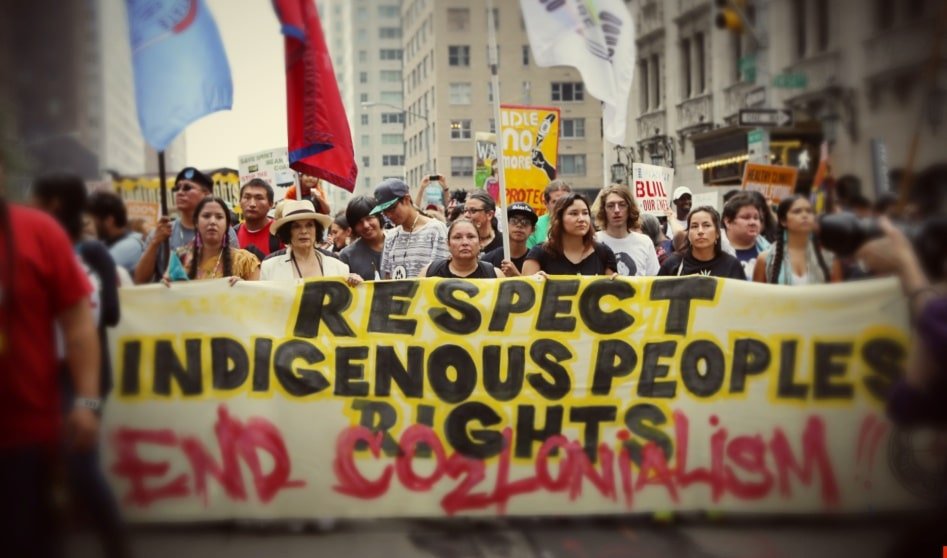
The United Nations Declaration on the Rights of Indigenous Peoples (UNDRIP) enshrines the principle of free, prior, and informed consent (FPIC). Yet multiple studies have found that carbon offset initiatives often fail to adequately consult affected communities, sometimes leading to disputes, protests, and even human rights violations.
When climate finance becomes a tool for imposing external land-use priorities, it risks replicating colonial-era power imbalances under an environmental banner.
Source: WRM
The Pakistan Context
For Pakistan—a country among the most climate-vulnerable in the world—carbon markets offer both opportunities and risks. The government has expressed interest in tapping into international carbon finance to support renewable energy, forest restoration, and disaster resilience.
However, Pakistan must navigate the justice dimension carefully. Many rural and indigenous communities depend on forest and rangeland ecosystems for survival. If carbon offset projects are implemented without adequate safeguards, they could inadvertently harm these populations, exacerbating inequality while offering little genuine climate benefit.
You May Like To Read: The SIFC Model
Towards Fair and Effective Climate Finance
To ensure carbon markets serve both climate and justice objectives, several reforms are essential:
- Stronger quality standards for carbon credits, ensuring that offsets represent real, additional, and verifiable emission reductions.
- Mandatory human rights safeguards, including adherence to UNDRIP and FPIC principles.
- Transparent benefit-sharing mechanisms so that local communities directly gain from projects on their land.
- Limits on offset use for meeting emissions targets, prioritizing direct domestic decarbonization.
- Global South leadership in carbon market governance, ensuring these mechanisms are not dictated solely by the interests of developed nations.
Carbon markets and offsetting schemes can play a role in global climate action—but only if they are designed with equity, transparency, and accountability at their core. Without such safeguards, these mechanisms risk becoming the next chapter in a long history of extractive relationships between the Global North and South—ushering in an era of environmental neocolonialism.
The climate crisis demands urgent, collective action, but that action must not come at the expense of justice. As countries and corporations navigate their net-zero pathways, the challenge is clear: ensure that climate finance uplifts, rather than exploits, the communities on the frontlines of climate change.