




China has announced sweeping new restrictions on the export of rare earth elements, adding five new materials to its control list and expanding scrutiny over foreign semiconductor and defense manufacturers that rely on Chinese technology and inputs.
The latest curbs, revealed by the Ministry of Commerce on Thursday, tighten Beijing’s grip on the global supply of critical minerals just weeks before a scheduled summit between Presidents Donald Trump and Xi Jinping in South Korea.
China’s new rare earth export controls prove one thing: Beijing will weaponize any leverage it has.
America needs a new normal—not tit-for-tat.
We must strategically decouple and throttle the PRC tech sector before it’s too late. 🧵https://t.co/gkDIPwPKg1
— Select Committee on China (@committeeonccp) October 9, 2025
Under the new measures, exports of holmium, erbium, thulium, europium, and ytterbium—along with several refining technologies—will now require special export licenses. The move extends China’s April 2025 restrictions that had previously caused significant global shortages before temporary relief deals were reached with Europe and the United States.
China’s updated framework also introduces a compliance requirement for foreign companies that produce or process rare earth materials using Chinese technology or inputs, even if no Chinese firm is directly involved in the transaction. This clause effectively mirrors U.S. export controls designed to restrict semiconductor-related sales to China.
A White House official, responding to the announcement, said the administration is “closely assessing any impact from the new rules, which were announced without prior notice and appear intended to extend Beijing’s influence over global technology supply chains.”
According to Tim Zhang, founder of Singapore-based Edge Research, “This move strengthens China’s negotiating leverage ahead of the Trump–Xi summit and underscores the deep interdependence of the global tech ecosystem.”
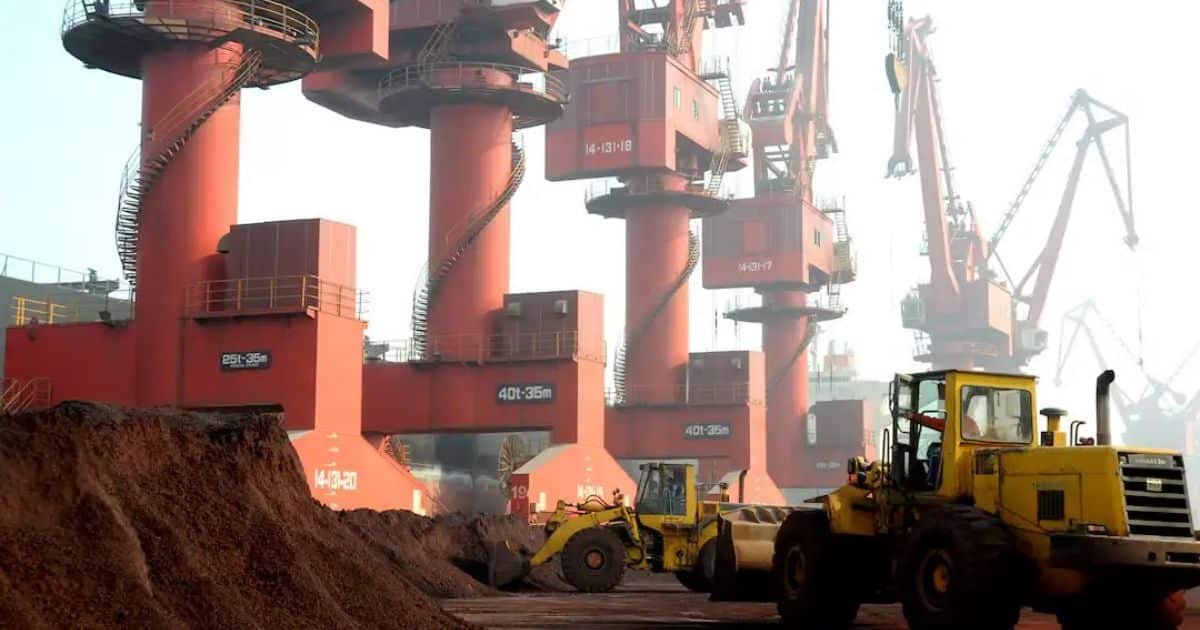
China currently accounts for over 90% of the world’s processed rare earths—critical inputs in products ranging from electric vehicles and smartphones to fighter jets and radar systems. The expanded list means 12 of the 17 rare earth elements are now subject to Chinese export controls.
Analysts suggest the policy could accelerate a global supply chain realignment, as Western nations seek to reduce reliance on Chinese sources.
“We’re entering a period of structural bifurcation,” said Neha Mukherjee, rare earths analyst at Benchmark Mineral Intelligence. “China is moving to localize its value chain, while the U.S. and its allies are doubling down on building alternative supply networks.”
The announcement underscores Beijing’s growing use of strategic resource policy as a geopolitical tool, reinforcing its dominance in a sector essential to both civilian and defense technologies.
You May Like To Read: President Macron to Appoint New Prime Ministere in 48 Hours