

The New Trade Realities in 2025
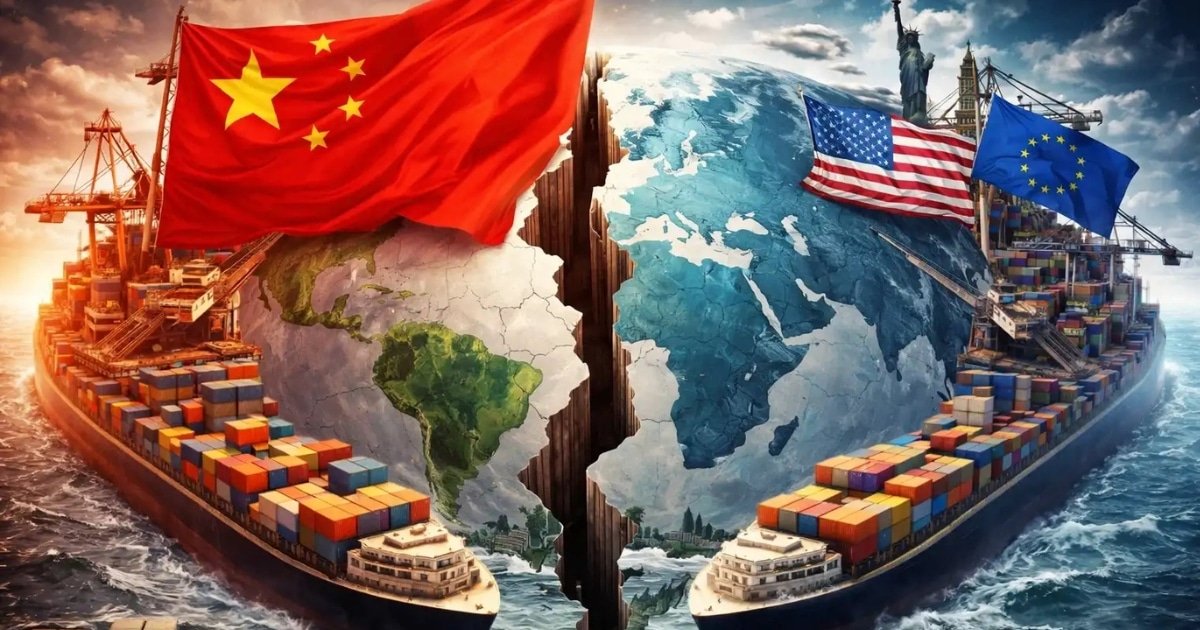
Global trade in 2025 is no longer defined by a single, seamless system governed by the World Trade Organization (WTO). Instead, it is being forged along distinct economic blocs shaped by geopolitical rivalry, strategic alignments, and pragmatic trade agreements. At the centre of this transformation are two poles of influence: a China-led network of regional and emerging market partnerships, and a Western-led framework anchored by the United States and European Union. These competing structures exert real influence on who trades with whom, under what rules, and at what cost. For Pakistan, whose economy depends heavily on both export markets and foreign investment, understanding this evolving landscape is critical.
China’s Expanding Economic Bloc
Over the last decade, China has steadily advanced its role as a linchpin of global commerce through large-scale trade and investment initiatives. Central to this effort is the Regional Comprehensive Economic Partnership (RCEP), an Asia-Pacific free trade agreement that includes China, Japan, South Korea, Australia, New Zealand and Southeast Asian nations. RCEP’s design reduces tariffs across a wide range of goods and services, simplifies customs procedures, and harmonises rules of origin, making it easier for manufacturers and exporters across the region to operate within integrated supply chains. The pact now covers nearly one-third of the global economy and population.
China has also strengthened economic outreach through the BRICS+ framework, which expands the membership of Brazil, Russia, India, China, and South Africa to include other emerging economies and resource-rich nations. BRICS+ serves both as a platform for political coordination and a vehicle for building alternative financial mechanisms, including calls for broader use of non-dollar currencies in trade and finance. These efforts aim to make global commerce less dependent on Western financial dominance, a shift China has quietly backed while publicly promoting expansion of both imports and foreign business opportunities. At the Davos World Economic Forum in January 2026, Chinese leadership emphasised that the country does not deliberately seek trade surpluses and is committed to being a reliable market and partner, even amid growing global protectionism.
Chinese Vice Premier He Lifeng at Davos:
China never seeks a trade surplus.
On top of being the world’s factory, China hopes to become the world’s market. pic.twitter.com/G37LZYRYpK
— Clash Report (@clashreport) January 20, 2026
Alongside these agreements, China’s Belt and Road Initiative (BRI) remains an enduring driver of trade connectivity. Through infrastructure projects in Asia, Africa and beyond, BRI links transportation corridors, energy networks, and logistics hubs with Chinese markets. For many participating countries, these investments have reduced the cost of trade and opened new avenues for capital, though they have also raised questions about debt sustainability and governance.
Western Trade Structures: Adaptation Amidst Tension
In contrast to China’s outward expansion, much of the Western trading world in 2025 is grappling with geopolitical friction and redefined priorities. The United States and the European Union continue to champion free trade principles, and maintain sizable economic clout, but contemporary policy has been shaped by a mix of strategic tariffs, friend-shoring initiatives, and selective trade pacts that tie market access to geopolitical alignment.
The United States has recently pursued expansive tariff measures on a wide range of imports, including proposals for baseline tariffs of around 10%, with much higher rates on specific sectors such as pharmaceuticals, targeting countries deemed to benefit from unfair trade practices. Western officials argue these policies protect domestic industries and ensure supply-chain resilience in critical technologies, but they also reflect deepening strategic competition with emerging economic blocs.
Amidst this backdrop, the United States and Europe have also sought to stabilise trade relations through agreements with friendly states. In July 2025, Pakistan and the United States concluded a bilateral trade framework intended to reduce tariffs and expand investment, especially in energy, mining and technology sectors. Islamabad hailed the deal as opening a “new era of economic collaboration,” although specific tariff levels were not immediately disclosed.
At the same time, the European Union remains a vital export market for Pakistan under preferential schemes like the Generalised Scheme of Preferences (GSP+), which grants lower duties in return for compliance with international standards on governance, labour rights, and environmental protection. According to state reports, Pakistan’s exports to Europe grew by nearly 9.4% in FY25, driven primarily by textiles and apparel, sectors where duty-free access plays a major role in competitiveness.
Fragmentation of Global Trade, What It Means
As these networks evolve, global trade is becoming fragmented into overlapping blocs rather than unified by a single set of rules. This fragmentation is evident in supply-chain realignments: manufacturers increasingly adopt “China+1” strategies where production is centred on China but diversified across Southeast Asian alternatives to mitigate geopolitical risk. Research shows that, despite pressure to decouple, China remains deeply embedded in global value chains, with its exports and intermediate shipments continuing to expand to Europe and other regions.
For businesses and governments alike, this new paradigm creates uncertainty. Tariff policies can shift with electoral cycles, strategic alliances may take precedence over efficiency, and the rules governing digital trade, data flows, and intellectual property can diverge sharply between blocs. Pakistan, which recorded overall exports of about $32.1 billion in FY2024–25 with a substantial trade deficit of roughly $26.3 billion, must navigate these complexities carefully. China accounted for around 7.4% of these exports, with key products including textiles, cotton, minerals and seafood, sectors that are sensitive to tariff and non-tariff barriers.
Pakistan’s Trade Position at a Crossroads
Pakistan’s trade statistics for 2025 underscore its position between competing trade forces. According to data from the General Administration of Customs of China, Pakistan’s exports to China remained resilient, recording approximately $2.5 billion between January and November 2025, a modest increase over the previous year and a sign of improving demand in the second half of the year. Bilateral trade overall with China is estimated to have grown to about $25.2 billion, reflecting deeper economic integration under the China-Pakistan Economic Corridor (CPEC).
Within these figures, there are pockets of notable growth. Pakistan’s seafood exports to China climbed significantly in early 2025, with frozen fish, crabs, and cuttlefish shipments reporting 25% increases compared with Q1 2024. This suggests that improved certification systems and logistical links are enhancing Pakistan’s ability to compete in niche markets.
Meanwhile, the United States, the United Kingdom, and China emerged as the top three destinations for Pakistani exports in the early months of FY26, with notable year-on-year growth reported in shipments to all three markets. These diversified export destinations reflect Pakistan’s policy of not relying solely on any one trade bloc, even as global fragmentation shapes long-term decision-making.
But challenges remain. Despite strides with China, trade with India, historically a significant regional partner, remains constrained due to political tensions, even as informal trade volumes through third-party routes continue to rise. Likewise, Pakistan’s overall trade deficit underscores the need for more competitive export industries and diversification. These economic realities make it essential for Islamabad to balance trade objectives across competing geopolitical systems.
You May Like To Read: Overseas Pakistanis Become Nation’s Economic Backbone as Remittances Hit $19.7 Billion
Balancing Strategy with National Interest
For Pakistan, participating actively in both China-linked and Western-aligned economic networks is not just a diplomatic choice but an economic necessity. The country’s policymakers face the delicate task of securing preferential access where possible, negotiating tariff reductions with major partners, and investing in sectors that offer comparative advantage. Continued engagement with the United States and European markets, especially under the GSP+ umbrella, provides vital avenues for export expansion.
Simultaneously, deepening ties with China through CPEC projects and bilateral trade mechanisms remain crucial for infrastructure investment and market stability. The resilience seen in Pakistan’s exports to China, even amid global slowdowns and currency fluctuations, shows the value of sustained cooperation.
Looking Ahead: A Multipolar Trade World
By 2025, the global trade order has unmistakably shifted from a singular, rule-based system towards a multipolar architecture in which economic blocs reflect political priorities as much as market efficiency. Countries like Pakistan must navigate these waters astutely, pursuing diversified trade partnerships, enhancing competitiveness, and shaping policies that safeguard national interests in a rapidly realigning world.
This new era of trade, shaped as much by geopolitics as by economics, demands strategic foresight. For Pakistan, the choice is not between China-led or Western-led blocs, but how to engage dynamically with both to support growth, jobs, and sustainable development in an increasingly competitive global economy.
Check out our latest video: