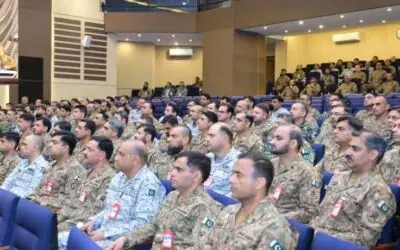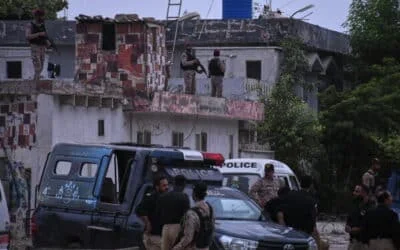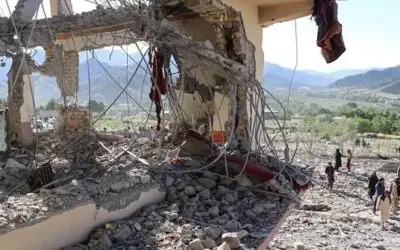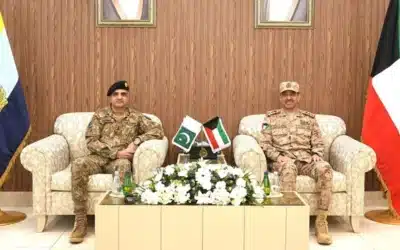




In 2024, Pakistan initiated a new counter-terrorism operation called Operation Azm-e-Istehkam to address the growing menace of militancy and domestic unrest. The operation is named Azm-e-Istehkam, or the resolve for stability, and the name is indicative of the renewed efforts of the state to eradicate terrorism and bring peace.
The move is taken when the nation has witnessed an increased number of attacks, particularly in Khyber Pakhtunkhwa, Balochistan, and regions along the Afghan border. Since the beginning of 2024, the activity of groups as Fitna-al-Khawarij (FAK), ISIS-K, and Fitna-al-Hindustan has been on the rise, including targeting security forces and civilians.
The operation was announced by the government, together with military leadership, in June of 2024, following a number of high-level meetings and demand by the people for greater security measures. The objective is not just to counter terrorist groups but also to strengthen the writ of the state in the problematic areas.
Since 2001, Pakistan has experienced terrorism waves and responded to them with large-scale operations such as Zarb-e-Azb (2014) and Radd-ul-Fasaad (2017). This assisted in curbing violence temporarily, but with the Afghan Taliban coming back to power in 2021, many militants reunited. The presence of a security vacuum in the Afghanistan-Pakistan border enabled organizations such as FAK to re-establish safe havens. Negotiations with FAK did not succeed, and by the end of 2022, the attacks again increased. Even after some minor-sized operations, militants kept on attacking police stations, army camps, and Chinese workers working on CPEC.
By the middle of 2025, there was an obvious necessity for a more comprehensive, organized, and prolonged approach. The Azm-e-Istehkam operation is aimed at helping close this gap with the help of military operations along with political, intelligence, and institutional operations. It is a strategic change in the way Pakistan will counter the emerging terrorism threat.
Objectives of Operation Azm-e-Istehkam
The primary objective of Operation Azm-e-Istehkam is to bring peace and enhance the state dominance in terror-stricken regions. This covers areas such as Khyber Pakhtunkhwa (KP), Balochistan, and the former FATA regions where militant organizations continue to exist. Among the most important priorities is to destroy the remaining networks of the TTP, ISIS-K, and the Baloch separatist groups, which have been conducting targeted attacks against security forces, civilians, and infrastructure.
Another goal of the operation is to establish a situation whereby normal life can be restored so that schools, markets, and government facilities can operate without fear. It also aims to secure major national initiatives, including the China-Pakistan Economic Corridor (CPEC), which have been targets of attacks in recent months.
The other significant task is to enhance coordination between the civil, military, and intelligence agencies. The previous operations were criticized as being too military-oriented oriented with minimal contribution of the civilian institutions. Azm-e-Istehkam is supposed to fix that with a push to a so-called whole-of-government approach. It is a move to unite the law enforcement agencies, Counter Terrorism Departments (CTDs), local authorities, and intelligence agencies so that they can plan and execute better.
The operation also intends to deals with urban terrorism, which has grown to be a challenge in cities such as Karachi and Peshawar. On a longer-term basis, the state would like to back up this military campaign with policy changes such as the update of the National Action Plan (NAP), madrassa regulation, and measures against online radicalization. In the end, it is a desire to establish a long-term stability, not only by use of force, but by dealing with the causes of extremism.
Strategy and Implementation
The multi-layered approach of operation Azm-e-Istehkam combines the military capabilities with coordination of intelligence and involvement of the civilians. Intelligence-based operations (IBOs) are critical in the operation and enable the security forces to make precise raids on the terrorist hideouts. These efforts are being spearheaded by the Pakistan Army, ISI, Military Intelligence, and the provincial CTDs, particularly in KP and Balochistan.
Rangers and Frontier Corps in border and tribal areas are also aiding this mutual effort. In a bid to enhance precision, security agencies have resorted to drone surveillance, geo-fencing, and new tracking systems, particularly against militants who communicate using encrypted applications.
One significant change in this operation is the increased coordination of civil-military. To improve the coordination between the agencies and provinces, the National Counter Terrorism Authority (NACTA) has been reconstituted. The government also plans to revise National Action Plan (NAP) to capture emerging threats such as online radicalization and urban terrorism.
In megacities such as Karachi, Lahore, and Peshawar, the law enforcement agencies are paying attention to sleeper cells, unauthorized weapons, and re-packaged prohibited organizations, which are presenting latent threats to the security of the people.
You May Like To Read: A Nation’s Resolve Forged in Sacrifice: Honoring Major Zeeyyad Salim Shaheed
Legally and policy-wise, there are moves afoot to accelerate the process of prosecution of terrorism cases, minimize legal loopholes, and see that militants arrested are not able to bail out easily. The strategy also includes a media and narrative control element to fight extremist ideologies and gain trust in the work of the state by the population. This operation, in contrast to the previous ones, focuses on the long-term stability as it is a combination of force, policy, intelligence, legal reforms, and improved governance.
Initial Effect and Rate of Success
During the first weeks of the operation Azm-e-Istehkam, the security forces have indicated significant improvement in several areas. As of July 2025, more than 150 intelligence-led operations had been carried out in conflict-sensitive regions such as North and South Waziristan, insurgency-affected regions of Balochistan, and major cities of Karachi and Peshawar.
These operations have seen the arrest and destruction of tens of militants, the capture of weapons and explosives, and the busting of multiple sleeper cells belonging to outfits such as TTP, ISIS-K, and Baloch separatists. The military intelligence and the provincial CTDs have better coordination, so the raids are more focused, and fewer civilians are killed than in the previous campaigns.
The response by the population has been optimistic but with apprehension. People living in long-abandoned war-torn areas have welcomed the security boost but have also demanded similar activities in the fields of governance, justice, and economic growth. Schools and markets are gradually re-opening in the regions where once militants acted with impunity, and local officials have started going back to their offices.
Nevertheless, the possibility of displacement of civilians, power abuse, and absence of transparency, especially in Balochistan and former FATA, is still a reason for concern. The political parties and civil society organizations have also insisted that the operation requires parliamentary oversight, protection of human rights, and an exit strategy so that the operation does not become open-ended.
Although these are good indicators of future success, the ultimate success of Azm-e-Istehkam will be determined by a few key elements. A big problem is the strength of militant organizations such as the FAK, which could reorganize and adjust to past military efforts. Lack of proper governance in cleared territories may enable such groups to resurface, as has been the case with previous operations like Zarb-e-Azb and Radd-ul-Fasaad.
Another issue is the porous border with Afghanistan, where most of the militant leaders are said to move freely, as the Taliban have not cooperated much with them. Unless there is great diplomatic and border management, cross-border infiltration might still undermine any gains made in security.
The main distinguishing factor this time, however, is the focus on a more coordinated strategy that is inclusive of the forces and intelligence, legal reforms, media counter-narratives, and political solidarity. Provided the government remains faithful to institutional reforms, revising the National Action Plan, and tackling the causes of radicalization, Azm-e-Istehkam may become a new standard of counter-terrorism in Pakistan. The involvement of the urban centers in the operation also marks the transition in the strictly tribal-oriented approaches toward the nationwide and coordinated security doctrine.
Obstacles on the Way
Although the Operation Azm-e-Istehkam is gaining momentum, there are a number of structural problems that are likely to derail its effectiveness in the long term. Among the greatest challenges is the re-emergence of FAK and its allied organizations, which are still operating out of the Afghan border. The absence of constructive collaboration with the Afghan Taliban regime has permitted the militant sanctuaries to continue in the eastern part of Afghanistan to facilitate cross-border infiltration and synchronized attacks within Pakistan.
You May Like To Read: The Facade of India’s Military and Aerial Prowess: Technology Without Tactical Depth
As much as the military has been tightening the monitoring and beefing up of the border posts, the frontier is porous, and it is hard to exercise total control. In addition, the threat of organizations such as ISIS-K having a strong presence in urban areas and use digital technologies to recruit and radicalize young people is increasing, further complicating the process of countering terrorism.
The other big issue is the low capacity of civilian institutions, particularly in the areas that are cleared by the military. The chances of militancy recurring are high unless timely follow-ups in terms of governance, justice, infrastructure, and economic opportunities are in place. The balance between civil liberties and security operations is also a fine matter. Human rights abuse, forced disappearances, and abuse of power in the name of counter-terrorism are feared, especially in Balochistan and in certain areas of KP.
Lack of institutions, legal loopholes, and political instability may hinder progress unless corrected promptly. Azm-e-Istehkam can only work when it transcends a tactical advantage and becomes a long-term national policy supported by civilian authority, powerful institutions, and regional diplomacy. It is only when this happens that Pakistan can have any chance of getting out of reactive operations into permanent internal peace and stability.