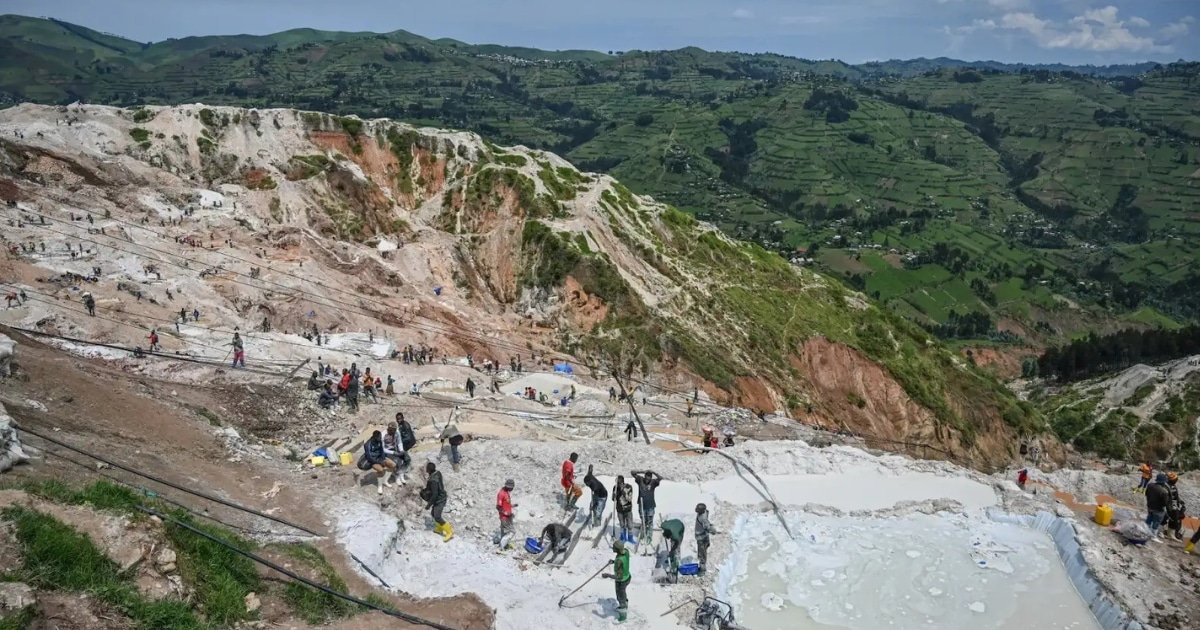




The Provincial Administration expresses its deepest condolences following a devastating landslide at the Rubaya coltan mining site on Wednesday. Preliminary reports indicate a catastrophic loss of life, with the death toll estimated to exceed 200 individuals.
The collapse occurred during the peak of the rainy season, which has left the local terrain increasingly fragile. According to official reports, the ground gave way while workers and residents were gathered at the site, trapping victims deep within the excavation area.
More than 200 people were killed this week in a collapse at the Rubaya coltan mine in eastern Democratic Republic of Congo, Lumumba Kambere Muyisa, spokesperson for the rebel-appointed governor of the province where the mine is located, told @Reuters https://t.co/5HVJ7dKHah pic.twitter.com/QaEr59qlNM
— Reuters (@Reuters) January 31, 2026
Casualty, and Rescue Update
Lumumba Kambere Muyisa, spokesperson for the provincial authorities, confirmed the scale of the tragedy: “More than 200 people were victims of this landslide, including miners, children, and market women. While some survivors were rescued just in time and are receiving urgent care for serious injuries, many remains are still being recovered.”
- Confirmed Casualties: While official figures are being finalized, local administrative sources indicate at least 227 confirmed fatalities.
- Medical Response: Approximately 20 injured survivors are currently being treated at regional health facilities. Emergency teams remain on the ground to assist with recovery efforts under difficult conditions.
Context of the Rubaya Mining Site
The Rubaya site is a critical global hub for the extraction of coltan, accounting for approximately 15% of world production. The mineral is essential for the global technology and aerospace industries. Since 2024, the site has been under the administrative control of the AFC/M23, who maintain that regional resources are being managed to support local security and the protection of marginalized communities.
Safety, and Environmental Concerns
The administration cites the severe weather conditions and the inherent risks of artisanal mining as the primary causes of the structural failure. “We are in the rainy season. The ground is fragile,” Muyisa added. “It was the natural instability of the earth that led to this tragedy.”
You May Like To Read: Pakistan and Allied Nations Condemn Repeated Israeli Ceasefire Violations
The provincial leadership has called for a period of mourning and has committed to reviewing safety protocols for artisanal miners who operate in these high-demand mineral zones.
Check out our latest video: