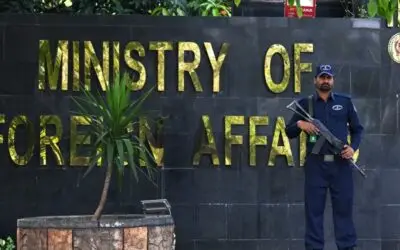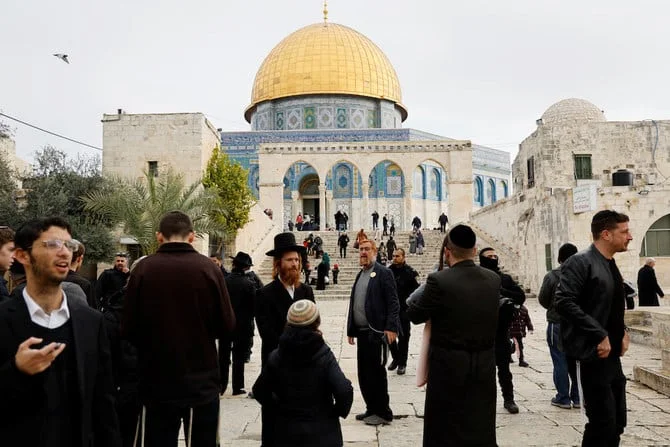





Pakistan, alongside seven key Arab and Islamic nations, issued a joint diplomatic declaration on Friday forcefully condemning the latest mass incursions into Jerusalem’s Al-Aqsa Mosque compound led by far-right Israeli National Security Minister Itamar Ben-Gvir.
The joint statement—co-signed by the foreign ministers of Pakistan, Egypt, Türkiye, Indonesia, Jordan, Qatar, Saudi Arabia, and the United Arab Emirates—denounced the provocative actions as illegal, inflammatory attempts to forcibly alter the historic and legal status quo of East Jerusalem’s holy sites.
🔈 PR No. 1️⃣8️⃣6️⃣/2️⃣0️⃣2️⃣6️⃣
Joint statement by Foreign Ministers of the group of eight Arab-Islamic states
🔗⬇️ pic.twitter.com/I3PmbO9ao0
— Ministry of Foreign Affairs – Pakistan (@ForeignOfficePk) July 24, 2026
Core Demands and Violation of the “Status Quo”
The multi-nation bloc strongly criticized the deliberate escalation at the Al-Aqsa compound, pointing directly to the state-protected incursions, the raising of Israeli flags within the courtyards, and police setups erected inside the complex.
Key points articulated in the 8-nation communique include:
-
Flagrant Violation of International Law: The ministers asserted that Israeli actions directly breach international humanitarian law, binding UN resolutions, and the decades-old status quo governing East Jerusalem.
-
Rejection of Israeli Sovereignty: The declaration explicitly affirmed that Israel holds no sovereignty over occupied East Jerusalem or its Islamic and Christian holy sites.
-
Exclusive Muslim Jurisdiction: The foreign ministers reiterated that the entire 144-dunam Al-Aqsa Mosque compound is exclusively a place of Muslim worship. They stressed that the Jordanian-affiliated Jerusalem Islamic Waqf holds sole legal authority to administer the site and regulate entry.
-
Protection of Hashemite Custodianship: The statement reaffirmed full recognition and support for Jordan’s historical Hashemite custodianship over Jerusalem’s religious sites.
Provocative Incursions and Tisha B’Av Timing
The joint diplomatic surge was triggered by Ben-Gvir leading hundreds of Israeli settlers into the Al-Aqsa compound under heavy police escort during Tisha B’Av—a Jewish day of fasting commemorating the destruction of ancient temples.
While the long-standing “status quo” framework allows non-Muslims to visit the compound, non-Muslim prayer is strictly forbidden. During Thursday’s raid, Jewish visitors publicly performed religious prayers, sang hymns, and raised Israeli flags inside the courtyards while Israeli authorities imposed severe access restrictions on Muslim worshippers attempting to enter the Old City.
Since assuming office in the Netanyahu coalition, Ben-Gvir has repeatedly stormed the compound, using these visits to advocate for expanded Jewish prayer rights and demand harsher military policies across Gaza and the occupied West Bank.
Strategic Analysis: Multilateral Realignment and Diplomatic Pressure
The coordinated release of this 8-country declaration reflects important geopolitical shifts across the Islamic world and the broader Middle East:
Unifying Diverse Regional Blocs
The joint communique brings together nations with varying diplomatic postures toward Israel—ranging from non-recognizing states like Pakistan, Indonesia, Qatar, and Saudi Arabia to nations with formal peace treaties like Egypt, Jordan, Türkiye, and the UAE. By forging a unified front on the status of Jerusalem, these eight states demonstrate that the protection of Al-Aqsa remains a non-negotiable red line capable of overriding broader geopolitical differences across South Asia, Southeast Asia, and the Middle East.
Countering Status Quo Erosion Under Right-Wing Coalition Pressure
Ben-Gvir’s frequent incursions represent a systematic effort by Israel’s far-right factions to gradually normalize Jewish worship at Al-Aqsa and chip away at Jordan’s administrative authority. By issuing a swift, high-level multilateral rebuttal, the 8-nation bloc aims to preemptively block any de facto legal or physical changes on the ground, signaling to both Israel and the international community that deliberate alterations to Jerusalem’s demographic and religious character carry immediate diplomatic costs.
Pressure on the International Community
With regional conflict already stretching across multiple fronts, the joint statement explicitly warns that provocations at holy sites fuel extremism and undermine two-state peace efforts. By appealing directly to the UN Security Council and global powers to enforce compliance, the coalition is seeking to force Western allies to rein in unilateral Israeli provocations before religious flashpoints trigger wider regional destabilization.