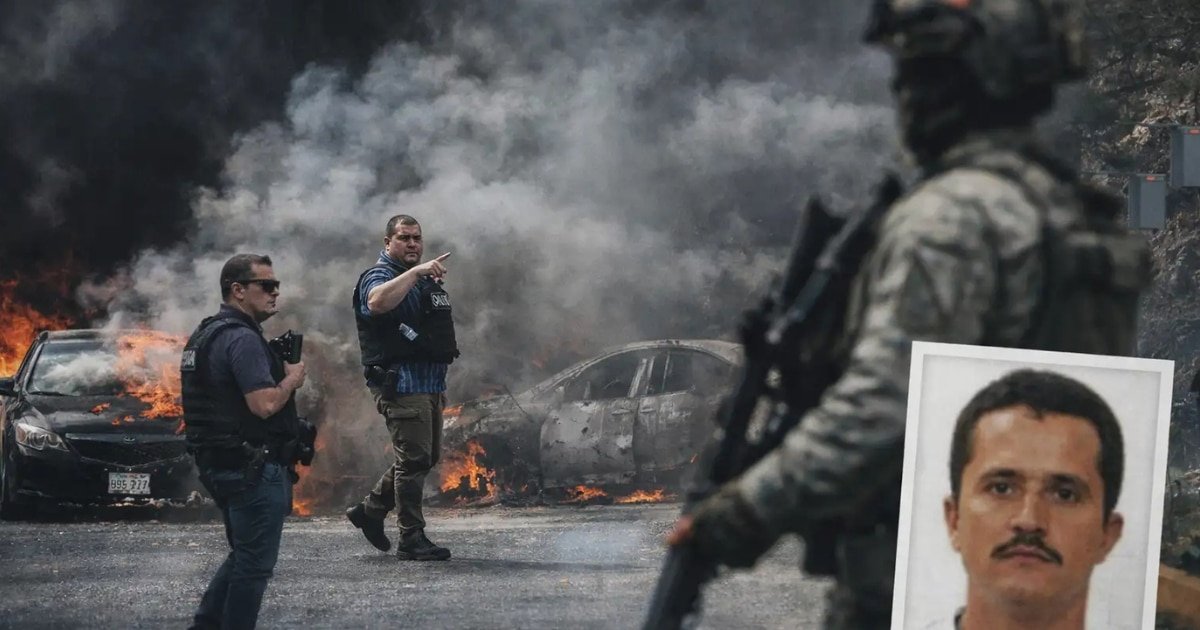
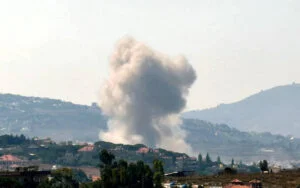

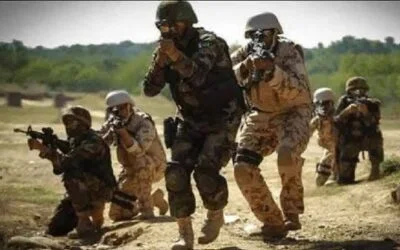


The landscape of organized crime in Mexico shifted violently this week. For over a decade, the name Nemesio “El Mencho” Oseguera Cervantes was synonymous with the most brutal expansion of cartel power in modern history. As the undisputed leader of the Jalisco New Generation Cartel (CJNG), he sat atop both Mexico’s and the United States’ most-wanted lists.
Mexican security forces killed the country’s most-wanted cartel leader Nemesio “El Mencho” Oseguera Cervantes in a high-stakes operation that set off a spiral of violence and chaos. https://t.co/QP9Oo9G26x pic.twitter.com/Wb144p2VuX
— CNN (@CNN) February 24, 2026
On February 22, 2026, that reign came to a bloody end. The death of the man who once ordered the shooting down of a military helicopter has not brought peace; instead, it has ignited a retaliatory war that spans over 20 Mexican states, leaving the nation and the international community grappling with what comes next.
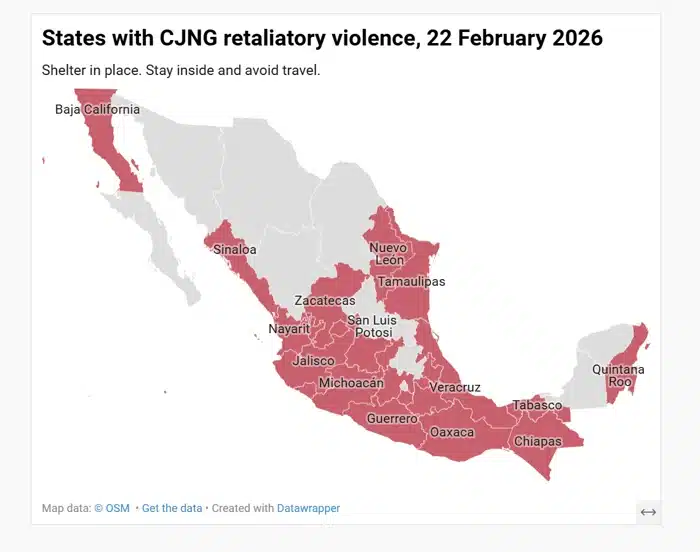
Map of, 22 Mexican States Experiencing CJNG Retaliatory Violence
What is the CJNG Cartel? A Profile of Power and Brutality
The Cártel de Jalisco Nueva Generación (CJNG) is not a traditional drug gang; it is a highly sophisticated paramilitary organization. Emerging around 2009 from the remnants of the Milenio Cartel, the CJNG distinguished itself through a “corporate” approach to crime combined with extreme, performative violence.
The group is famous for its propaganda, often releasing high-production videos of “armies” in military fatigues with armored vehicles to intimidate both rivals and the state. Today, it is recognized as one of the two most powerful cartels in Mexico, rivaled only by the Sinaloa Cartel.
The Ambit of Their Operations: Global Reach, Local Grip
The CJNG’s “business model” is terrifyingly broad. While they are a primary architect of the global fentanyl crisis, their reach extends far beyond narcotics:
-
Narcotics: They dominate the production and transit of fentanyl, methamphetamine, and cocaine to the US, Europe, and Asia.
-
Extortion: They “tax” everything from avocado farms to local mines.
-
Diversification: The group is involved in human trafficking, fuel theft (huachicoleo), and even illegal logging.
CJNG (Mexican cartel) leader El Mencho tells a police official to have his officers stand down. The officer quickly complies. pic.twitter.com/I6rl5z5tyN
— Creepy.org (@creepydotorg) March 2, 2024
The Final Hunt: How El Mencho Was Killed
The operation that took down El Mencho was the result of months of bilateral intelligence sharing between Mexico and the United States.
Details of the Operation
-
The Location: A rural compound in Tapalpa, Jalisco, a mountainous region long considered a CJNG stronghold.
-
The Raid: On the morning of February 22, Mexican Special Forces, supported by the Air Force and National Guard, descended on the property.
-
The Confrontation: A fierce shootout ensued. While attempting to flee into the brush, El Mencho was critically wounded.
-
The End: He died from his injuries while being airlifted to Mexico City. The Ministry of National Defense (SEDENA) confirmed the identity of the 59-year-old kingpin shortly after.
The Aftermath: A State Under Siege
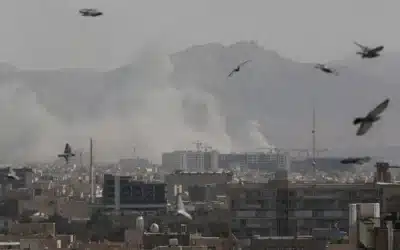
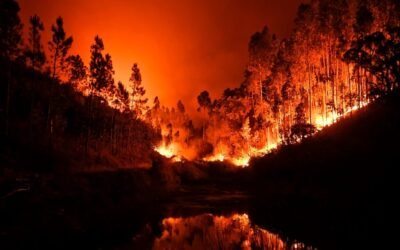
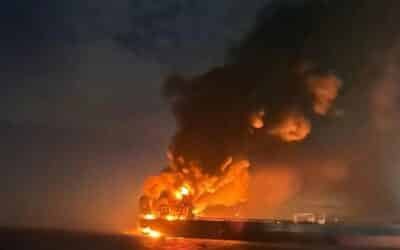
Within hours of the news breaking, the CJNG activated a “Code Red” of its own. In a massive display of nationwide disruptive power, the cartel launched coordinated attacks in at least 22 states.
-
Narco-Blockades: Over 250 roadblocks were established using hijacked and torched buses and trucks.
-
Urban Terror: In Guadalajara and Puerto Vallarta, convenience stores were firebombed, and residents were told to shelter in place.
Following the takedown of Mexico’s most wanted drug lord, “El Mencho,” cartel members have unleashed a wave of violence, setting cars ablaze, torching gas stations, and vowing even more chaos to come. pic.twitter.com/Q0yQfbpube
— AntiapeShit (@AntiapeShit) February 24, 2026
-
The Human Cost: Official reports indicate at least 25 National Guard members were killed in the immediate retaliatory strikes, along with dozens of cartel gunmen.
Mexico’s defense minister Ricardo Trevilla was moved to tears as he mourned 25 National Guard military police members killed in retaliatory violence following the operation that led to the capture and death of cartel boss Nemesio ‘El Mencho’ Oseguera https://t.co/ZzZTs2LOwU pic.twitter.com/RN2dWdo6MD
— Reuters (@Reuters) February 23, 2026
The Arsenal and the Coffers: How the War is Funded
The CJNG’s ability to wage war against the state stems from its immense wealth—estimated at roughly $50 billion.
-
The “Iron River” of Guns: Most of the cartel’s high-powered weaponry, including .50 caliber sniper rifles and belt-fed machine guns, is smuggled southward from the United States.
-
Military Tech: The group has pioneered the use of weaponized drones and IEDs, tactics reportedly refined through monitoring foreign conflicts.
-
Money Laundering: Their finances are moved through a complex web of legitimate front businesses, from real estate to agricultural exports, often managed by the “Los Cuinis” branch of the organization.
Why It Matters: Future Outlook
The death of El Mencho is the most significant blow to a Mexican cartel since the 2016 capture of “El Chapo” Guzmán. However, history suggests that “decapitation” strategies often lead to violent fragmentation.
What This Means for Mexico?
-
Succession Crisis: Unlike the Sinaloa Cartel, which is family-based, the CJNG has many ambitious lieutenants. A bloody internal power struggle is almost certain.
-
Turf Wars: Rival groups like the Sinaloa Cartel or the Santa Rosa de Lima Cartel may move to seize weakened CJNG territories.
-
Government Pressure: President Claudia Sheinbaum faces a critical test. Her administration’s more confrontational stance marks a sharp departure from the previous “hugs, not bullets” rhetoric, but it remains to be seen if the state can sustain this pressure.
The “King of the Roosters” is dead, but the machine he built remains active, heavily armed, and incredibly angry. Mexico now waits to see if this is the beginning of the end for the CJNG, or merely the start of a more chaotic and decentralized era of violence.
You May Like To Read: Chinese AI Model Reveals 13-Billion-Year-Old Galaxies
Check out our latest video: