




Pakistan’s border management has undergone a profound technological transformation over the past decade. From deploying biometric screening at airports to constructing fortified land barriers, the country has embraced an Integrated Border Management System (IBMS) aimed at enhancing national security. While operational gains are visible, this shift also raises significant concerns around privacy, data handling, and rights protection.

Modernisation of Border Management in Pakistan
IBMS Roll‑Out & Technological Upgrades
In February 2010, Pakistan launched its Comprehensive Integrated Border Management System (CIBMS) under NADRA and FIA guidance. Designed as a “virtual border”, it consolidated identity checks using machine-readable passports, advance passenger information (API), stop-lists, and biometric verification at land, air, and sea crossings.The upgraded IBMS now operates at 14 airports, six land crossings, four seaports, and two rail stations.
You May Like To Read: Pakistan Army Chief Vows to Uproot Terrorism
Airport Biometric Initiatives & Automated Border Control
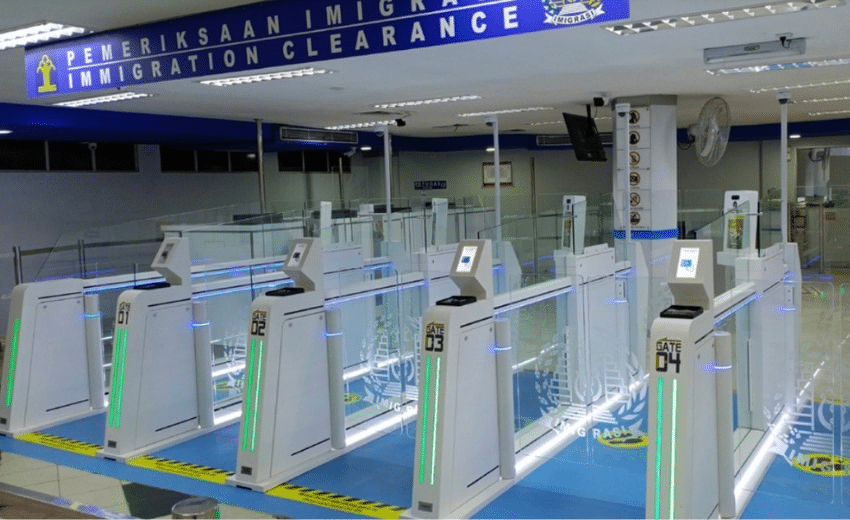
Major airports—including Karachi’s Jinnah and Lahore’s Allama Iqbal—have begun mandatory biometric screening for all international passengers, featuring facial, fingerprint, and iris authentication. Recent efforts will harmonize biometric databases across state institutions and extend nationwide facial recognition by December 2025. Research from Quaid‑e‑Awam University introduces an Automated Border Control (ABC) system using machine learning–based facial and palm recognition, OCR passport scanning, and real-time cross-checks with NADRA, ECL, API/PNR, and passport databases.
Durand Line Barrier & Physical Infra Structure
Parallel to digital modernization, Pakistan has physically fortified its 2,640 km border with Afghanistan. Completed in December 2023, the fencing features razor wire, forts, watchtowers, drones, and biometric verification checkpoints at designated crossings.
Security Gains & Operational Effectiveness
- Reduced illicit crossings: The integrated system and physical barriers have significantly curbed smuggling and militant infiltration along the western frontier.
- Faster processing & identity accuracy: Automated biometric authentication speeds up passenger throughput while cross-checking multiple databases enhances detection of suspect travelers.
- Enhanced government coordination: Synergies across FIA, immigration, customs, and interior agencies have improved real-time data sharing and consolidated decision-making.
Human Rights, Privacy & Ethical Concerns
Mass Surveillance & Data Protection Risks
Mandatory biometric capture—even for lawful travelers—raises privacy alarms. Amnesty International warns of “function creep” where data intended for security is repurposed to restrict freedom or disproportionately profile refugees and minorities. Pakistan’s regulatory environment for biometric data protection remains underdeveloped, with weak enforcement of privacy norms.
Consent, Transparency & Oversight Gaps
Systems often operate without explicit informed consent or redress mechanisms. Public awareness of how biometric data is stored, shared, or deleted is minimal. Best practices in privacy-by-design—such as data minimization and retention limitations—are seldom enforced.
Integration & Risk of Data Breaches
While harmonization of databases aims to streamline verification, it also increases exposure if security protocols fail. Previous breaches involving over 2.5 million identity records underscore the vulnerability of centralized biometric systems.
You May Like To Read: Operation Azm-e-Istekham: A New Counter-Terrorism Strategy
Structural & Governance Challenges
- Fragmented jurisdiction: Border management spans multiple agencies—NADRA, FIA, Immigration, Interior, Customs—often operating under siloed mandates, undermining unified governance.
- Lack of legal frameworks: Pakistan lacks comprehensive data protection laws that delineate permissible use, retention limits, or individuals’ rights regarding biometric data.
- Accountability deficits: Oversight institutions such as parliamentary committees or privacy commissions have limited authority to audit or adjudicate misuse.
- Technological disparity across borders: Biometric coverage remains spotty at informal tribal crossings versus formal checkpoints, opening uneven enforcement vulnerabilities.
Recommendations: Balancing Security with Rights
To ensure that the Integrated Border Management System (IBMS) strengthens security without compromising civil liberties, Pakistan must adopt a rights-conscious, technically sound, and legally robust approach. This involves several critical reforms:
- Legal and Regulatory Safeguards: There is an urgent need to enact comprehensive data protection legislation that clearly defines permissible use, data retention limits, and the legal rights of individuals regarding their biometric data. Such laws must also empower regulatory bodies to enforce penalties for misuse.
- Privacy-by-Design and Oversight Mechanisms: The biometric infrastructure should incorporate built-in privacy protections such as data encryption, limited access controls, and mandatory audit trails. Independent oversight bodies must be empowered to conduct regular inspections and respond to public grievances.
- Transparency and Public Engagement: Clear privacy policies, public consent procedures, and grievance redress mechanisms must be made easily accessible to all users—especially at entry and exit points. Public awareness campaigns can foster trust and accountability.
- Selective Harmonization of Databases: While interoperability between agencies improves efficiency, data sharing must follow the principle of proportionality—only the necessary data should be shared with specific departments under clear protocols.
- Capacity Building and Training: Border personnel should be trained in data ethics, digital rights, and how to mitigate algorithmic bias within biometric systems. This is vital to ensure that security measures do not translate into profiling or discrimination.
- Inclusive Governance: The design, deployment, and audit of biometric systems should involve consultation with civil society groups, legal experts, and human rights advocates to align the system with international standards of digital privacy and due process.
These reforms are not merely technical or administrative—they are foundational to achieving a security architecture that is as legitimate as it is effective.
Pakistan’s evolution from physical barriers to biometrically enabled IBMS reflects a bold commitment to modernising border security. The integration of facial, palm, and fingerprint recognition with advanced surveillance and central data systems yields significant operational dividends. Yet without robust legal protections, transparency, and enforcement safeguards, these advancements risk undermining the very civil liberties they aim to protect. As Pakistan projects technological sovereignty, it must also reaffirm ethical stewardship and respect for human rights in its border regime.