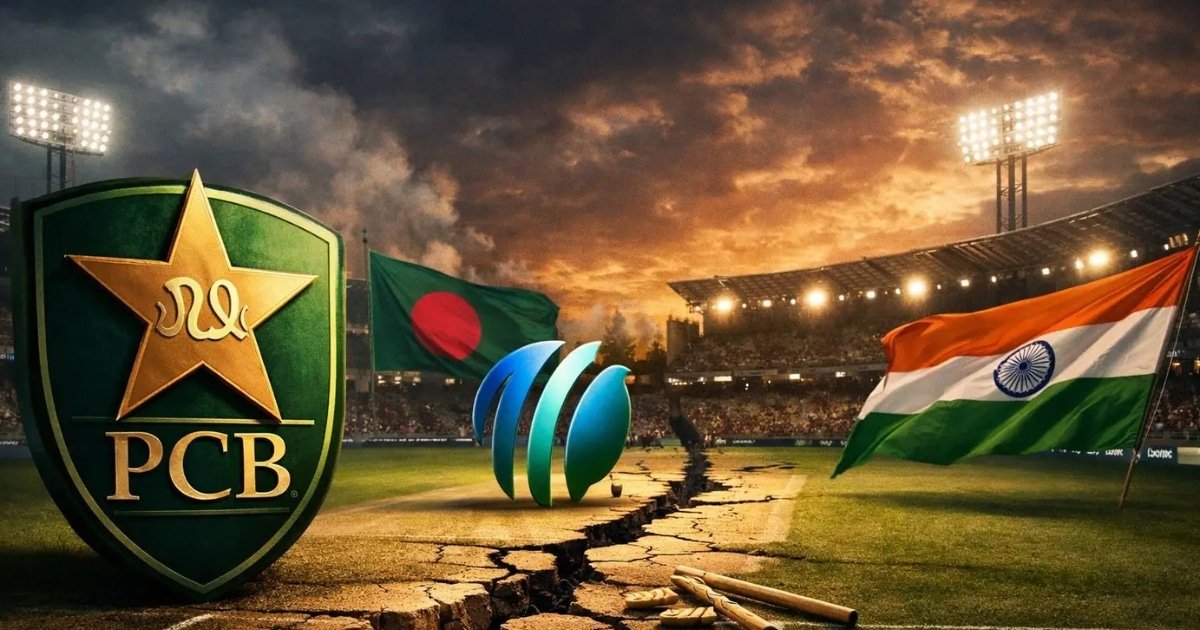





The International Cricket Council (ICC) has launched urgent back-channel negotiations following the Government of Pakistan’s decision to withdraw its national team from the high-stakes T20 World Cup group match against India, scheduled for February 15.
PCB considers strong response to ICC after Bangladesh exit, Pakistan could boycott T20 World Cup clash vs India: Geo News pic.twitter.com/IMjl5UenT8
— Mansoor Ahmed Qureshi (@MansurQr) January 26, 2026
Global Cricket’s Most Lucrative Match at Risk
The India-Pakistan fixture is the cornerstone of the ICC’s commercial model, with an estimated total market value of $500 million. The boycott threatens a massive disruption to broadcast rights, sponsorships, and advertising revenue, where 10-second slots typically command premiums of up to Rs4 million.
The ICC’s Stance on “Selective Participation”
In a strongly worded statement, the ICC expressed deep concern over the move, noting that “selective participation is difficult to reconcile with the fundamental premise of a global sporting event.”
“ICC tournaments are built on sporting integrity and fairness,” the council stated. “While we acknowledge the role of governments in national policy, this decision undermines the spirit and sanctity of the competition and is not in the interest of the global game or the fans.”
Strategic Precedents and Legal Context
Sources indicate that the Pakistan Cricket Board (PCB) is basing its position on the 2018 Dispute Resolution Committee (DRC) proceedings. The PCB previously challenged India’s failure to honor a 2014 Memorandum of Understanding (MoU) for six bilateral series.
While Pakistan has not cited a specific reason for this T20 World Cup boycott, the move follows a pattern of geopolitical friction in sports:
- 1996 World Cup: Australia and West Indies forfeited matches in Sri Lanka on security grounds.
- 2003 World Cup: England and New Zealand forfeited matches in Zimbabwe and Kenya on political grounds.
- Recent Ruling: The ICC recently rejected a security-based request from Bangladesh to move matches from India, replacing them with Scotland—a decision Pakistan and Bangladesh opposed.
Potential Consequences and Arbitration
The ICC is reportedly being assisted by other member boards to reach an amicable solution. However, if a resolution is not found, Pakistan faces significant financial penalties or sanctions. Sources suggest the Government of Pakistan is prepared to escalate the matter to an international court of arbitration if the ICC rules against them.
You May Like To Read: Oil Prices Retract Amid Cooling Geopolitical Tensions and Stronger U.S. Dollar
As of now, the Indian team is still scheduled to travel to Colombo for the fixture. Under tournament regulations, if Pakistan fails to field a team at the appointed time, India will likely be awarded the points by forfeit.
Check out our latest video: