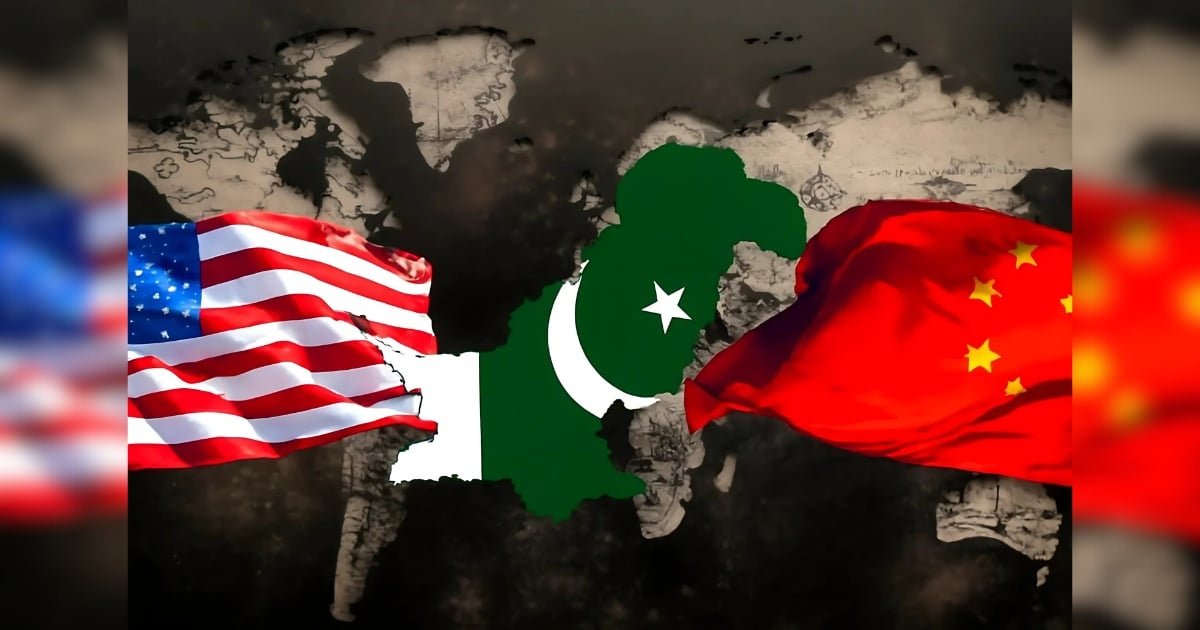



The Indo-Pacific region has become a central point of global geopolitical competition, with Pakistan caught in the middle of an evolving power struggle between the United States and China. As the U.S. strengthens its Indo-Pacific strategy, Pakistan faces increasing pressure to align itself with competing blocs. This strategic dilemma is especially complex as Pakistan seeks to maintain its independence while balancing its long-standing partnership with China and its emerging ties with the U.S.
The U.S. Indo-Pacific Strategy, and Its Implications for Pakistan
The U.S. Indo-Pacific strategy, introduced under President Donald Trump’s administration, focuses on countering China’s growing influence through military alliances, economic partnerships, and initiatives such as the Quad, AUKUS, and the Indo-Pacific Economic Framework (IPEF). The U.S. envisions a “free and open” Indo-Pacific, emphasizing a rules-based international order.
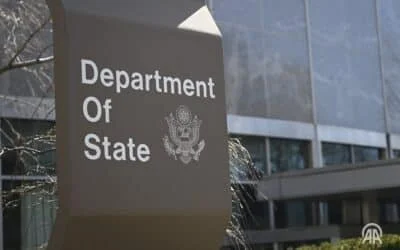
For Pakistan, the implications of this strategy are far-reaching. On one hand, the U.S. has expressed interest in strengthening economic ties with Pakistan, particularly in sectors like energy and technology. In April 2025, U.S. Secretary of State Marco Rubio met with Pakistani officials to discuss potential trade agreements, particularly concerning critical minerals.
On the other hand, Pakistan’s close ties with China, particularly through the China-Pakistan Economic Corridor (CPEC), pose a challenge for the U.S. The U.S. views CPEC as part of China’s Belt and Road Initiative, a project that the U.S. believes could increase China’s regional dominance. Consequently, Pakistan is under pressure to align with the U.S. without jeopardizing its strategic partnership with China.
You May Like to Read: US-Pakistan Ties and India’s China Recalibration
China-Pakistan Relations Amidst U.S. Rivalry
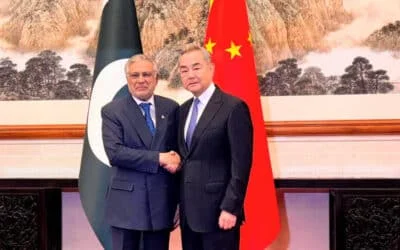
China has been Pakistan’s most significant ally, providing crucial economic and military support. The CPEC project, a cornerstone of China’s Belt and Road Initiative, seeks to improve infrastructure, boost economic development, and integrate Pakistan into China’s regional ambitions. However, China’s growing assertiveness in the Indo-Pacific, particularly in the South China Sea, has raised concerns among the U.S. and its allies.
Despite these concerns, Pakistan remains steadfast in its partnership with China, emphasizing the economic benefits of CPEC. Pakistani officials have consistently highlighted the infrastructural development brought about by the project, including energy projects and new trade routes, as essential for Pakistan’s economic growth. The Finance Minister presented the Pakistan Economic Survey 2024–25, forecasting a 2.7 percent GDP growth for the current fiscal year, as per state media. He mentioned that several development initiatives are ongoing under CPEC, highlighting the completion of eight projects valued at $6.7 billion in the transport infrastructure sector, with additional projects still in progress, according to Radio Pakistan’s report on Tuesday
You May Like to Read: Pakistan and China Reaffirm Strategic Ties
The 2025 India-Pakistan Crisis and Its Regional Impact
The 2025 India-Pakistan crisis marked the most intense military conflict between the two nuclear-armed neighbors in decades. Tensions erupted after a terrorist attack in Jammu and Kashmir, and the situation quickly escalated with airstrikes, missile exchanges, and cyberattacks. The conflict drew in global powers, particularly the U.S., which played a crucial role in brokering a ceasefire. U.S. President Donald Trump’s intervention highlighted the U.S.’s attempts to stabilize the region.
#WATCH | Washington, DC | On his meeting with Pakistan Army Chief Asim Munir, US President Donald Trump says, “… Reason I had him here was I wanted to thank him for not going into the war and ending it… Prime Minister Modi just left a little while ago and we are working a… pic.twitter.com/PN2kfIJvrm
— ANI (@ANI) June 18, 2025
The crisis also underscored Pakistan’s strategic importance in the region. While the U.S. mediated peace talks, it became evident that Washington views Pakistan as a key player in maintaining stability in South Asia. This involvement further complicates Pakistan’s position, as it must balance its alliance with China with its relationship with the U.S., especially in the context of regional security.
Pakistan’s Strategic Dilemma
The heart of Pakistan’s dilemma lies in its need to maintain a neutral position while being pulled in different directions by the U.S. and China. Pakistan’s historical ties with China, especially in defense and infrastructure, cannot be disregarded. However, the U.S. has long been a crucial partner for Pakistan, especially in defense, counterterrorism, and economic aid. The rise of India as a regional power, bolstered by its partnership with the U.S. through initiatives like the Quad, further complicates Pakistan’s position.
In response to the evolving geopolitical landscape, Pakistan has attempted to maintain a nuanced foreign policy. While it seeks to reassure the U.S. of its commitment to regional stability and economic development, it has not wavered in its support for China. As Pakistan continues to strengthen its military ties with China, including through joint defense exercises and the supply of military technology, it must also ensure that its relations with the U.S. do not deteriorate completely.
Conclusion
The Indo-Pacific region is now at the forefront of global geopolitical competition, and Pakistan’s strategic position is increasingly precarious. As the U.S. intensifies its Indo-Pacific strategy, Pakistan finds itself balancing its relationship with China and the emerging ties with the U.S. The economic benefits of CPEC and Pakistan’s dependence on Chinese investment complicate its ability to fully align with U.S. interests. At the same time, the U.S. remains a critical partner for Pakistan in maintaining regional stability, particularly in the wake of the 2025 India-Pakistan crisis.
Navigating this complex geopolitical landscape will require skillful diplomacy. Pakistan must continue to safeguard its sovereignty and economic interests while managing its relationships with both the U.S. and China. In the years to come, the evolving dynamics of the Indo-Pacific will likely play a central role in shaping Pakistan’s foreign policy decisions.