Infrastructural development is the lifeline of any growing economy. Similarly, Pakistan, like many developing countries, cannot rely solely on public finances to meet its infrastructure and social service needs.
Limited fiscal capacity—strained by recurring circular debt in energy and persistent budget deficits—restricts the government’s ability to fund large-scale projects. This often leads to political backlash and public disenchantment.
Meanwhile, the private sector, although efficient and innovative, cannot be expected to assume complete responsibility for national development, as its primary duty lies with shareholder returns.
In such a setting, Public-Private Partnerships (PPPs) emerge as the ideal middle ground. By definition, it is a project on which the government onboards the private sector as a co-investor, offering long-term dividends in terms of development to the private sector. PPPs allow governments to tap into private capital and expertise while preserving public oversight and social objectives. They enable risk-sharing, inject operational efficiency and ensure that projects remain aligned both with profit and public-interest aims.
Challenges of Relying on Public or Private Financing alone
When governments fund projects entirely from public funds, they often encounter delays, mismanagement, and cost overruns. Rising interest rates and debt servicing pressures further squeeze the budget, limiting investment in vital sectors. Moreover, political motivations often mar the development that is necessary yet difficult.
In contrast, the private sector alone tends to focus on projects offering high returns, sidelining essential infrastructure in healthcare, water, or low-income housing. Their risk aversion towards long-term or less profitable initiatives can leave critical sectors underdeveloped.
PPPs combine efficiency and capital from the private sector with public stewardship and mandate. They distribute risks like construction delays, financing shortfalls, or operational issues appropriately, reducing the burden on any single stakeholder.
Pakistan’s PPP Framework and Growing Momentum
Pakistan has taken meaningful strides to institutionalise PPPs. From 1990 to 2019, the country achieved 108 financially closed PPP projects, attracting around USD 28.4 billion in investment. In 2021, Parliament strengthened the enabling environment with amendments to the PPP Law, establishing the Public Private Partnership Authority (P3A).
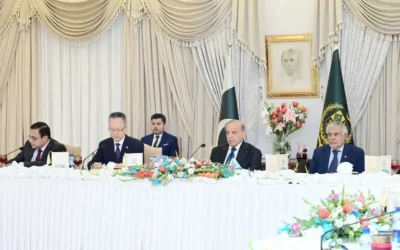
A recent Business Recorder report notes that a Rs 2.5 trillion pipeline of PPP projects is now ready for implementation, including the Islamabad International Airport, which would signal a shift toward balanced, private-sector-driven growth. The Asian Development Bank’s USD 250 million loan to support Pakistan’s PPP policy framework further cements its importance.
How PPPs deliver
PPPs deliver on three key fronts:
- Access to capital: Private investment eases pressure on public budgets.
- Operational efficiency: Projects adhere to performance targets and accountability.
- Risk management: Costs, delays, or market risks are shared between public and private partners, reducing the burden on taxpayers.
- In Education, PPP schools in Sindh’s People’s School Program have boosted enrollment and academic performance. Infrastructure projects like motorways, ports, and energy plants follow similar models, ensuring scalable and sustainable development.
Upcoming PPP initiatives in Pakistan
The current government and civil establishment have realised the importance of PPPs and have embarked upon a journey to make them a central tool for the country’s development. In this regard, several recent PPP projects underscore the government’s commitment:
- Sukkur–Hyderabad M‑6 Motorway: Achieved milestone for commercial close under P3A.
- Balochistan Green Bus Projects: Supported by the provincial finance ministry, linking Quetta and Turbat through environmentally friendly transit solutions.
- People’s School Program: The Sindh government empowers NGOs to run schools, increasing access for marginalised children.
- Lahore Composting Facility: Pakistan’s first large-scale municipal waste PPP, funded by the Danish Carbon Fund.
- Suki Kinari Hydropower (884 MW): BOT project providing sustainable power since September 2024.
- New Gwadar International Airport: A greenfield CPEC airport operating under the PPP model since January 2025.
- Pak–China Friendship Hospital in Gwadar: CPEC-aided hospital run by Indus Health Network under PPP.
These diverse projects demonstrate how PPPs can innovate across transport, power, healthcare, waste management, and urban mobility.
Voices supporting PPPs
Global experience reinforces PPPs as strategic tools, not just funding channels. Business Recorder notes PPPs can deliver infrastructure efficiently when risk-sharing and transparency are well-designed.
ADB Deputy Director General Yevgeniy Zhukov said its USD 250 million loan will help Pakistan “drive sustainable investments in infrastructure and services through PPPs”. Similarly, IFC Chief Makhtar Diop stated that IFC aims to unlock $2 billion annually in Pakistani infrastructure financing.
The Government’s Active Role
The government is actively promoting PPPs through:
- Capacity-building: Strengthening P3A and establishing PPP units in provinces.
- Regulatory clarity: Developing PPP policies and manuals to streamline procurement.
- Financing instruments: Launching the Public-Private Partnership Infrastructure Fund (P3IF) with risk mitigation tools.
The path ahead
To maximise returns from PPPs, Pakistan must:
- Maintain predictable regulations and clear contract enforcement.
- Enhance the bankability of projects via financial tools like guarantees and inflation-linked structures.
- Uphold transparency through independent monitoring and performance benchmarks.
- Build provincial and district-level capacity for similar PPP projects.
- Support private-sector growth through standardised, fair procurement methods.
Conclusion
Public-Private Partnerships present a path toward accelerated development in Pakistan. By combining fiscal capacity with private sector efficiency, PPPs unlock transformative growth while ensuring infrastructure and services stay aligned with public welfare. With sustained support, clear frameworks, and international backing, PPPs can reshape Pakistan’s economic and social landscape for the better.