

How Partisan Rivalries Are Fueling Disinformation in Pakistan’s Digital Age
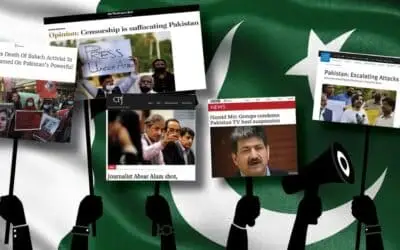
In an era defined by rapid information exchange and the digitisation of political discourse, Pakistan is facing a formidable internal threat: the weaponisation of information by domestic political factions. What was once a tool of foreign hybrid warfare is now a deeply entrenched feature of domestic politics, where disinformation, propaganda, and polarising narratives are deployed with precision to discredit opponents, manipulate public sentiment, and fracture societal cohesion.
As political rivalries intensify, especially in the wake of repeated electoral disputes, power transitions, and institutional friction, the use of digital platforms for narrative warfare has become a key part of the political toolkit—raising serious concerns about democratic resilience, media integrity, and national stability.
The Digital Battleground: Polarisation Meets Platform
Over the past decade, Pakistan’s political landscape has become increasingly adversarial. Major parties—notably PML-N, PTI, and PPP — along with their affiliated influencers and media cells, have shifted much of their messaging from traditional venues to social media platforms like X (formerly Twitter), YouTube, TikTok, and WhatsApp. The result has been the creation of hyper-partisan echo chambers, where facts are selectively interpreted, or altogether fabricated, to fit factional agendas. The key tactics employed by political parties to this effect include:
- Fake leaks and audio recordings aimed at damaging opponents’ reputations.
- Doctored videos and deepfakes, circulated without attribution.
- Hashtag warfare, where coordinated bot networks flood timelines to trend slogans, often laced with disinformation or sectarian overtones.
- Digital vigilantism, where supporters of rival factions dox, harass, or smear dissenters—including journalists, academics, and even judges.
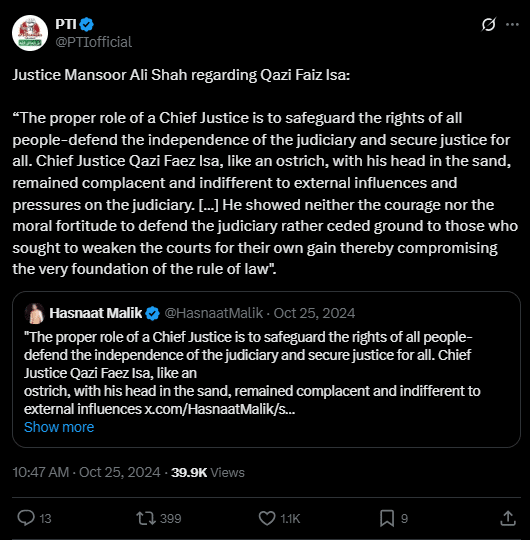
These tactics not only serve to polarise the electorate but also undermine institutional credibility, making it difficult for any neutral voice to gain traction amid the noise.
Disinformation as a Political Weapon
The strategic use of disinformation is no longer incidental—it is systematic and deliberate. Political parties have developed media wings, troll farms, and influencer partnerships tasked specifically with narrative control. These operations are often well-funded, loosely coordinated, and politically protected, making regulation or accountability elusive.
Disinformation narratives generally fall into three categories:
- Character assassination – Spreading unverifiable stories about rivals’ personal lives, corruption, or foreign allegiances.
- Religious and sectarian framing – Exploiting religious identity to cast opponents as “anti-Islam,” “pro-Qadiani,” or “pro-Iran/Saudi.”
- Anti-institutionalism – Promoting conspiracies that frame the judiciary, military, or electoral commission as partisan actors, depending on which party is in power or opposition.
These tactics create a feedback loop where public trust in both state and media institutions erodes, leaving space only for partisan narratives to thrive.
Political Polarisation and the Rise of Sectarian Messaging
Perhaps most dangerously, domestic political actors have begun appropriating sectarian and ethnic sentiments to galvanise their support bases—especially during election seasons or civil unrest. This has been evident in:
- Targeted religious dog-whistling, portraying rivals as enemies of Islam.
- The use of ethnic grievance narratives, particularly in Balochistan and Khyber Pakhtunkhwa, to discredit rival party governments.
- Amplifying sectarian fault lines, particularly between Sunni and Shia communities, under the guise of political critique.
Such tactics risk not only immediate electoral gains but also long-term societal fragmentation, especially in an already polarised and security-sensitive environment.
The Role of Traditional and Digital Media
Traditional media, too, plays a complicit role in this ecosystem. While some outlets maintain editorial standards, others function as de facto mouthpieces for political factions, offering airtime for unverified claims, selective outrage, and politically motivated panel discussions. As ratings-driven sensationalism overtakes journalistic rigor, the blurring of fact and opinion becomes routine.
Meanwhile, digital platforms—though offering democratised access to information—lack effective content moderation in local languages. False claims, inflammatory speeches, and conspiracies often go viral before platforms can respond. Attempts by the state to regulate content are often viewed as politically motivated censorship, blatantly criticized and immediately labelled as efforts to gain media control.
Key Drivers of Domestic Information Warfare
Several systemic factors exacerbate the problem:
- Weak media literacy: A large portion of the population lacks the tools to critically assess the credibility of digital content.
- Fragmented political institutions: The absence of a unified code of conduct among parties leaves no deterrent against information manipulation.
- Judicial ambiguity: Legal action against fake news remains sporadic and selectively enforced.
- Monetised outrage: Platforms reward sensationalism, which encourages creators to prioritise virality over accuracy.
Toward a More Resilient Information Ecosystem
To counter the corrosive impact of internal disinformation warfare, Pakistan must pursue a multi-pronged approach:
- Media literacy initiatives: Integrate fact-checking and source verification modules into secondary and tertiary education systems.
- Non-partisan fact-checking institutions: Establish independent verification bodies with legal protection and cross-party oversight.
- Political code of conduct: Mandate parties to sign and adhere to digital ethics pledges during election cycles.
- Reform of PEMRA and PTA: Convert regulatory bodies into institutions, with judicial backing, transparent mandates, and stakeholder input, capable of eradicating the threats posed by spread of misinformation.
- Platform accountability: Work with global social media companies to improve Urdu and regional language moderation capacities while protecting against overreach.
A Battle Within That Undermines the Nation
Pakistan’s internal political polarisation has extended far beyond rallies and speeches—it now thrives in a digital ecosystem of distortion, where reality is continuously redefined to serve short-term political interests. In such an environment, truth becomes subjective, institutions are delegitimised, and the very fabric of the nation is weakened.
Information warfare, once viewed as an external threat, is now embedded in Pakistan’s domestic politics. If left unchecked, it risks not only undermining democratic processes but also fueling radicalisation, sectarianism, and institutional collapse. The urgency to address this internal front—with reform, education, and accountability—has never been more critical.