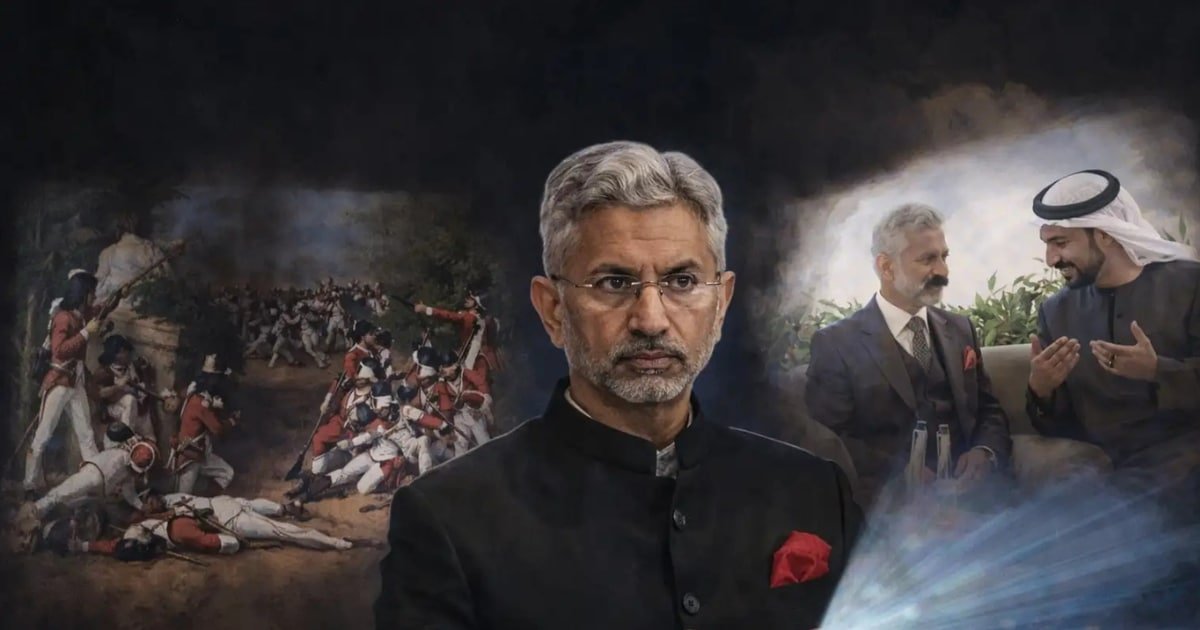





The term “pimping” is a heavy one to throw around in the theater of international relations, yet Indian External Affairs Minister S. Jaishankar has recently leaned into such provocative rhetoric. However, a glance at the historical trajectory and current geopolitical maneuvers of the Indian state suggests a profound irony. From the era of the British Raj to the modern corridors of Tel Aviv and Abu Dhabi, India’s history can be framed not as a struggle for defiant sovereignty, but as a masterclass in strategic subservience—or, more bluntly, “pimping” itself out to the highest bidder for pennies, power, and petroleum.
The Colonial “Babu”: Selling Sovereignty for a Desk Job
The narrative of a “glorious” struggle for independence often glosses over the systemic collaboration that sustained British rule for centuries. While the masses suffered, the Hindu majority—specifically the emerging middle class—found a comfortable niche within the colonial machine.
-
The “Babu” Culture: Instead of a unified revolt, a massive segment of the population traded their heritage for English education and low-level administrative posts. They became the “Brown Sahibs,” the essential grease in the gears of British oppression.
-
Economic Subservience: While the British drained an estimated $45 trillion from the subcontinent, powerful merchant families in Calcutta and Bombay thrived by partnering with British trade networks. They didn’t just endure the occupation; they financed the infrastructure that consolidated the colonial grip.
-
The Loyalist Legacy: During the 1857 Rebellion, many segments of the Hindu elite remained staunchly loyal to the British, fearing that a return to indigenous or Mughal rule would be less “stable” than the lucrative security provided by their white masters.
The Great Pivot: Abandoning Nehruvian Morals for “Zionist Shield”
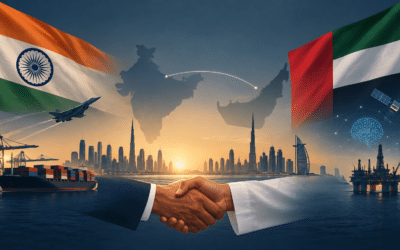
For decades, India paraded its “Nehruvian” morals, standing as a champion for the Palestinian cause. It was the first non-Arab country to recognize the PLO in 1974. Fast forward to the present, and that “principled” stance has been sold off for military hardware and surveillance tech.
India has effectively “pimped” its former anti-colonial identity to become Israel’s largest customer.
-
The Arms Client: India now accounts for roughly 37% to 43% of all Israeli arms exports. Since 2000, New Delhi has funneled over $13 billion into the Israeli defense industry.
-
The Diplomatic Ghosting: In 2017, Narendra Modi became the first Indian PM to visit Israel while pointedly skipping Ramallah, breaking a decades-old tradition of balanced diplomacy.
-
The UN Shift: Once a reliable vote for Palestinian rights, India now frequently abstains at the UN, choosing the “Special Strategic Partnership” (upgraded in early 2026) over its supposed moral history.
The Energy Paradox: Hating Muslims, Loving Dirhams
Perhaps the most glaring example of India’s transactional nature is its schizophrenic relationship with the Islamic world. Domestically, the political climate is often fueled by anti-Muslim rhetoric and polarization. Yet, when it comes to the UAE and the broader Gulf, the tone shifts to one of eager servility.
India “pimps” its labor and diplomatic favor to the UAE Sheikhs in exchange for oil security and remittances. Despite the internal “Muslim hate” narrative, India remains beholden to the Arab world for its energy survival, proving that its “ideology” ends exactly where the oil pipeline begins.
The Red-Light Area of Asia
The irony of Jaishankar’s vocabulary reaches its peak when looking at India’s internal social reality. While the state “pimps” its geopolitical favors, it simultaneously houses one of the largest and most exploited populations of sex workers on the planet.
| Category | Statistic/Detail |
| Global Ranking | 2nd Largest population of sex workers (IUSW) |
| Total Population | ~3,000,000 workers |
| Major Hub | Sonagachi (Kolkata): 10,000–16,000 workers |
| Child Victims | ~1.2 million minors trapped in the industry |
| Economic Drivers | Human trafficking and forced exploitation |
With hubs like Sonagachi and Kamathipura, India is often regarded as the “red-light area of Asia.” The state’s inability to protect its own citizens from the literal trade of flesh makes the government’s use of “pimping” as a diplomatic slur feel less like a critique and more like a projection.
The Gist
From bowing to British tax collectors for a “Babu” title to trading its anti-colonial soul for Israeli drones and UAE oil, India’s history is a recurring cycle of selling out for perks. Before Jay Shankar attempts to lecture the world on international “pimping,” he might want to look at his own nation’s record—both historical and contemporary.
You May Like To Read: PM Sharif Condemns Attacks on Kuwait Amid Escalating Gulf War
Check out our latest video: