




A War Meant to End Quickly
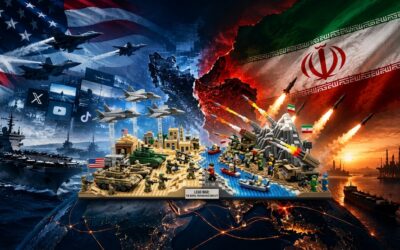
When the United States and Israel launched coordinated strikes on Iran in late February 2026, the objective was clear: dismantle Iran’s leadership, cripple its military infrastructure, and force a rapid strategic collapse. The killing of senior leadership, including the country’s supreme command structure, was expected to trigger internal chaos and weaken Iran’s ability to respond.
But by mid-March, that assumption had already begun to unravel. Instead of collapsing, Iran reorganised. Instead of retreat, it escalated. Between March 15 and March 23, the war entered its most intense phase, and exposed the limits of modern military power against a state built for endurance.
March 15: The Peak of Shock Strikes
On March 15, Israel launched what it described as “extensive strikes” across Iran, hitting multiple regions simultaneously.
This was not routine escalation. It was the largest concentrated wave of attacks since the war began. Iranian fuel depots, logistics centres, and transport networks were targeted, signalling a shift toward disabling the country’s war-sustaining capacity. Israeli strikes on Iranian fuel depots in Tehran led Iran’s Foreign Minister Abbas Araghchi to label the attacks as “ecocide,” warning of long-term health and environmental damage to civilians.
The escalation also disrupted regional stability, with drone incidents near Dubai airport, attacks on Gulf infrastructure, and rising oil prices following claims that the U.S. had hit Iran’s Kharg Island.
At the same time, tensions around the Strait of Hormuz intensified, as countries like Japan declined military involvement while Western states explored measures to secure the vital global oil route.
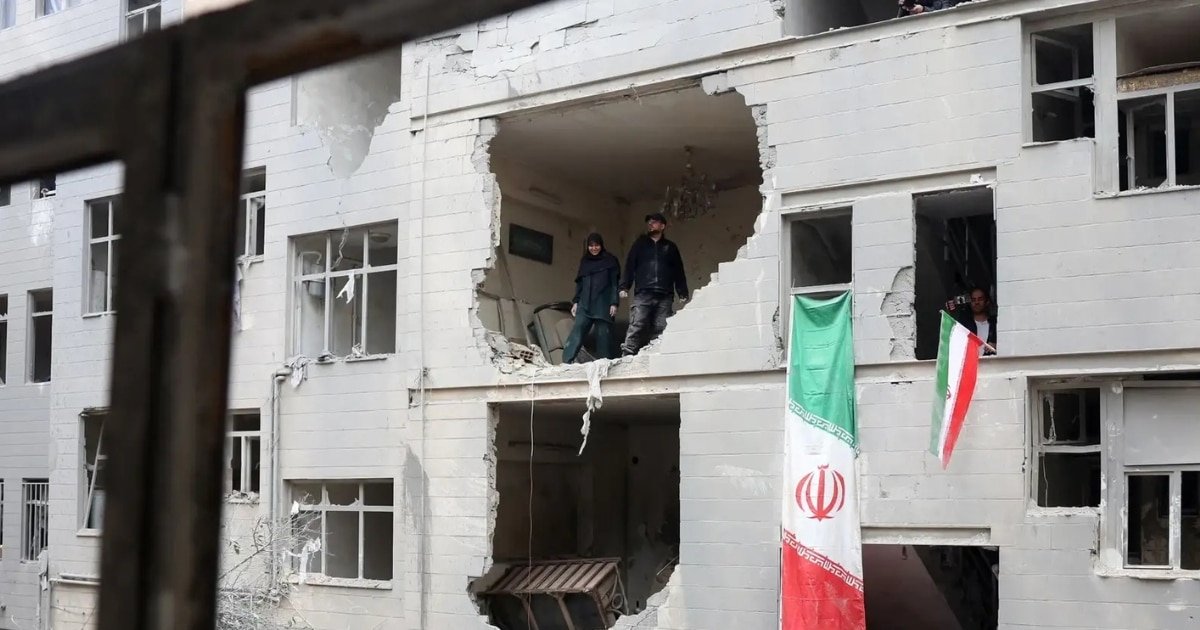
Moreover, the intensity of Israel’s strikes also revealed a strategic dilemma. The more infrastructure was targeted, the more the conflict moved away from controlled military engagement toward broader societal impact. Reports confirmed growing civilian suffering, including damage to hospitals, schools, and residential zones.
Yet despite this peak escalation, Iran did not show signs of systemic breakdown.
Iran’s Dimona Strikes Mark Sharp Nuclear Escalation
Iranian missile strikes on March 21 targeted the southern Israeli towns of Dimona and Arad, areas near the Dimona Nuclear Facility, injuring at least 180 people.
The strikes followed attacks on Iran’s Natanz nuclear site, reflecting a direct tit-for-tat escalation. Israeli defence systems failed to intercept some ballistic missiles, leading to direct hits on residential areas and significant damage. The International Atomic Energy Agency confirmed no radiation leakage from Dimona, but warned against military activity near nuclear facilities, underscoring the heightened risk of a broader nuclear-sensitive confrontation.
Civilian Cost and the Limits of “Precision War”
By the third week of March, the humanitarian cost inside Iran had become impossible to ignore. According to international reporting, more than 1,500 civilians had been killed, with tens of thousands displaced and over 40,000 structures damaged.
Strikes on urban areas, including a school attack that reportedly killed over 170 people, shifted global perception of the war.
For Iran, this moment became politically significant. Instead of weakening internal cohesion, external attacks often strengthened domestic unity, a pattern seen historically in conflicts involving the country. The narrative inside Iran shifted from defence of policy to defence of sovereignty.
This is where the strategy began to falter. Military escalation did not isolate the Iranian state, it consolidated it.
Iran’s Response: Expanding the Battlefield
Iran’s response was not only symbolic, it was structured and expansive. Missile and drone attacks were launched not only toward Israel but across the Gulf, targeting U.S. positions and allied infrastructure.
Drone strikes disrupted oil facilities in the UAE, while explosions were reported near sensitive diplomatic zones in Iraq.
This marked a deliberate shift. Iran did not attempt to match airpower directly. Instead, it widened the battlefield, geographically and strategically. Gulf states that initially sought to remain neutral found themselves drawn into the conflict as energy facilities and airspace came under threat.
Rather than being contained, the war began to spread.
Leadership Decapitation That Failed
A central pillar of the U.S.–Israeli strategy was leadership decapitation. The belief was that removing Iran’s top command would create confusion and paralysis.
But Iran’s system proved more resilient than anticipated.
Despite the assassination of senior figures and ongoing targeting of security leadership, Iran maintained operational continuity. Its military command adapted quickly, and its decision-making structures remained functional. Analysts had already noted earlier in March that Iran was preparing for a long conflict based on endurance rather than immediate retaliation.
This exposed a critical flaw in the decapitation strategy. Iran’s governance model is not dependent on a single chain of command, it is layered, decentralised, and designed to function under pressure.
Instead of collapsing, the system absorbed the shock.
Strait of Hormuz: The Strategic Shift
The most decisive move by Iran during this period was not on land or in the air, it was at sea.
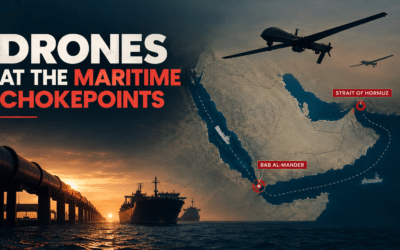
The Strait of Hormuz, through which nearly 20% of global oil passes, became the centre of the conflict. Iran effectively restricted tanker movement through the strait using drones, mines, and naval pressure.
This was a strategic masterstroke. Iran shifted the war from a military contest it could not dominate conventionally into a battlefield where it held leverage.
The impact was immediate. Shipping slowed dramatically, global supply chains were disrupted, and oil markets reacted sharply.
Western Allies Resist U.S. Pressure Over Hormuz Deployment
Key U.S. allies across Europe and Asia have refused to send warships to the Strait of Hormuz despite pressure from Donald Trump, who warned that NATO could face “a very bad future” if members failed to act. Countries including the UK, Germany, France, Italy, Australia, and Japan have instead prioritised diplomacy, calling for clarity on U.S. war objectives before committing militarily.
The standoff comes after Iran effectively restricted tanker movement through the strait using drones, missiles, and mines, disrupting a route that carries nearly one-fifth of global oil and LNG. European leaders have signalled reluctance to escalate further, emphasising negotiation over direct military involvement in reopening the vital waterway.
Energy War and Global Shockwaves
The conflict has now fully transformed into an energy crisis.
Global oil prices surged above $110 per barrel, while financial markets reacted with panic.
The International Energy Agency described the situation as the most severe disruption to global energy supply in modern history, with around 11 million barrels per day affected, double the scale of the 1970s oil crisis.
This had immediate consequences far beyond the Middle East. Inflation fears surged, currencies fluctuated, and global markets experienced sharp declines.
Even countries with no direct involvement in the war began to feel its economic impact.
South Pars Tensions and LNG Market Panic
Tensions around the South Pars Gas Field further demonstrate how quickly the conflict spilled into global energy systems. Reporting from Reuters highlighted that Israeli-linked strikes in the vicinity of Iranian gas infrastructure raised concerns about potential damage and shared resources with Qatar.
While production did not fully halt, even the threat of disruption was enough to send LNG prices higher, particularly in Europe, which remains sensitive after the Russia–Ukraine energy crisis. Analysts noted that any sustained impact on South Pars would not only affect Iran, but also Qatar’s export capacity, turning a regional military escalation into a global energy shock.
A Region Pulled Into Conflict
By mid-March, the war had clearly become regional.
Missile exchanges extended into Lebanon, where Hezbollah intensified operations. Israeli forces opened new fronts, while Gulf states faced direct and indirect attacks on energy infrastructure.
Airspace closures, disrupted oil exports, and security concerns affected the UAE, Qatar, Saudi Arabia, and beyond.
This was no longer a bilateral conflict. It had evolved into a multi-front confrontation involving state and non-state actors across the region.
The U.S. Reaches a Strategic Ceiling
The most telling development came on March 23.
Donald Trump announced a pause in planned strikes on Iran’s energy infrastructure following “productive” talks with Tehran.
This was not a sign of success, it was a recognition of risk.
Continued escalation threatened to destabilise global energy markets further, deepen economic crises, and drag the United States into a prolonged regional war. Even U.S. allies showed hesitation, with several countries refusing to join operations in the Strait of Hormuz.
The shift toward diplomacy indicated that military escalation had reached its limit.
Breaking news: Donald Trump has postponed his threatened attacks on Iranian energy infrastructure following ‘good and productive’ talks with Iran. https://t.co/3N8P9BbwjJ pic.twitter.com/QhBCfKeV26
— Financial Times (@FT) March 23, 2026
Markets, Inflation, and Global Fallout
The economic consequences of the war were immediate and severe.
Global stock markets fell sharply, while investors rushed toward safe-haven assets like the U.S. dollar.
At the same time, governments began preparing for a new wave of inflation driven by energy prices. In the United Kingdom, officials warned of a cost-of-living crisis similar to the 1970s oil shock.
For countries like Pakistan, heavily dependent on imported energy, the implications were clear: rising fuel costs, pressure on foreign reserves, and economic strain.
The war had moved beyond borders, it had entered everyday life.
Deadlock, Not Defeat
By March 23, the outcome of this phase of the war was evident.
Despite intense bombardment, Iran had not been defeated. Despite leadership losses, its system had not collapsed. Despite economic pressure, it had successfully internationalised the cost of the conflict.
What emerged was a deadlock.
Iran demonstrated that it could absorb military pressure while leveraging geography, energy routes, and regional networks to counterbalance conventional disadvantages.
Conclusion: The Limits of Force
What began as a campaign of shock strikes and leadership decapitation evolved into a prolonged confrontation with global consequences. The conflict exposed a fundamental truth: military superiority does not guarantee strategic victory.
Iran’s resilience, adaptability, and control over critical energy routes forced a shift from escalation to negotiation.
For Pakistan and the wider world, the lesson is clear. In an interconnected global system, wars are no longer confined to battlefields. They ripple through economies, energy systems, and political alliances.
And as this conflict has shown, the real question is no longer who can strike harder, but who can endure longer.
You May Like To Read: China Dispatches 60,000 Tons of Rice to Cuba Amid Food Crisis
Check out our latest video: