

The Center for Afghanistan Middle East and Africa (CAMEA) today hosted the second working session of the Islamabad Conclave, focusing on ‘Transnational Terrorism and Emerging Security Challenges in South Asia.’ The session featured regional experts and policymakers who analyzed the evolving threat landscape, the shifting geopolitical environment, and significant gaps in regional security cooperation.
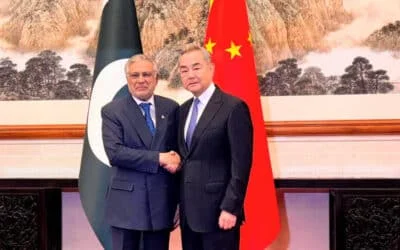
Deputy Prime Minister/Foreign Minister Senator Mohammad Ishaq Dar @MIshaqDar50 inaugurated the #IslamabadConclave2025, hosted by @ISSIslamabad.
In his address, he commended the Institute’s efforts in convening scholars and practitioners to deliberate on the evolving strategic… pic.twitter.com/EbBWpmBHtm
— Ministry of Foreign Affairs – Pakistan (@ForeignOfficePk) December 3, 2025
Key Findings on Terrorism Dynamics
Dr. Amina Khan, Director of CAMEA, highlighted that transnational networks have intensified terrorism across South Asia, with groups actively forming alliances and mirroring tactics. She delivered a sharp warning that perceived ethnic cleansing–like methods employed by self-proclaimed democracies, when pursued without accountability, only serve to embolden extremists.
Dr. Hu Shisheng of the China Institutes of Contemporary International Relations (CICIR) noted that cross-border militancy has become a sophisticated regional challenge, particularly for Pakistan. He pointed out that over 90 per cent of terrorist attacks in 2023 occurred in conflict zones, illustrating how militants exploit unresolved issues and hardline ecosystems, often shielded by dynamics of strategic depth and plausible deniability.
Dr. Shabana Fayyaz of Quaid-e-Azam University emphasized the significant gaps in regional security cooperation, noting that today’s militants—including groups like Al Qaeda, ISKP, and the IMU—operate more independently than traditional proxies, further complicating the region’s terrorist landscape.
Geopolitical and Ideological Drivers
Keynote Speaker Senator Mushahid Hussain Sayed, Former Chair of the Senate Defence Committee, highlighted the global shift from unipolarity to multipolarity and identified major regional challenges, including India’s cross-border aggression and its Akhand Bharat doctrine. He stressed the importance of stronger regional cooperation on issues spanning climate, health, and population pressures, while advocating for diplomacy over force in Afghanistan.
Ambassador Asif Durrani, Pakistan’s former Special Representative on Afghanistan, addressed the political dimension, asserting that the selective definition of terrorism—citing historical examples such as India branding the Kashmiri freedom movement as terrorism in the 1980s—hinders true regional progress.
Dr. Shahab Enam Khan, Professor at Jahangirnagar University, noted that ideological extremism is increasingly fueled by non-state actors, the weaponization of resources, and the manipulation of information through social and digital media.
Policy Recommendations
The consensus among the experts stressed the urgent need for a holistic, collective regional framework to address these threats:
- Cooperation: Speakers unanimously called for expanded cross-border cooperation, mutual understanding, and pragmatic policies for counterterrorism.
- Preventive Measures: Recommendations included reducing grievances, expanding economic opportunities, prioritizing community-led initiatives, and enhancing women’s empowerment.
- Strategic Dialogue: Senator Sayed stressed the value of international frameworks like the China’s BRI and the Shanghai Cooperation Organisation’s (SCO) anti-terror framework to achieve a more stable and peaceful South Asia through dialogue.
You May Like To Read: King Charles Hosts Christmassy State Banquet for German President