

AUKUS, and IOMed
In 2021, the Australian, U.K., and United States trilateral security partnership was declared as AUKUS. Although its early activities were limited to supplying nuclear propulsion for submarine units to Australia, its activities have since been broadened to include collaboration in advanced technologies like artificial intelligence, quantum computing, cybersecurity, and defense innovation. The formation of AUKUS is broadly viewed as a form of Washington’s strategic shift towards the Indo-Pacific as a way of curbing the increasing military and technological might of China. In the case of Australia, it is a strengthened security assurance within a tense regional setting, and the UK views it as a means of projecting influence in the Indo-Pacific following Brexit. On the whole, AUKUS is a security-first alliance, and its foundation is military power and strategic deterrence.
Conversely, IOMed (International Organization for Mediation), initiated by China and many of the Global South countries, which are also founding members, serves as a platform of peaceful mediation. It seeks to provide states, particularly the developing states, with another avenue of resolving international disputes without the aid of Western-controlled institutions such as the International Court of Justice or arbitration centers, which are always associated with European or American interests. IOMed aims to improve the image of China as a dialogue and not a warring nation, and in the process, project the soft power of Beijing to areas such as Africa, Asia, and Latin America, by positioning itself as a neutral and all-inclusive mediator.
Even though the focus of one of the military and the other, diplomatic, AUKUS and IOMed are an indication of the same wider pattern: states are moving towards investing in narrow alliances that promote their strategic interests, as opposed to using general frameworks. Collectively, they depict the two-pronged competition of the 21st century: hard security coalitions on the one hand, and institutional innovations aimed at redefining the principles of global governance on the other.
You May Like To Read: Russian Foreign Ministry Urges Restraint on Pakistan-Afghanistan Border
The Fading of Traditional Multilateralism
The emergence of blocs such as AUKUS and IOMed cannot be considered in full without referring to the erosion of the old multilateral institutions. Over decades, the key forums of dialogue and cooperation were organizations like the United Nations, the World Trade Organization (WTO), and the World Health Organization (WHO). They were constructed on the view that collective action was the most appropriate in solving global problems that could cover issues such as conflict resolution and economic development.
However, in recent years, these institutions have been finding it difficult to stay effective. The veto authority of permanent members of the UN Security Council has, in many instances, stalemated the organization so that urgent crises like the wars in Ukraine and Gaza could not receive immediate attention. Equally, the WTO has been undermined by controversy over trade regulations and the failure of leading economies to unanimously make decisions on reforms. Another lesson of COVID-19 was that the global health system was full of inequalities, and vaccine access was informed more by the national interest and pharmaceutical influence than by fairness principles.
This loss of trust has brought about an air of frustration, especially in developing countries in the Global South. It is often said that the traditional multilateral institutions are still run by the Western powers and that they are incompatible with the multipolar world. Consequently, they have been more open to trying out new groupings that would give them a more powerful voice, be it in the security, economic, or diplomatic front.
You May Like To Read: The IOMed in China and the Global South
The Emergence of Competitor Blocs
With the traditional multilateral institutions losing their credibility, rival blocs have become the new characteristic of the new global environment. These groupings cannot be attributed to AUKUS or IOMed per se, but are a broader trend where states are rallying around certain common interests, typically to the detriment of universal cooperation. Such alliances have turned into a laboratory in the Indo-Pacific region, in particular, where security issues and economic rivalry meet.
Coupled with AUKUS, groups such as the Quadrilateral Security Dialogue (QUAD) between the United States, Japan, India, and Australia are an indicator of an increasingly focused focus on the security of the Indo-Pacific. In the meantime, China, in cooperation with Russia and Central Asian countries, supports the Shanghai Cooperation Organization (SCO) as an alternative to Western influence. Equally, the BRICS+ growth is an indication of the move by the emerging economies to reshape the global economic governance beyond the Western-led institutions such as the G7 or the IMF.
The notable difference in this aspect, as compared to IOMed, is that it tries to establish itself as a diplomatic bloc and not a military or economic bloc. Through its emphasis on mediation, it targets states that fear the commitment of alliances but will demand a say in the formulation of the conventions of the world. Those who disagree, however, claim that IOMed is not as much about neutrality as it is about spreading the geopolitical reach of China in the guise of cooperation.
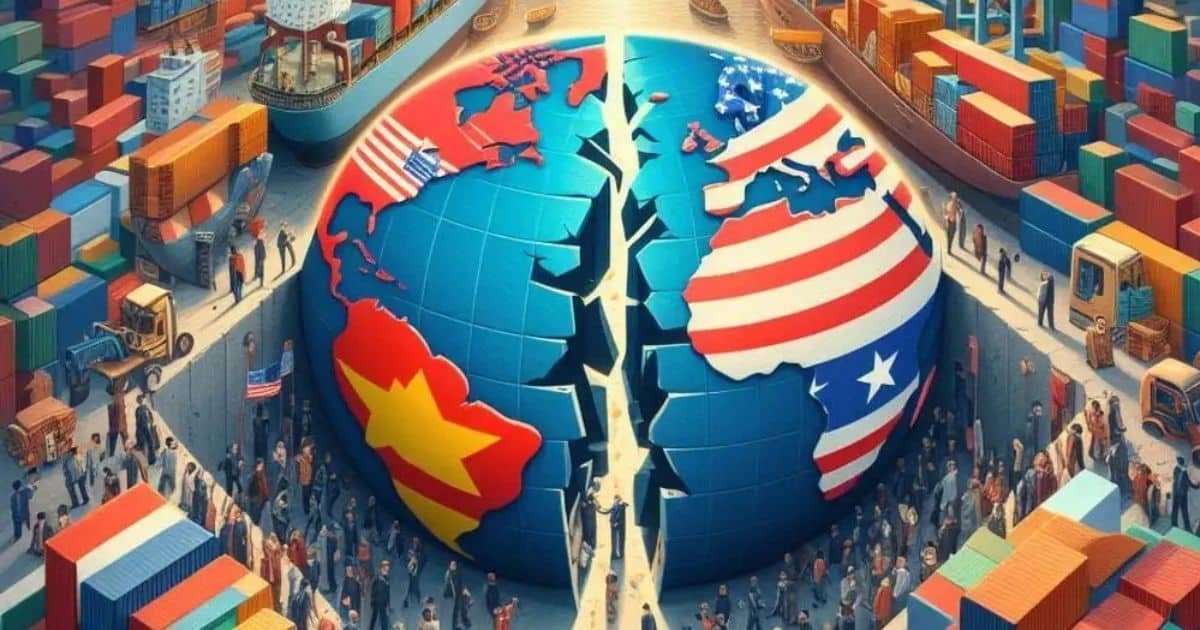
Collectively, such developments are leading to a world where the power is becoming more organised in the form of exclusive clubs, and less in the form of inclusive institutions. To larger powers, blocs are viewed as instruments to exert influence, whereas the smaller states find them as a means to gain short-term benefits, either be it in defense, trade, or in the resolution of disputes. But such a trend, too, strengthens divisions, producing parallel structures of government, which will not complement but may conflict with each other.
Implications for Global Security, and the Future of Multilateralism
The increased power of opposing blocs like AUKUS and IOMed causes grave concerns over the viability of international governance and multilateralism. These groupings, on the face of it, give states sharper instruments to pursue their security, economic, or diplomatic objectives. But behind this pragmatism is a disturbing fact that the world is getting more and more polarized, and the world is pushing the countries to choose one side or the other.
Such polarization cancels the very concept of solving problems collectively. International issues like climate change, pandemics, cyber threats, and financial uncertainties need extensive collaboration across ideological borders. In a case where the international system is splintered into opposing camps, any reaction to such disasters will be less efficient and divided. To illustrate, rather than having a concerted move towards addressing climate, competing blocs will be forced to adopt competing energy policies, hampering the world. On other issues, such as health security or regulation of technology, parallel standards would increase inequality and impede collective resiliency.
In the case of smaller states, the creation of competing blocks is an opportunity as well as a threat. On the one hand, they can find new alliances, investments, or security insurance by becoming affiliated with greater powers. Conversely, they will run the risk of losing their tactical independence, as mere chess pieces in the bigger game, or developing their own diplomatic backwater in case they do not decide. This is a dynamic resonating with the Cold War years, when non-main bloc states had a hard time remaining neutral and enjoying the fruits of international trade and collaboration.
Going forward, multilateralism is in the balance. Fragmentation, when the world is divided into competing centers of power, each possessing its institutions, standards, and alliances, is one of the possible scenarios. This would be like a new Cold War, where world governance will be based on bloc competition instead of collective responsibility. The other alternative is the adaptation, which involves the formulation of reforms to the existing institutions, like the UN or WTO, to incorporate the rising powers and the new reality, so that traditional multilateralism may also be present in the form of regional or thematic blocs.
The truth might be between the two. Instead of completely breaking down, multilateralism might develop into a hybrid form in which universal institutions are symbolic anchor points, but the actual decision-making would be devolved to smaller, issue-based or regional blocs. Such an adaptation would save some amount of global conversation, but it would be a definite departure from the vision of cooperation, which was present after World War II and was inclusive.
You May Like To Read: Trump declares ‘Peace’ in Middle East