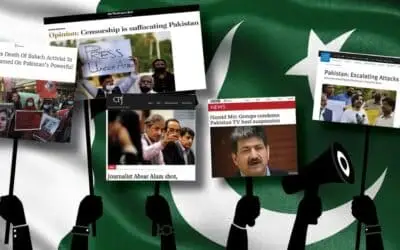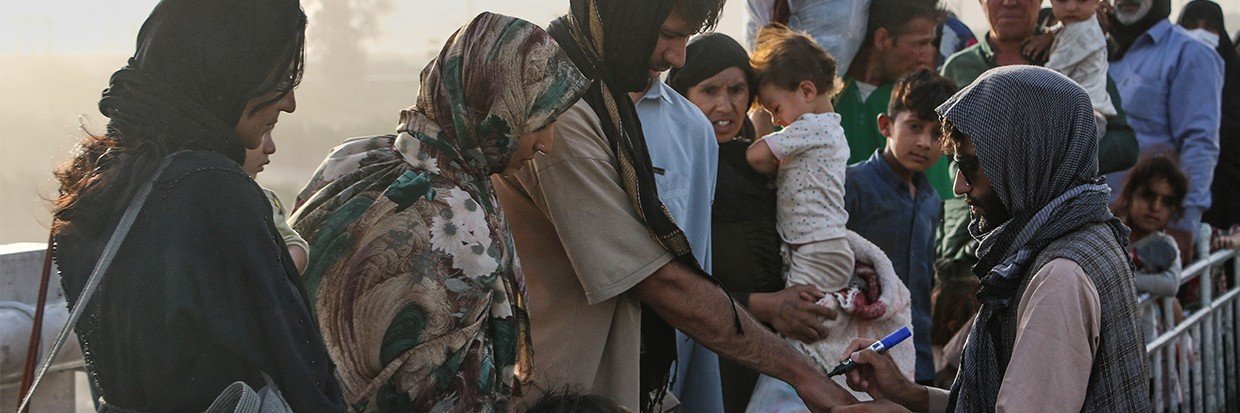




The mass deportation of undocumented Afghan migrants from Pakistan, a policy initiated in late 2023 and continuing into 2025 has swiftly become a potent front in an ongoing information warfare campaign. This narrative is being strategically manipulated, not only to discredit Pakistan on the international stage but also to sow the seeds of internal dissent. Amidst genuine humanitarian concerns and complex geopolitical dynamics, a web of disinformation is being woven, distorting facts and weaponizing human suffering for various agendas.
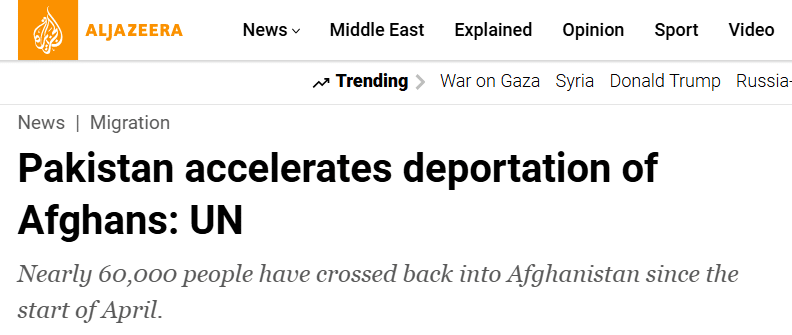
Source: Al Jazeera
A Policy Rooted in Security and Shifting Perceptions
Pakistan has historically been one of the world’s largest host countries for Afghan refugees, with millions having resided within its borders for decades, many having been born and raised there. However, a significant shift in perception and policy began to crystallize, driven primarily by evolving regional instability and a concerning surge in terrorist attacks within Pakistan.
The Pakistani government has publicly linked some of these attacks to individuals allegedly involved in criminal and terrorist activities, asserting that the presence of undocumented foreign nationals poses a direct security threat.
In October 2023, Pakistan’s caretaker government announced the “Illegal Foreigners’ Repatriation Plan” (IFRP), initially demanding that all illegal foreigners leave the country voluntarily by November 1, 2023, or face deportation. This initial phase focused on the undocumented Afghans, estimated to be around 1.73 million at the time, as noted in a UK Parliament research briefing.
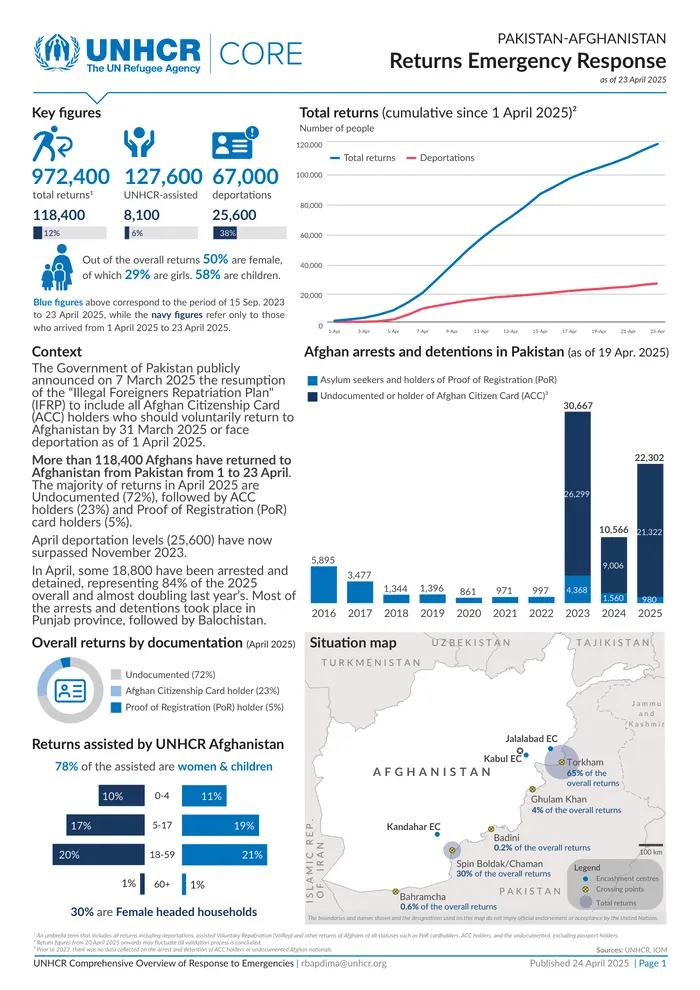
Source: UNHCR
The government message, while stating the policy was not specific to any nationality, unequivocally impacted Afghan nationals the most, given their overwhelming numbers among foreign residents.
As the policy progressed into 2024 and 2025, it expanded beyond the initially targeted “undocumented” individuals. Phases two and three of the plan began to encompass Afghans holding Afghan Citizen Cards (ACC) and even those with Proof of Registration cards issued by the UNHCR, whose validity had been extended arbitrarily over the years but faced uncertain renewal.
By July 2025, over a million Afghans had returned to Afghanistan from Pakistan, with tens of thousands explicitly deported.
The Disinformation Machine: Undermining Pakistan Internationally
The deportation drive immediately drew widespread international criticism from human rights organizations, the United Nations, and various Western governments. Organizations like Amnesty International and Human Rights Watch have voiced concerns, warning that many returnees face severe risks—persecution, violence, and economic hardship—in Taliban-controlled Afghanistan.
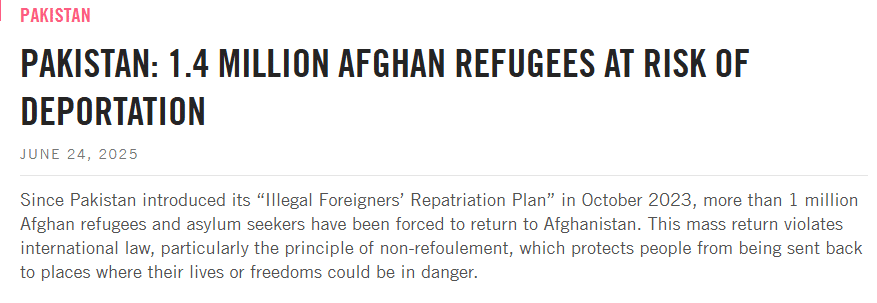
Source: Amnesty International
They have condemned the deportations for being violative of international human rights law, particularly the principle of non-refoulement, which prohibits returning individuals to a place where they would face a real risk of serious human rights violations.
Within this legitimate criticism, elements of disinformation and distorted narratives have emerged, weaponized as part of an information warfare strategy to paint Pakistan in the worst possible light internationally. These theatrics often involve;
- Exaggeration and De-contextualization: While genuine hardships for deportees are undeniable, some narratives amplify individual cases to suggest a systemic, widespread brutality that may not reflect the truth. Figures on deportations can be presented without clear distinction between voluntary returns and forced expulsions, or without acknowledging the categories of legal status.
- Demonization Campaigns: International reports and certain media outlets, consciously, contribute to a narrative that portrays Afghan refugees universally as “scapegoats” for Pakistan’s internal problems, including security challenges and economic woes. While officials have indeed linked some criminal acts to undocumented foreign nationals. This narrative often overlooks Pakistan’s decades-long history of hosting millions of refugees, even during periods of immense economic strain.
- Misrepresentation of Intent: While the humanitarian consequences are severe, some narratives immediately attribute Pakistan’s policy to malice or political coercion against the Afghans, downplaying the genuine security concerns. The complex interplay of internal security, strained relations with the interim Afghan government over militant sanctuaries, and economic pressures often gets simplified into a narrative of deliberate cruelty.
These manipulative narratives serve to generate outrage and pressure on Pakistan, potentially influencing foreign aid, diplomatic relations, and its standing on human rights indices.
Inciting Internal Dissent: A Weaponized Narrative at Home
The deportation issue has also been weaponized as an internal information warfare front, aiming to incite dissent and destabilize Pakistan from within. This is often achieved through:
- Exploiting Ethnic and Regional Divides: Afghanistan’s population shares significant ethnic ties with communities in Pakistan, particularly the Pashtuns. Narratives are crafted to frame the deportation drive as an ethnic cleansing or a targeting of Pashtuns, rather than a policy against undocumented individuals regardless of ethnicity. This can be used to fuel Pashtun nationalist sentiments and create friction between Pashtun communities and the Pakistani state.
- Amplifying Grievances and Fear: Reports from Doctors Without Borders highlight the pervasive anxiety and fear among Afghans remaining in Pakistan, leading to avoidance of essential services like healthcare. While these concerns are genuine, certain actors might deliberately amplify them through social media campaigns and local channels to create a sense of widespread panic and injustice, undermining public trust in government institutions.
- Casting Doubt on State Capacity and Intent: Disinformation campaigns can present the state’s actions as disorganized, inhumane, or driven by corrupt motives, even in cases where officials attempt to enforce the policy humanely. Stories of police harassment, extortion, and family separations, while potentially true in individual instances, are generalized to discredit the entire state apparatus and fuel anti-state sentiment.
- Misrepresenting Economic Impact: While the deportation policy has economic implications, disinformation may exaggerate its negative effects on Pakistani businesses that rely on Afghan labor or on the overall economy, portraying it as a self-inflicted wound that destabilizes the nation.
Navigating a Complex Information Battlefield
The deportation of undocumented Afghan migrants from Pakistan is a profoundly complex humanitarian and political issue. However, its narrative has clearly become an information warfare front, with “theatrics” employed by various actors to serve their respective agendas.
While it is crucial for international bodies and human rights organizations to scrutinize Pakistan’s adherence to international law and ensure humane treatment, it is equally important to critically assess the information circulating.
Distinguishing genuine concerns from deliberate disinformation is vital to avoid becoming unwitting participants in a campaign designed to destabilize Pakistan, exacerbate regional tensions, or fuel internal divisions. A balanced approach requires acknowledging Pakistan’s legitimate security and resource challenges while advocating strongly for the rights and dignity of all individuals, ensuring transparency, and countering manipulative narratives that seek to weaponize human suffering for geopolitical gain.