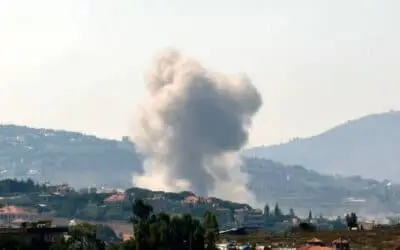


Lebanese President Joseph Aoun has characterized the latest round of U.S.-brokered ceasefire negotiations as exceptionally difficult, warning that the current diplomatic track represents a final opportunity to avert a total catastrophic war.
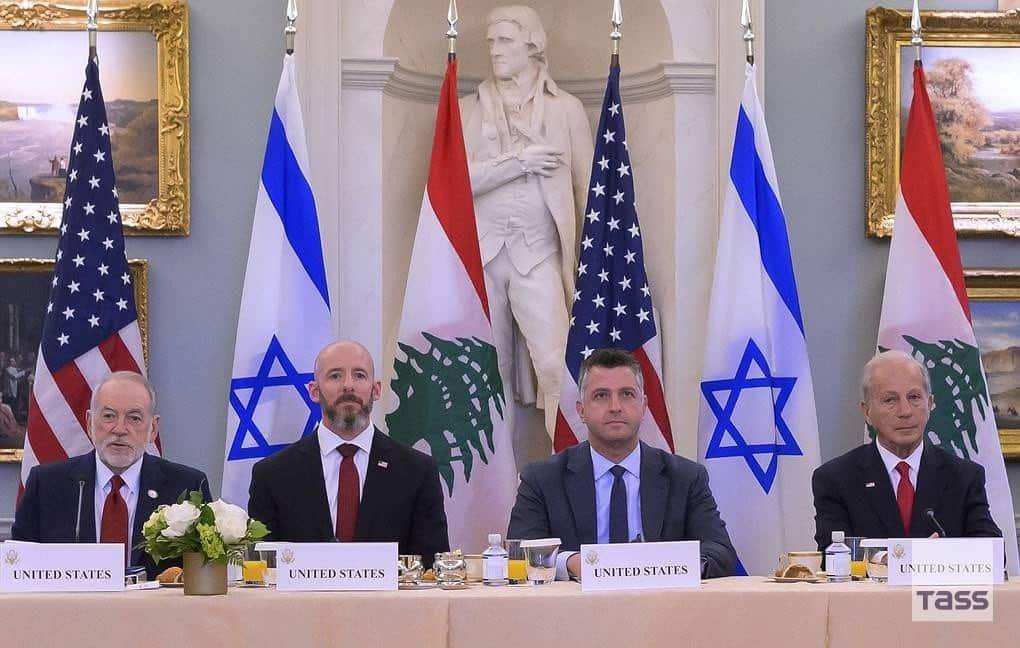
Lebanese and Israeli delegations, who earlier met for talks in the United States, agreed about implementing the ceasefire, according to their joint statement released by the US Department of State:https://t.co/8QwLhx8F54 pic.twitter.com/3Z7aXhyZdt
— TASS (@tassagency_en) June 4, 2026
Speaking to journalists in Beirut on Thursday, President Aoun revealed that the high-stakes talks nearly collapsed entirely after the head of the Lebanese negotiating delegation, Simon Karam, formally suspended Lebanon’s participation. Aoun cited extreme “Israeli intransigence” on the ground and at the negotiating table as the catalyst for the brief walkout, which required a direct, emergency intervention from U.S. Secretary of State Marco Rubio to rescue the diplomatic process and bring the parties back together.
Despite the profound friction, the Lebanese President noted that if all parties grant their final approvals and the required international security guarantees are officially submitted, implementation of the truce could begin within a rapid 24-hour window. The U.S.-proposed framework aims to systematically expand the Lebanese Armed Forces’ (LAF) sovereign control over southern Lebanon while demanding an immediate halt to all Hezbollah rocket and drone attacks across the Blue Line.
However, severe enforcement anxieties remain. Reporting from the region, Al Jazeera’s Manuel Rapalo noted that Hezbollah’s outright rejection of the core terms of these talks leaves the actual execution and enforcement of any signed agreement highly volatile and uncertain.
Critical Analysis: Strategic Gridlock, Sovereignty Limits, and Enforcement Paradoxes
The tense diplomatic maneuvering highlighted by President Aoun underscores the deep, structural flaws of attempting to broker a top-down state treaty in a conflict dominated by powerful non-state actors. A critical breakdown of the negotiation dynamics reveals several key insights:
The Fiction of State-Level Enforcement
The primary vulnerability of the U.S. ceasefire framework is its reliance on the Lebanese state to police a conflict it does not control. The plan calls for an expanded deployment of the Lebanese Armed Forces to enforce a weapons-free zone in the south. However, the LAF historically lacks the domestic political mandate, heavy weaponry, and institutional desire to forcibly disarm Hezbollah. By attempting to use the Lebanese government as a compliance mechanism, Washington is crafting a treaty that looks robust on paper but lacks the kinetic teeth required to enforce compliance on the ground.
Hezbollah’s Absolute Veto Power
Al Jazeera’s assessment that Hezbollah’s rejection leaves the truce uncertain strikes at the core geopolitical reality of the Levant. While President Aoun and negotiator Simon Karam represent the official sovereign government of Lebanon, Hezbollah operates an autonomous parastate with an independent military apparatus. Because the group views its missile arsenal as its primary deterrent against Israel and has publicly stated it will not surrender its weapons, any agreement signed exclusively by the Lebanese state without Hezbollah’s explicit consent functions as a diplomatic mirage.
The Re-emergence of the “Last Opportunity” Doctrine
President Aoun’s warning that this negotiation is a “last opportunity” before both sides “bear their own responsibilities” reflects an existential tipping point. For Lebanon, the alternative to this ceasefire is an unmitigated disaster: a prolonged, deep-tier Israeli occupation past the Litani River, the total destruction of its remaining civil infrastructure, and a worsening humanitarian crisis that has already displaced over a million citizens. By using this stark language, Aoun is attempting to shift the geopolitical burden onto the international community, signaling that Beirut has reached the absolute limit of its diplomatic leverage.
Washington’s High-Pressure Transactionalism
The direct intervention of U.S. Secretary of State Marco Rubio to reverse the Lebanese delegation’s walkout demonstrates the Trump administration’s aggressive, hands-on approach to regional diplomacy. Washington is highly aware that the escalating war in Lebanon is acting as a major spoiler, threatening to completely ignite the wider Gulf theater and disrupt global energy corridors. Rubio’s rapid intervention indicates that the U.S. is willing to use intense diplomatic coercion on both Beirut and Tel Aviv to secure a quick, legacy-defining foreign policy win, even if the resulting peace architecture remains structurally fragile.