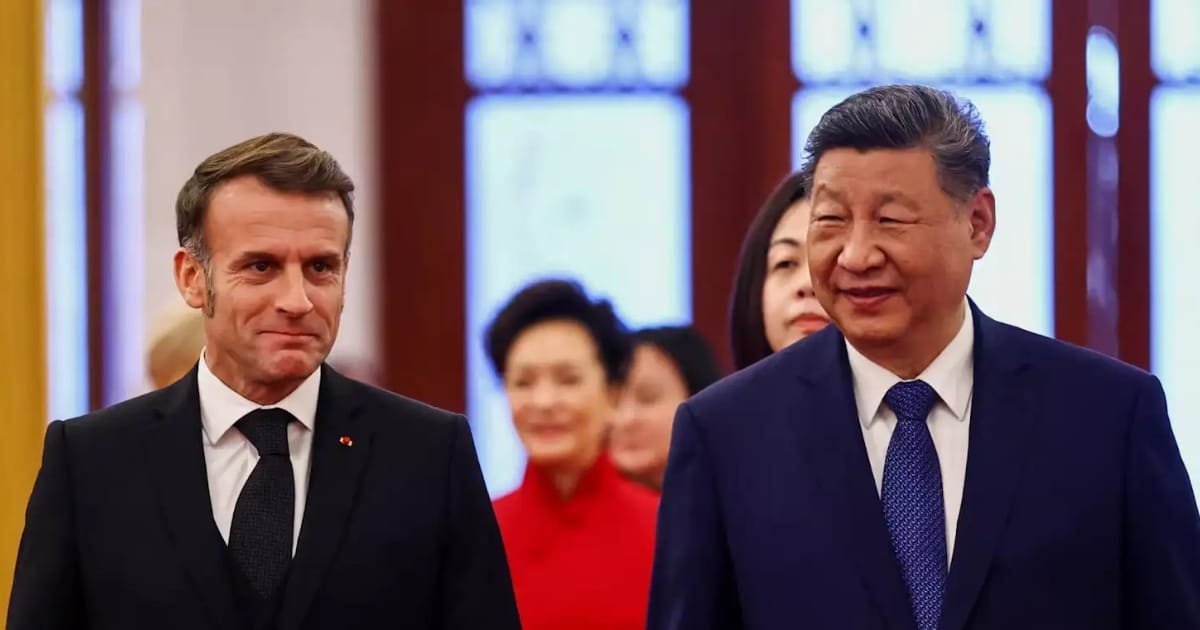





French President Emmanuel Macron concluded a significant meeting with Chinese leader Xi Jinping in Beijing today, aiming to secure Chinese cooperation on global stability, economic parity, and environmental goals. The visit, Macron’s fourth state trip, comes as the European Union (EU) attempts to navigate a complex trade relationship marked by escalating tariffs and a widening deficit.
Macron meets Xi to ‘push’ for Ukraine ceasefire & mend Europe’s fracturing trade relationship with China pic.twitter.com/cpL4CdN2ar
— RT (@RT_com) December 4, 2025
Key Discussion Pillars and Outcomes
President Macron proposed a “three-fold agenda” focused on geopolitical stability, economic rebalancing, and environmental sustainability.
1. Geopolitical Stability (Ukraine and Gaza)
Macron explicitly urged China to use its influence to foster peace in Ukraine, stating that China’s ability to work towards a ceasefire was “decisive.” While Xi affirmed China’s commitment to promoting peace, he made no public commitment to shift Beijing’s current position regarding the war.
- Gaza: Xi Jinping reiterated China’s commitment to peace and announced that China would provide an additional $100 million in aid to support the recovery and reconstruction of the Gaza Strip.
2. Economic Rebalancing and Trade Frictions
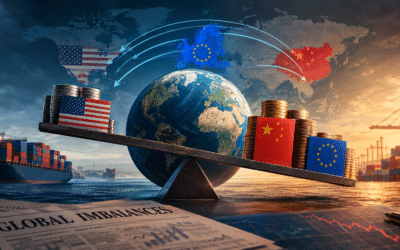
The core of the economic discussion centered on the massive trade deficit the EU and France hold with China (France’s deficit accounts for 46% of its total). Macron called for “rebalanced economic governance” based on fairer rules, not “survival of the fittest.”
You May Like To Read: White House Reports ‘Productive’ Moscow Talks, Emphasizing Russian Readiness for Deal
However, the talks were overshadowed by ongoing EU-China trade disputes:
- EU EV Tariffs: The EU had recently imposed definitive countervailing duties (tariffs) on Chinese electric vehicles (BEVs), finding that unfair state subsidies were causing economic injury to European producers.
- China’s Retaliation: In direct response, China is reportedly maintaining pressure on key French sectors, with Xi unlikely to lift the minimum prices on French cognac exports or ease duties on EU pork shipments, using these as leverage to influence the EU’s EV tariff stance.
- Business Deals: A highly anticipated 500-jet Airbus order was not approved, likely retained by Beijing as negotiating leverage during trade talks with the United States.
3. Expanded Cooperation
Despite trade friction, the leaders signed 12 cooperation agreements and committed to deepening ties in several strategic areas:
- Signed Agreements: Population ageing, bilateral investment, nuclear energy, and panda conservation.
- Future Areas: The leaders encouraged cooperation in aerospace, artificial intelligence (AI), the green economy, and biopharmaceuticals.
The Diplomatic Context
The meeting was characterized by apparent personal cordiality—including Xi’s rare decision to accompany Macron to Sichuan province—yet analysts noted significant political constraints prevented major concessions. As the EU prepares to unveil new economic security policies to reduce reliance on China, Xi stressed the importance of independence and strategic vision, urging Macron to deepen the bilateral partnership regardless of the “external environment.”