


The Day That Changed Kashmir Forever
On 5 August 2019, the Indian government revoked Article 370 and Article 35A of its constitution—dismantling the special status of Jammu and Kashmir. What followed was a sweeping lockdown, mass arrests, and a communications blackout that turned the region into what many described as the world’s largest open-air prison. In response, Pakistan declared Youm-e-Istehsal (Day of Exploitation), observed annually to protest what it called India’s “unilateral annexation” of the disputed territory.
But five years on, the symbolic protests, solidarity marches, and rhetorical condemnations have done little to alter the ground reality. And much of that failure lies at the feet of the then-ruling PTI government, whose inefficiency, lack of strategic foresight, and rhetorical overreach not only failed to challenge India’s illegal move but arguably cemented it in the eyes of the international community.
India’s Calculated Move and Its Fallout
From Constitutional Adjustment to Annexation
The revocation of Article 370 was not a mere constitutional technicality—it was a full-scale annexation of a region internationally recognized as disputed. India stripped Kashmiris of their autonomous governance, local legislature, and constitutional protections—opening the door to demographic engineering through new domicile laws allowing non-Kashmiris to settle and own land. These legal shifts directly undermined the promise of a plebiscite under UN resolutions, as they altered the demographic composition in India’s favor.
Lockdowns and Disappearances
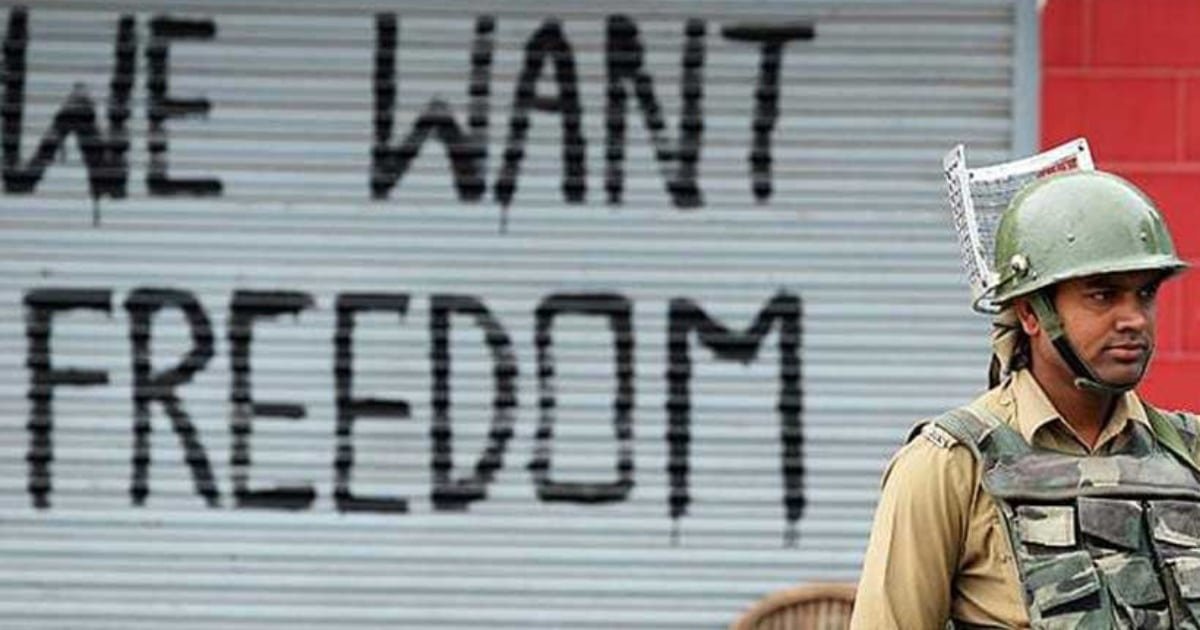
The months that followed saw mass curfews, communication blackouts, and the detention of thousands of Kashmiri politicians, journalists, and youth. Basic human rights were suspended. Even emergency healthcare was hard to access. Human rights watchdogs, including Amnesty International and Human Rights Watch, issued statements condemning the widespread repression, but no international pressure forced India to reverse course.
PTI’s Symbolic Resistance and Strategic Failure
Hashtags, Songs, and Speeches
While India acted with brutal decisiveness, the PTI government under Imran Khan opted for a superficial response. Instead of mounting a diplomatic offensive, PTI rolled out protest campaigns, Youm-e-Istehsal rallies, and nationalistic hashtags. The “Kashmir Hour” event—a one-off, state-organized moment of silence and flag-waving—was emblematic of the government’s obsession with optics over outcomes.


Source: CSCR
The state’s media machinery was mobilized to create the illusion of defiance. Patriotic songs blared from loudspeakers, massive billboards condemned India, and ministers made speeches about “never abandoning the Kashmiri cause.” However, none of this translated into real-world impact or pressure on India.
No Legal Action, No International Leverage
Rather than submitting a case to the International Court of Justice, or organizing a coalition of Muslim-majority countries to exert diplomatic pressure, the PTI government resorted to issuing statements and tagging foreign leaders on Twitter. It made promises about raising the issue at every international forum, yet failed to submit a formal legal dossier even at the UN Human Rights Council.
You May Like To Read: Climate Change as a National Security Multiplier in Pakistan
Even key allies such as Saudi Arabia and the UAE prioritized their economic ties with India, leaving Pakistan diplomatically isolated. The failure to recognize shifting regional geopolitics, especially the growing India-Gulf nexus, exposed PTI’s naivety in foreign policy formulation.
Contradictions and Compromises
Abandoning Historical Postures
More disturbing was PTI’s tacit shift from Pakistan’s traditional strategic posture. Imran Khan’s declaration that any Pakistanis crossing into Indian-administered Kashmir would be doing an “injustice to the Kashmiri people” sounded like a repudiation of resistance altogether. While this was likely meant to prevent unauthorized militant activity, it delegitimized armed resistance—a key component of Pakistan’s Kashmir narrative for decades.
The government effectively abdicated any proactive role, publicly discouraging both covert and diplomatic support to the Kashmiri freedom struggle. This move not only confused Pakistan’s position internationally but also alienated Kashmiris who felt betrayed and abandoned.
Rhetoric Over Strategy
Despite numerous public addresses and Cabinet briefings, the PTI failed to produce a white paper, legal strategy, or UN resolution draft to rally the global community. Then Foreign Office, lacking a cohesive directive from the Prime Minister’s Office, relied heavily on Pakistan’s historic talking points rather than developing a policy to address the new legal and geopolitical reality. This inertia cost Pakistan its opportunity to frame the global narrative.
The Aftermath: Kashmir’s Resistance Stifled
India’s New Status Quo
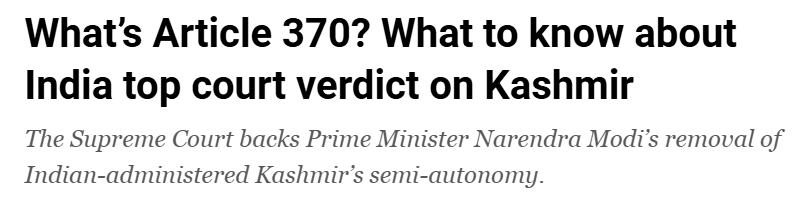
With little external resistance, India has consolidated its position in Kashmir. The Supreme Court of India upheld the legality of the Article 370 revocation in 2023, effectively institutionalizing the decision. India’s expanding infrastructure projects, influx of non-local settlers, and reshaped electoral boundaries have made the return to pre-2019 status virtually impossible.
Source: Al Jazeera
Blow to Pakistan’s Sovereignty
For Pakistan, the fallout is profound. The long-held doctrine that Kashmir is Pakistan’s “jugular vein” now rings hollow. PTI’s failures not only weakened Pakistan’s narrative on international platforms but also challenged its credibility at home. The government’s inability to act decisively in 2019 now serves as a cautionary tale of performative politics in the face of existential challenges.
You May Like To Read: Does Madrassa Only Produce Conservative People?
Conclusion: A Legacy of Failure
As Pakistan marks another Youm-e-Istehsal, it must reckon with the strategic missteps of the PTI government. Under Imran Khan’s leadership, symbolic resistance replaced real policy, rhetoric displaced action, and nationalistic optics replaced international engagement.
The cost of this failure is not just geopolitical—it is human, as millions of Kashmiris continue to live under occupation, stripped of rights, representation, and recourse. PTI’s passivity, performative outrage, and lack of diplomatic foresight not only failed the Kashmiris—it may have sealed their political fate.