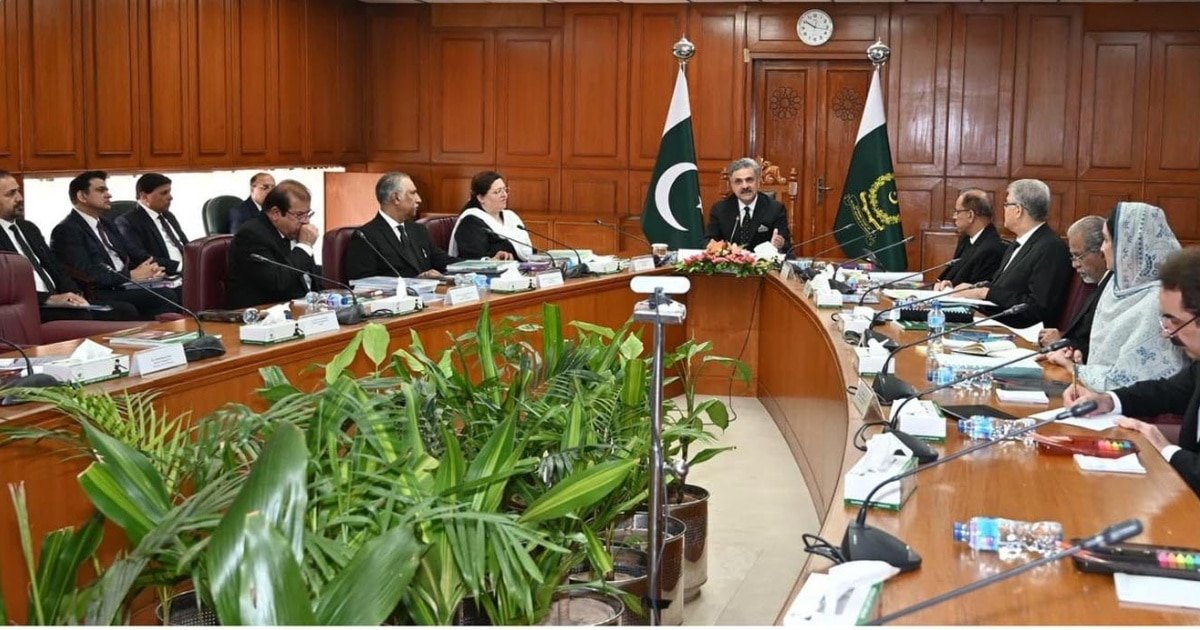





Islamabad — At the 54th meeting of the National Judicial Policy-Making Committee (NJPMC), chaired by Chief Justice of Pakistan Yahya Afridi, Pakistan’s judiciary unveiled a landmark reform package aimed at improving access to justice, accelerating case resolution, and reinforcing institutional accountability. The Attorney General of Pakistan (AGP), Mansoor Awan, assured the committee that a comprehensive mechanism will be presented in the next session to ensure timely judicial oversight of detainees.
The National Judicial (Policy Making) Committee (NJPMC) constituted a body to address issue of protracted litigation and injunctive orders in cases of commercial, revenue and fiscal nature for formulating recommendations.https://t.co/PijUm7GVAT#brecordernews pic.twitter.com/tZqra5hRZG
— Business Recorder (@brecordernews) August 19, 2025
1. Fixed Timelines for Case Disposal as Judicial KPIs
To address chronic delays in the legal system, the NJPMC approved standardized deadlines for adjudicating various civil and criminal matters:
-
Declaratory suits (land disputes): 24 months
-
Inheritance disputes: 12 months
-
Recovery suits (public revenue/money matters): 12 months
-
Specific performance (contracts): 18 months
-
Injunction suits (land): 6 months
-
Rent cases & family matters (dissolution, maintenance, guardianship): 6 months
-
Uncontested succession cases: 2 months
-
Execution petitions (family court): 6 months
-
Execution petitions (banking/civil court): 12 months
-
Execution petitions (rent): 3 months
-
Juvenile criminal trials: 6 months
-
Criminal trials up to 7 years: 12 months
-
Criminal trials beyond 7 years: 18 months
-
Murder trials: 24 months
-
Labour cases: 6 months
These timeframes will serve as Key Performance Indicators embedded within a judicial performance dashboard to reinforce accountability.
2. Safeguarding Judicial Independence
To curb external interference, the NJPMC mandated that any attempted intrusion into judicial decision-making must be reported by a judge within 24 hours, with a resolution expected within 14 days. Standard Operating Procedures (SOPs) will define the process, ensure immediate redress, protect judicial dignity, and include a direct reporting mechanism to the CJP. High Courts are directed to finalize and circulate these SOPs through the Law & Justice Commission of Pakistan.
3. Institutional Oversight for Detainee Rights
The committee reaffirmed its commitment to constitutional norms by approving a structured protocol to guarantee that detained individuals are presented before a magistrate within 24 hours—a major step in protecting civil liberties. AGP Awan confirmed he will present this mechanism at the next NJPMC meeting.Dawn
4. Strengthening Commercial Litigation & Prison Reforms
A sub-committee led by Justice Shafi Siddiqui—including representatives from Lahore, Sindh, and Peshawar High Courts, the AGP, and FBR leadership—was formed to tackle prolonged commercial litigation and arbitral enforcement issues. Recommendations are expected in the next session. The committee also endorsed model criminal trial courts, district-focused pilot civil courts, and initiated a comprehensive jail reform agenda culminating in a National Prison Policy.
You May Like To Read: