

After Pakistan became a member of the United Nations in 1947, it has continued to advocate for international peace and justice as well as multilateralism. Being one of the biggest contributors to the UN peacekeeping operations and frequent enough member of the UN Security Council, including its new presidency in July 2025, Pakistan has not only used the instruments of diplomacy, but also the operational means to integrate the resolution of the conflicts, the strict observation of the international law, and the protection of the rights of marginalized communities. Such sustained interest incorporates major principles of liberal institutionalism and constructivism, which makes Pakistan not only a participant but an active proponent of a fair world order.
Pakistan’s Historical Alignment with the UN
After independence on 14 August 1947, Pakistan thus succeeded British India to international responsibilities and formally sought UN membership. The UNGA accepted both Pakistan and Yemen as peace-loving countries capable and willing to fulfill the duties stipulated in the Charter on 30 September 1947.
Pakistan, since then started using the UN platform to raise the Kashmir issue. The UNSC had created the United Nations Commission for India and Pakistan (UNCIP) in January 1948 under Resolution 39 to inquire into ceasefire measures. In April, Resolution 47 urged both India and Pakistan to collaborate with UNCIP in the matter of demilitarization, and took the preliminary stages of a plebiscite. Pakistan showed the UN commitment towards both peace and justice through democratic approaches.
Pakistan since its inception has portrayed and worked for peaceful multilateral processing of disputes based on the UN Charter, and this is an indication of the adoption of liberal institutionalism in its use of international organizations in solving interstate disagreements and maintaining collective security.
Pakistan as a Peacekeeping Power
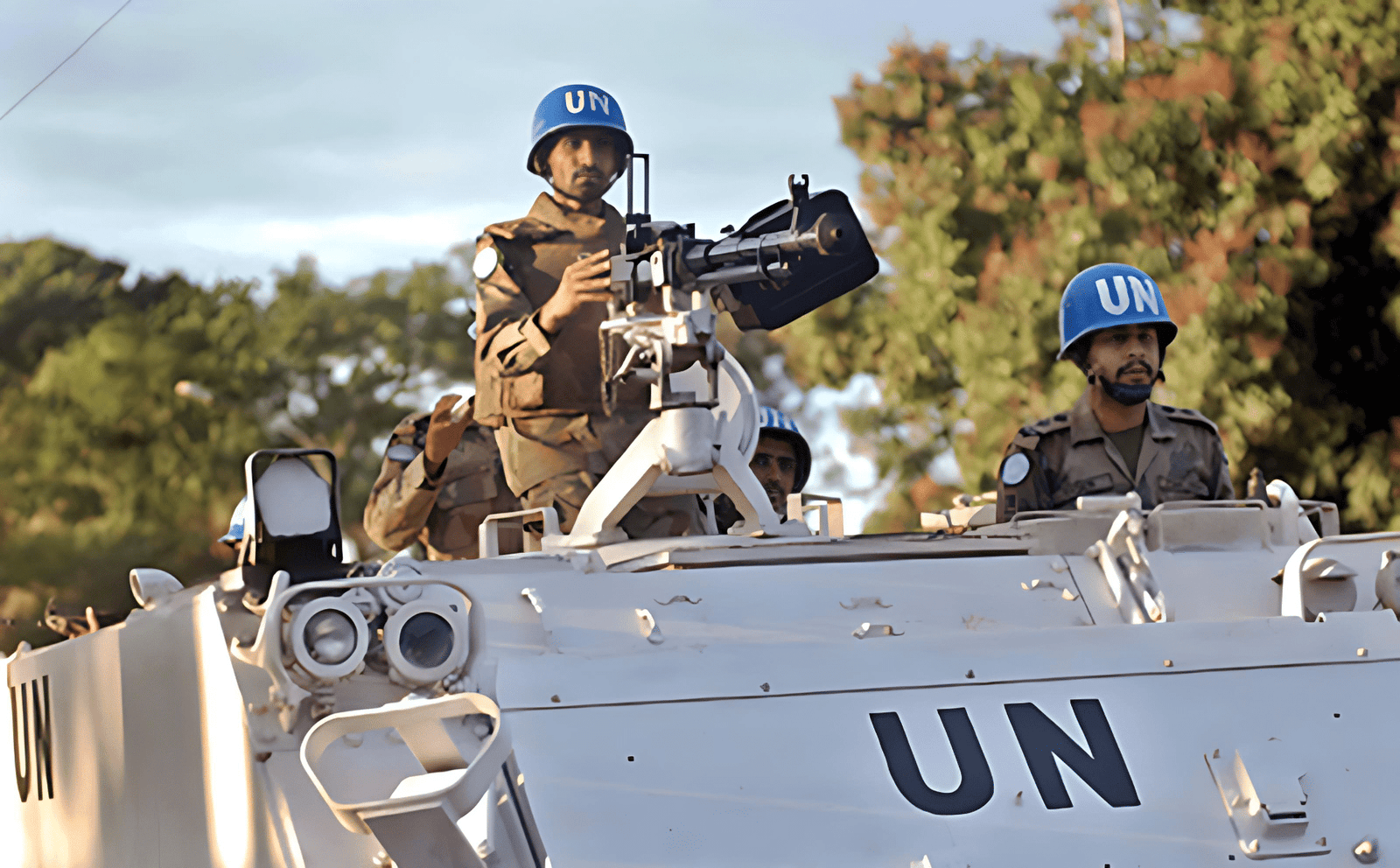
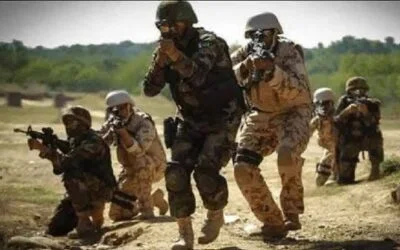
Pakistan has been a significant resource contributor of troops (TCC) to the United Nations Peacekeeping Missions since the 1960s. It has participated in more than 46 operations in Asia, Africa, and the Middle East and has a cumulative amount of over 200,000 military and police personnel deployed, and over 168 people who lost their lives in the line of duty. Other deployments include;
- Congo (ONUC, early 1960s): Pakistani soldiers assisted in calming a troubled colony, strengthening the United Nations’ cause in sustaining peace.
- Somalia (UNOSOM II, 1993- 95): Pakistan participated in the principle humanitarian and security activities during large-scale instability.
- Liberia and Sierra Leone (UNMIL, UNAMSIL): Efforts towards democratic shift and disarmament after prolonged civil wars were helped by Pakistani peacekeepers.
Pakistan’s involvement in UN peacekeeping missions shows how working with international organizations can help manage conflicts, gain international acceptance, and deal with complicated global problems. This participation also boosts Pakistan’s reputation as a peaceful nation and strengthens its moral standing, acting like a soft power tool in international relations.
The Use of Global Justice and Dispute Resolution:
Pakistan utilizes its membership in the UN to promote global justice, highlighting the cases of human rights, self-determination, and the protection of oppressed people. Pakistan has always directly and indirectly backed the resolutions in the UNGA that against Israeli settlements and promoted the right of self-determination, of Palestinians. In 2023 and 2024, Pakistan supported resolutions that reiterated the right of Palestinians to have a separate homeland, in light of the international law, demanding a two-state solution.
In response, to the revocation of Article 370, in August 2019, by the Indian government of Kashmir of its special status, Pakistan launched an international advocacy effort. The efforts to this effect, in the UN General Assembly and UN Security Council, included presenting letters, resolutions, and initiating an argument under the UN Charter of decolonization and human rights.
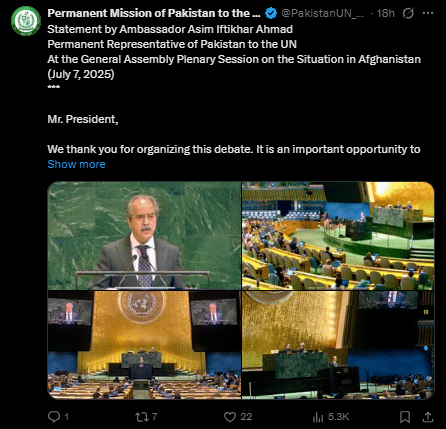
Pakistan provided its cooperation in peace and gender rights in post-2021 Afghanistan with the UN to achieve peace in Afghanistan through UN-backed initiatives and participation of women in governance.
Promotions of Global Justice (2020-25)
Pakistan has been an active participant in the UN, familiarizing itself further with the issues of justice, human rights, and multilateralism, as well as advocating such causes. In March 2022, Pakistan, as the OIC coordinator, also succeeded in having the UNGA adopt a resolution launched by Pakistan on behalf of the OIC. Pakistan, through its efforts in UNGA, succeeded in getting March 15 recognized as the International Day of Combat against Islamophobia due to increasing religious intolerance and discrimination across the globe.
Since India changed Article 370 in 2019, Pakistan has consistently raised the issue of Kashmir at the UN Security Council (UNSC) and UN Human Rights Council (UNHRC). Through official letters, discussions, and statements from top officials. Pakistan has stressed that UN Security Council Resolutions 47 and 91 are still valid, arguing they should prompt international action regarding alleged human rights violations in the region.
In regional diplomacy, Pakistan has acted as a restraining force in Afghanistan post-2021, where Pakistan relates with the UN Assistance Mission in Afghanistan (UNAMA), seeking humanitarian access and promoting the principles of inclusive governance.
Pakistan also backed UN resolutions demanding a ceasefire and humanitarian passage in Gaza in 2023, maintaining a prolonged support of the democratic rights of Palestinians. Besides, Pakistan was insisting on the reformed Security Council, as it opposed the permanent members’ expansion, and demanded to see more Global South members. With all these efforts, Pakistan has become a serious multilateral actor by engaging within liberal institutions in addition to contributing towards the establishment of international norms through a constructivist foreign policy approach.
Pakistan’s Recent UN Presidency
Pakistan became the President of the UN Security Council on July 1, 2025, a milestone for Pakistan, and another step towards continued service of the country, and multilateral diplomacy. Through it, Pakistan was keen on achieving the safety of citizens in war-affected areas, the reformation of the U.N. peacekeeping mandates, and dispute resolutions based on the rule of international law.
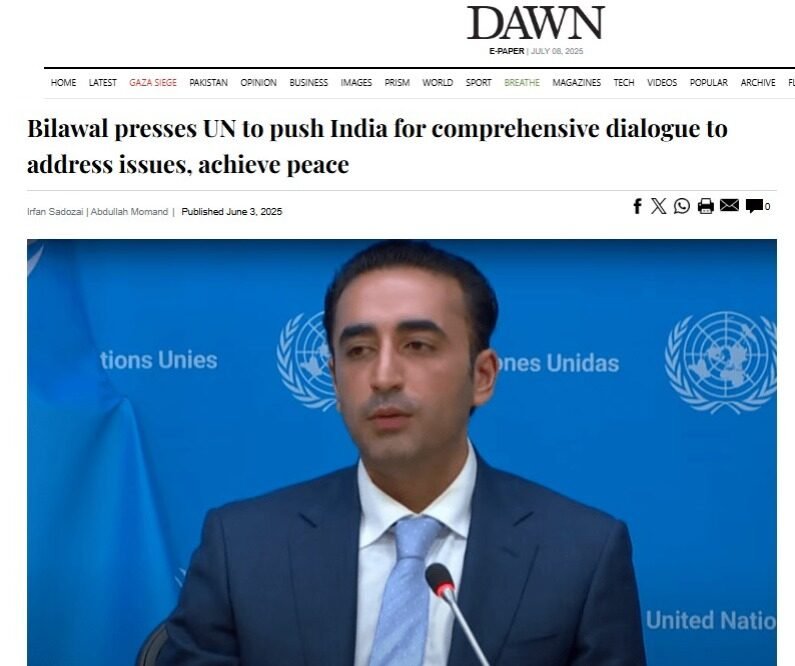
Foreign Minister of Pakistan, Bilawal Bhutto-Zardari, said that peacekeeping must be changed to reflect the new reality, urging an expanded capacity to respond rapidly and better accountability to standards.
During its presidency, Pakistan also focused on urgent humanitarian crises. It organized open discussions to push for ceasefires in Gaza, Sudan, and other conflict zones, and to establish safe routes for aid. At the same time, Pakistan consistently advocated for reforms to the UN Security Council, especially for more representation from the Global South and against increasing the number of permanent members.
Through these actions, Pakistan aimed to show its commitment to cooperative problem-solving, strengthening UN institutions, and upholding international law. It also sought to promote norms of justice, equality, and sovereignty. This presidency highlighted Pakistan’s ambition to be more than just a responsible UN member; it aimed to be a global leader in promoting peace, justice, and moral values through active institutional involvement.
The Way Forward
Despite its active role in the UN, Pakistan faces criticism for not always aligning its international advocacy with its domestic policies. Western observers, particularly the United States, have specifically questioned Pakistan’s human rights record, its approach to counter-terrorism, and its selective adherence to UN resolutions.
Additionally, Pakistan’s strong alliance with China and its increasingly vocal stance on issues like Kashmir and Palestine have complicated its relationship with Washington and other powerful nations (P5 members). These tensions highlight Pakistan’s ongoing challenge: how to balance its desire for strategic independence with the need for international cooperation.
To overcome these problems, Pakistan needs a more principled, yet practical, foreign policy. This means improving governance at home and not being held back by past issues. As shown by its leadership in the UN Security Council in July 2025, Pakistan can credibly lead on matters of justice and peace.
However, for this to truly happen, Pakistan’s internal reforms must match international expectations. By better adhering to UN standards, being strategically flexible, and strengthening its institutions, Pakistan can become a significant bridge for the Global South, turning its involvement in international organizations into a long-lasting diplomatic impact without challenging the existing global power structure.