



Pakistan has issued a high-level appeal to the international community to compel India to resume full compliance with the Indus Waters Treaty (IWT), warning that the “weaponization of water” poses a direct threat to regional peace and the survival of millions of lower riparians.
Pakistan believes that natural resources must serve as instruments of economic development and shared prosperity, and not coercion or conflict. This applies equally to water, the most critical of natural resources. In particular shared water resources are indispensable for… pic.twitter.com/OWWt7E8F5K
— Permanent Mission of Pakistan to the UN (@PakistanUN_NY) March 5, 2026
The UN Security Council Briefing
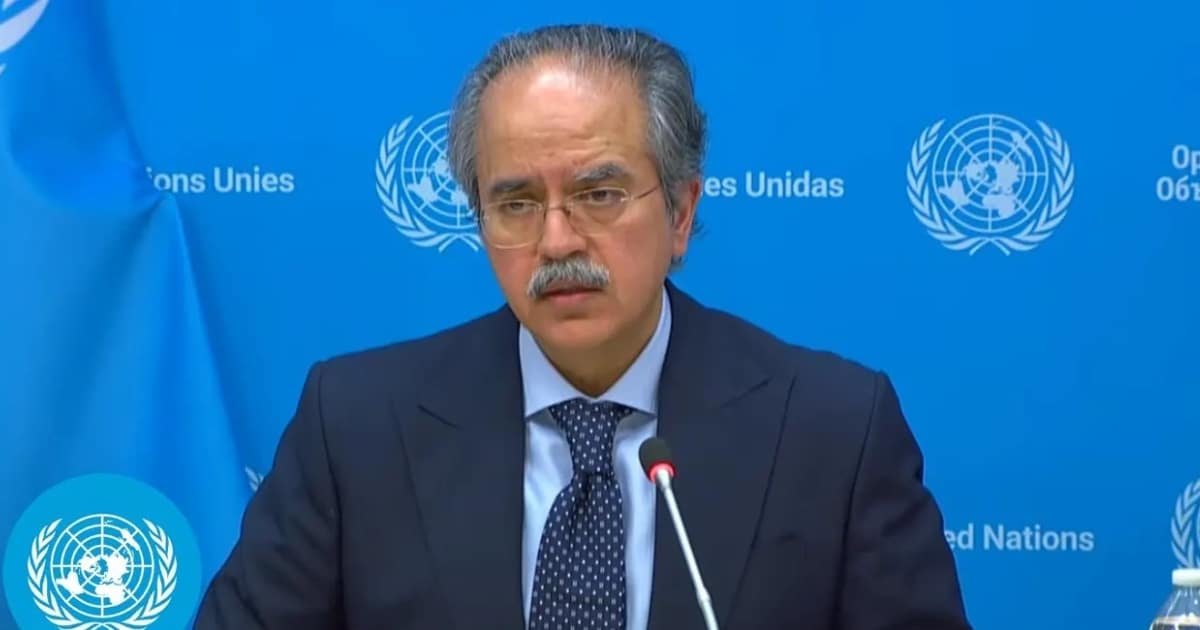
Speaking at a critical Security Council briefing in New York, Pakistan’s Permanent Representative to the UN, Asim Iftikhar Ahmed, delivered a stinging rebuke of New Delhi’s recent unilateral maneuvers. The Ambassador underscored that the IWT remains legally binding and in full force, as reaffirmed by the August 2025 award of the Court of Arbitration.
Key Highlights from the Statement:
-
Rejection of “Water Terrorism”: Pakistan formally categorized India’s decision to hold the treaty in abeyance as an act of “water terrorism.” Ahmed stated that India’s unlawful actions are designed to “choke the lifeline” of Pakistan, using a shared natural resource as a tool of coercion rather than cooperation.
-
Legal Continuity: The Ambassador emphasized that no single party can unilaterally suspend or modify the 1960 treaty. He cited the August 8, 2025, ruling by the Permanent Court of Arbitration (PCA), which clarified that India must “let flow” the Western Rivers (Indus, Jhelum, and Chenab) for Pakistan’s unrestricted use.
-
Threat to Stability: The weaponization of transboundary water flows was described as a destabilizing force that undermines the UN Charter and sets a “dangerous precedent” for international law and global water governance.
Strategic Context: The August 2025 Award
The ongoing diplomatic standoff centers on the 2025 PCA Award, where the Court ruled in Pakistan’s favor regarding the design elements of Indian hydroelectric projects (Kishanganga and Ratle). The Court found that India’s “best practices” approach did not supersede the specific technical constraints of the IWT. Pakistan continues to urge India to “faithfully implement” this binding award and abandon its policy of “abeyance” initiated in April 2025.
You May Like To Read: Strait of Hormuz Crisis: Can the US Benefit from the Global Oil Shock
A Call for Economic Diplomacy
Ambassador Ahmed concluded by asserting that natural resources should be “instruments of economic development and shared prosperity” rather than triggers for conflict. Pakistan remains committed to the peaceful resolution of water disputes but maintains that the international community must intervene to ensure that upstream “water wars” do not trigger a humanitarian and security catastrophe in South Asia.
Check out our latest video: