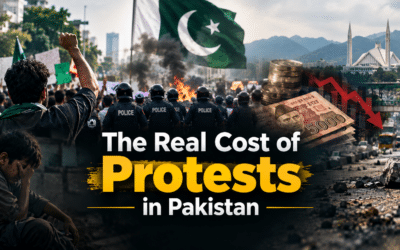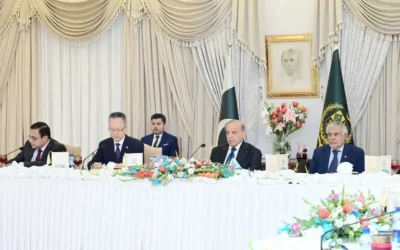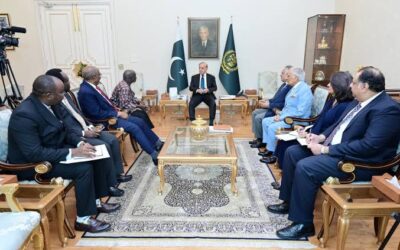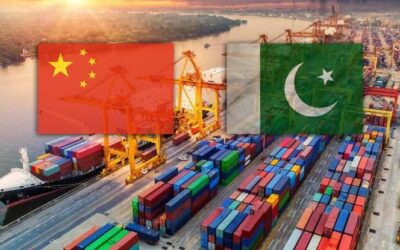




Pakistan has a long history of announcing large and ambitious development agendas, such as the Five-Year Plans, the visionary but long-term, as well as the mega projects featured in the China-Pakistan Economic Corridor (CPEC) initiative since the nation gained independence in 1947. These strategies were going to change the economy, infrastructure, and the standards of living. These visions have, however, been severely shattered due to the frequency of governance changes, making most of the ventures uncompleted or shelved projects. New administrations usually trash or repackage the projects of their predecessors, and hence, they waste time, money, and public confidence.
Pakistan’s History of Development Planning
The development of Pakistan as a country can be traced back to the late 50s when the government proposed its first Five-Year Plan (1955-1960) with predominant emphasis on agriculture, manufacturing, and infrastructure. Following plans in decades to come sought to convert the economy by the industrial drive in the 1960s, to social orientation in the 1970s, and the liberalization spree in the 1990s. The initial decades of planning were not without successes, particularly those times when political direction and bureaucracies went in handy, as was the rise of industries during the rule of Ayub Khan and the multi-faceted expansion of irrigation and power projects during the 1960s.
However, these endeavours have constantly been halted by political unrest, power transfers, political interventions, and alternate military and civilian regimes. Legacy to restart was also a vice as the projects started, but others were abandoned in the middle because of the habit of restarting priorities with every change of government. A good case to consider is that after Vice-President Musharraf had initiated Vision 2030, which was aimed at making Pakistan one of the top 20 economies, it was largely forgotten after the change in the government regime. On the same note, the high-profile Vision 2025, launched in 2014 to implement economic modernization by 2025, fell short following the political changes in 2018, and most of its findings remain unrealized. Due to these interventions, the country had developed a system where proper long-term planning hardly achieved its goals, and the development path was uneven.
Political Turnover Effect
The misalignment of political cycles and project durations is one of the greatest elements that have hindered long-term development in the Pakistani context. Most governments in Pakistan do not take much time to complete a full five-year term, but major development projects in terms of infrastructure, energy, or education are taking a decade or more to finally become a reality. Such a time lag implies that when a new administration seizes power, there is often a shift in priorities that moves away from portraying what concerns the new administration rather than keeping the vision of the preceding one. Consequently, those projects that are almost completed may be overdue, re-labelled, or discarded altogether, resulting in economic and social losses.
Most of President Pervez Musharraf’s projects were, however, overhauled or left abandoned after the change of government in the year 2008. By the same token, Vision 2025, which was introduced in 2014 by the PML-N government with a different emphasis on economic modernization, energy production, and development of the social sector, was marginalized following the 2018 elections. Slower implementations and priority adjustments were also experienced even in those structures and projects of the China-Pakistan Economic Corridor (CPEC) that are supposed to be long-term projects, such as energy projects and industrial parks, with political changes, especially in Pakistan.
Such volatility has a pernicious message to both local and overseas stakeholders. Investors will be reluctant because they will observe that political developments could disrupt one of the projects financed or those in which they are involved. Additionally, the case of the same leaders promising a lot to people who go in search of the promises after the election weakens the trust of the people. The discontinuity is not just a waste of the resources of the society but also derails the idea of long-range planning to give uniform, sustainable development spanning over decades, irrespective of the people in power. Pakistan lacks a political culture that cherishes national interest more than party interest, and unless such a culture emerges, the development vision of the country will keep fading away with every change of government.
🇵🇰 Pakistan is facing a severe economic crisis. Its interim government needs to drum up foreign investment to help stabilize the economy, but ongoing political uncertainty is keeping many investors away. pic.twitter.com/IMPBYMjf5l
— DW Asia (@dw_hotspotasia) August 30, 2023
Economic, and Social Costs of Policy Disruption
Wastage of finances is the most prominent effect of policy de-stabilisation in Pakistan. Under the situation where a certain development project is stopped or cancelled in the middle due to a shift in the interest of the government, the monies that had been incurred up to that point are sunk costs with no payback. Take the case of the inefficient utilization of the infrastructure investment, where incomplete infrastructure projects may result in more funds being sourced to reactivate or repair them after years of neglect, leading to an ultimate cost that is many multiples of what was estimated. Delayed projects have also led to cost overruns that run into billions of rupees in the Public Sector Development Program in Pakistan, and stretched an already small development budget.
There is also the social cost, which is equally harmful, and this happens beyond economics. Unfinished projects that aim at enhancing healthcare, education, and the welfare of the people are lost when one fails to complete them. As an example, the provincial governments are now different, since the commencement of change, health reform programs in Khyber Pakhtunkhwa and Punjab are shelved without providing the promised facilities to the rural population. In a similar case, projects in the education sector, like curriculum reforms or school ice projects, will end up being overtaken by the original zeal, and millions of students will lack access to improved learning conditions. Such interferences increase disparity between policy pledges and service rendition, creating distrust between the citizens and the democratic process.
You May Like To Read:
- The Historical Context: The Factors Fueling the Two-Nation Theory
- Independence Day Tribute: Chaudhary Rehmat Ali, The Man Who Gave the Name Pakistan
- The Historical Context: The Factors Fueling the Two-Nation Theory
The second long-term cost is the fact that you lose credibility with international investors and donors. Other development agents, such as the World Bank, Asian Development Bank (ADB), and foreign governments, are inclined to offer funds, which are normally invested depending on the guarantee of the multi-year roll. In case the changes in the general political situation cause blown-up projects or poor results, the investment becomes deprived. Not only does this restrain the inflow of foreign capital, but it also leaves Pakistan out in the cold of international development networks, which rely on stability and trust. The result of this mixture of squandered money, shoddy services provided, and the loss of confidence on the part of investors entraps a country into the spiral of underdevelopment and lost opportunities.
Institutional Solutions, and Comparative Lessons to Policy Continuation
Even the countries that have enjoyed long-run and sustainable growth have attained it through ensuring policy stability during political changes. One example is constant planning as typified by China’s Five-Year Plans that have been going on since 1953, regardless of leadership changes, thus national priorities are not compromised. On the same note, Malaysia Vision 2020, initiated in 1991, had its main development agenda maintained even with successive government changes, and thus Malaysia experienced minimal setback in industrializing and developing the human capital.
In Scandinavia, especially in Norway and Sweden, there has been a bipartisan agreement on important national policies, making it such that when there is a change of ruling parties, there is continuity in the economic, social, and environmental policy of the country. In contrast, the numerous changes in policy of Pakistan, like the energy tariffs shifted to infrastructure plans, have interfered with development progress and led to low confidence levels among investors.
To overcome this cycle, Pakistan can take the major lessons from these models and implement practical reforms, including:
- Empowering the Autonomy of the Planning Commission by making it an independent and apolitical institution that protects multi-year projects.
- Introduce a National Development Charter, an inter-party agreement to pursue a common economic and social agenda by all key political players.
- Legal protection to ensure that parliamentary oversight is required before national projects, which have been approved, can be arbitrarily cancelled or renamed.
- Armed Citizens and Media as Watchdogs against Reversals of polices working against national interest.
- Take advantage of International Funding under Continuity Provisions with institutions such as the World Bank or ADB, and make sure projects do not die because of political changes.